

 Oops! We couldn’t find any results...
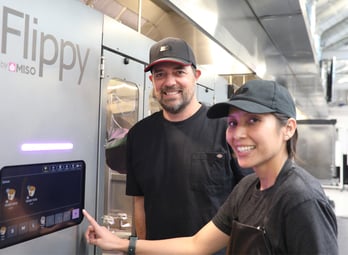
Most explanations of asset tokenization start with the technology. Brian starts somewhere else: what problem does this actually solve for someone who couldn't get access before?
That question is a useful way into the conversation, and a useful primer on what's changed in real world asset (RWA) tokenization, in plain terms.
Watch the episode on Spotify.
The problem we've been solving for a decade
Before Brian joined, Republic had already spent close to ten years on one mission: giving investors access to private markets, or as he put it, "anything that's not the New York Stock Exchange or NASDAQ." That's a bigger category than it sounds. By his estimate, roughly 90% of companies are private, many with little incentive to go public given how demanding that process has become. Access to that 90% has historically been reserved for institutions and high-net-worth investors.
Republic's founders helped bring about the exemption that made retail equity crowdfunding possible in the first place. Brian's description: "Think Kickstarter, but instead of getting a shirt, you get equity." From there, the platform grew in two directions. The investor base expanded from retail to accredited to international investors, and the asset types expanded from early-stage startup equity to later-stage companies, funds, and debt.
Where blockchain actually comes in
Brian's job is to take that existing mission and push it further using blockchain, because tokenization solves specific mechanical problems traditional finance has struggled with. His clearest example is dividends. Paying out loan interest daily is capitally inefficient for traditional finance to handle, but if the interest payments are represented as a security token, paying them out daily is just a matter of code.
Profitr, which we recently launched, works this way. Buying the token gives an investor the legal right to a share of loan interest receivable, with payouts arriving daily instead of on a traditional schedule. This is a right that once required a minimum investment in the tens of thousands of dollars, now accessible for a few hundred.
The same logic shows up in our work with Hamilton Lane, fractionalizing a private infrastructure fund that would traditionally carry a high minimum down to $500.
Why Solana, specifically
Republic's tokenization infrastructure isn't tied to one chain, but Brian was direct about why Solana matters to it: predictable, low gas fees and fast settlement. Issuers bringing an asset on-chain need to be able to explain fees to investors who've never paid gas before, which means fees have to be low and steady enough for the platform to reliably absorb or explain. Settlement speed matters for a similar reason. Traditional finance has spent years crawling from T+2 to T+1 settlement. On Solana, Brian says, it's close to instantaneous.
Republic and Solana also worked directly together on a security token standard that extends a standard token with the specific features that make it a security: transfer restrictions that can enforce OFAC and AML controls, and a plug-in point for identity and KYC management.
Custody isn't a binary choice
Asked whether Republic requires custodial or self-custodial wallets, Brian's answer was both, depending on the use case. Republic's own wallet is fully non-custodial and uses passkeys rather than a raw seed phrase, with social backup for device recovery. His framing was "a wallet in seconds," not a wallet that requires a technical crash course first. But he was equally clear that forcing every product into one model misses how the market is developing. Many of the more interesting products blend both, with institutional capital sitting behind a KYC'd layer and individual access sitting on top of a permissionless one.
What's actually slowing this down
Brian pointed to awareness as the answer to what's holding this space back. "I don't even know that half of these things exist," he said of the retail side of the market. The gap, in his view, is roughly half access and half education. That's a large part of why we keep producing content like this.
The full conversation covers more ground than fits here, including our acquisition of the INX exchange and Brian's advice for engineers who want to get hands-on with RWA tokenization. Listen to the full episode of The Stack, or explore our tokenized offerings directly on Republic.