Republic Republic Republic
  • Log in
Open account
Oops! We couldn’t find any results...
Can’t find a deal? Try advanced search.
Is something missing? Add your suggestion here.
Primary market Live deals Trading Buy and sell Republic Note Own a piece of Republic's upside
Republic Ventures Opportunities for accredited investors
Republic Capital Multi-stage venture firm
Wallet Manage your digital assets Mobile app Available on iOS or Android Learning center Explore investor resources FAQ Get your questions answered
Capital fundraising Raise on Republic Tokenized assets Design, launch, manage tokenized assets Sharedrops Gift equity as a reward Founder Academy A complete guide to raising funds
Advisory Access veteran web3 advisors Infrastructure Stake your digital assets Tokenization Deploy your assets on-chain
Republic Capital In-house Venture Capital fund Broker dealer Regulated capital services
Republic Republic Republic
Oops! We couldn’t find any results...
Can’t find a deal? Try advanced search.
Is something missing? Add your suggestion here.
  • US

  • Log in
  • Open account
All investors
Primary market Live deals Trading Buy and sell
Republic Note Own a piece of Republic's upside
Accredited only
Republic Ventures Opportunities for accredited investors
Institutional
Republic Capital Multi-stage venture firm
More
Wallet Manage your digital assets Mobile app Available on iOS or Android Learning center Explore investor resources FAQ Get your questions answered
Growth capital solutions
Capital fundraising Raise on Republic Tokenized assets Design, launch, manage tokenized assets Sharedrops Gift equity as a reward Founder Academy A complete guide to raising funds
Web3 services
Advisory Access veteran web3 advisors Infrastructure Stake your digital assets
Tokenization Deploy your assets on-chain
Institutional services
Republic Capital In-house Venture Capital fund
Broker dealer Regulated capital services
Insights

Learn

· November 10, 2021

Revenue sharing notes: Investing in debt instruments

In the second of this three part series, we will cover everything you need to know about revenue sharing notes.


Profile picture of Lee Morgan
By Lee Morgan
  • Liked
    Like
    5
  • Comment (1)

What is revenue sharing?

Revenue sharing is a loan arrangement where borrowers tie their repayments to the revenue that their business generates over time. When a borrower brings in high revenue, the timeline of repayment decreases. If revenue takes a dip, the repayment timeline increases.  

This can offer flexibility to high growth or seasonal businesses where revenue projections can be harder to predict. It also has the potential to provide attractive rates of return to investors.


What is a revenue sharing note?

Revenue sharing notes involve an agreement between two parties: lenders and borrowers. Investors (lenders) invest funds into small businesses (borrowers) that are looking to launch or scale their companies. The borrowers agree to pay the lenders a percentage of their revenue (for a particular period of time) until the total amount borrowed is repaid. 

Payments, if any, may vary monthly. Unlike a term note, revenue sharing notes aren’t tied to an interest rate. Instead, they are based on something called an “investment multiple.”


Key terms to know about revenue sharing notes

Maturity date: The date by which all funds are paid back to investors. Sometimes this happens before the Maturity Date, in which case no amount would be due. However, if any amount is still due by the Maturity Date, investors would be owed repayment of the remainder due.

Investment multiple:  From the investor standpoint, it is the total amount the company will owe you, including principal and interest.

Revenue sharing percentage: How much the business agrees to pay investors each month from its gross revenues. (This is not in addition to the investment multiple—this is how a business reaches the investment multiple).

 Securities are not guaranteed or insured, and investors may lose some or all of the principal invested if an issuer cannot make its payments.


How do revenue sharing notes work?

Use this hypothetical investment to understand how these notes work.

Example: You invested $1,000 in a revenue sharing offering on Republic.

     

  • Investment Multiple: 2X
  • Revenue Sharing Percentage: 5%
  • Maturity: 48 months


How are payments calculated?

Your payment depends on how much of the total offering amount you took with your principal investment.

Suppose that the total amount a business raised was $100,000 and you invested $1,000.

Your $1,000 investment was 1% of the total $100,000 raised:
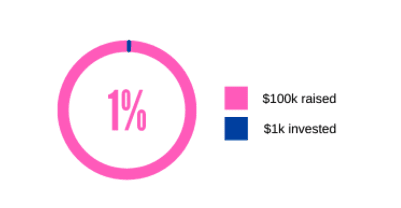
 You receive 1% of the total payment a business makes to all investors each month as long as the business can make payments.


How much does a business pay to its investors each month?

Each month, the payment a business owes to its investors depends on its gross revenues. This means that payments to investors are calculated first before costs are deducted.

Let’s say the business has the following hypothetical revenues:


What is my monthly payment?

Your monthly payment is your share of the total payment, if any, made to investors.


When do my payments start?

After closing a successful campaign, payments generally start after a business has generated revenue for one full calendar month. This is different from term notes, which commence in accordance with the terms of the note purchase agreement. Usually, businesses begin receiving revenues after they’ve opened to the public. If a company does not have revenues, then no payment is due.

There is a chance that payments will not commence at all if the company does not generate revenue. What’s more, not all loans come in the form of secured debt.


When do my payments end?

Payments end when the business pays you back your total payment amount.

The investment multiple determines the total amount a business must pay you. In this case:

So, if the investment’s maturity date is in 48 months, but the business pays you $2,000 in 40 months, then payments stop at 40 months. If it’s been 48 months and the business has only paid you $1,500, then the business would be required to pay the remaining $500 at the maturity date.


What are the advantages of revenue sharing notes?

  • Unlike an equity crowdfunding investment, revenue sharing notes can become liquid much earlier. 

    • Payments flow to investors when revenue starts flowing to the company.

  • Can offer a potentially attractive rate of return with some upside.

    • If a company exceeds growth expectations, their monthly repayments will increase, and the term length will lessen, thus increasing investors’ yield.

  • Investors can play an active role in the success of the business.

    • Because investors receive a percentage of revenue, they can benefit from promoting the business in their community to help the business grow. 

  • Due diligence is more straightforward than with an equity crowdfunding investment. 

    • There is no concern about the company’s valuation or exit strategy.


What are the disadvantages of revenue sharing notes?

  • Securities are not guaranteed or insured, and investors may lose some or all of the principal invested if an issuer cannot make its payments.

  • Potentially inconsistent returns.

    • Investors may not be attracted to a revenue sharing agreement if they are not generating consistent income. 

  • No opportunities to exit or resell.

    • No secondary market exists for revenue sharing notes. What this means is, once you’ve invested in a company, you are at the mercy of the terms of the agreement until you are either paid in full, or the contract matures. 


So far, we have covered two of the three types of debt instruments in this series. If you missed the first post, read up on convertible notes. Our last post in this series (coming soon) will explain term notes for investors. 



Get notified about new posts

Not a valid email address

Share this story

Read next

Why Republic tokenizes RWA on Sui

Digital assets

Why Republic tokenizes RWA on Sui

A complete guide to storing and staking SUI: set up a non-custodial wallet, understand Sui's proof-of-stake rewards, and delegate to Republic in a few steps.

From Uranium to Treasuries: How Etherlink is Unlocking Real-World Assets

Digital assets

From Uranium to Treasuries: How Etherlink is Unlocking Real-World Assets

The Real World Assets (RWA) sector has become one of the fastest-growing narratives in blockchain. In 2026, tokenized real-world assets are bridging traditional finance and decentralized technology, offering investors new levels of liquidity, transparency,...

Early Conviction to Enterprise Scale: Inside Republic’s Seven-Year Space Investment Pipeline

Republic

Early Conviction to Enterprise Scale: Inside Republic’s Seven-Year Space Investment Pipeline

Republic moved quickly to take part in the new space revolution’s earliest days, placing its first investment in May 2019. That early conviction has never wavered. Branches across Republic have offered dozens of investment opportunities throughout the ...

1 comment

Share feedback and comment below. Please note that this section is not monitored by Republic. If you have any questions please reach out to investors@republic.co
The comment you're trying to see no longer exists.
Profile picture of Travis Powell
Travis Powell
4 years ago
Is there a way to filter companies by investment opportunities? I.e revenue share & term note? Does Republic have any offerings at this time using the revenue share module?
0 Like Reply
Join the discussion
Icon
Verify your identity to join the discussion
To keep discussions authentic and prevent spam,
we ask users to verify their identity.
Verify your identity
Your information is kept secure and will only be used for identity verification.
Republic

Giving everyone access to early-stage startup investing

For investors
  • Why invest
  • How it works
  • FAQ
  • Risks
  • Privacy policy
  • Accessibility
  • Cookie Preferences
  • Form CRS
For startups
  • Why raise
  • Learn
  • FAQ
  • Tokenized assets
Company
  • About
  • Insights
  • Events
  • Contact
  • Security
  • We're hiring!
Dollar Refer a startup, get $2,500

Invest in the app

Android app iOS app

Invest in the app

Android app iOS app

This site (the "Site") is owned and maintained by OpenDeal Inc., which is not a registered broker-dealer. OpenDeal Inc. does not give investment advice, endorsement, analysis or recommendations with respect to any securities. All securities listed here are being offered by, and all information included on this Site is the responsibility of, the applicable issuer of such securities. The intermediary facilitating the offering will be identified in such offering’s documentation.

By accessing the Site and any pages thereof, you agree to be bound by the Terms of Use and Privacy Policy. Please also see OpenDeal Broker’s Business Continuity Plan and Additional Risk Disclosures. All issuers offering securities under regulation crowdfunding as hosted by OpenDeal Portal LLC are listed on the All Companies Page. The inclusion or exclusion of an issuer on the Platform Page and/or Republic’s Homepage, which includes offerings conducted under regulation crowdfunding as well as other exemptions from registration, is not based upon any endorsement or recommendation by OpenDeal Inc, OpenDeal Portal LLC, or OpenDeal Broker LLC, nor any of their affiliates, officers, directors, agents, and employees. Rather, issuers of securities may, in their sole discretion, opt-out of being listed on the Platform Page and Homepage.

Neither OpenDeal Inc., OpenDeal Portal LLC nor OpenDeal Broker LLC verify information provided by companies on this Site and makes no assurance as to the completeness or accuracy of any such information. Additional information about companies fundraising on the Site can be found by searching the EDGAR database, or the offering documentation located on the Site when the offering does not require an EDGAR filing.

Invest in startups using your credit card
You can invest using your credit card

Made in SF/NYC