


 Oops! We couldn’t find any results...
Restaurants have long operated on the assumption that there would always be enough workers.
That assumption no longer holds.
Full-service restaurants are down 210,000 jobs from pre-pandemic staffing. Staffing churn also plagues the industry, with an astonishing 54% of quick service restaurant (QSR) employees quitting after 90 days.
Faced with a labor pool that isn’t coming back and costs that keep climbing, restaurants are rushing to modernize their operations.
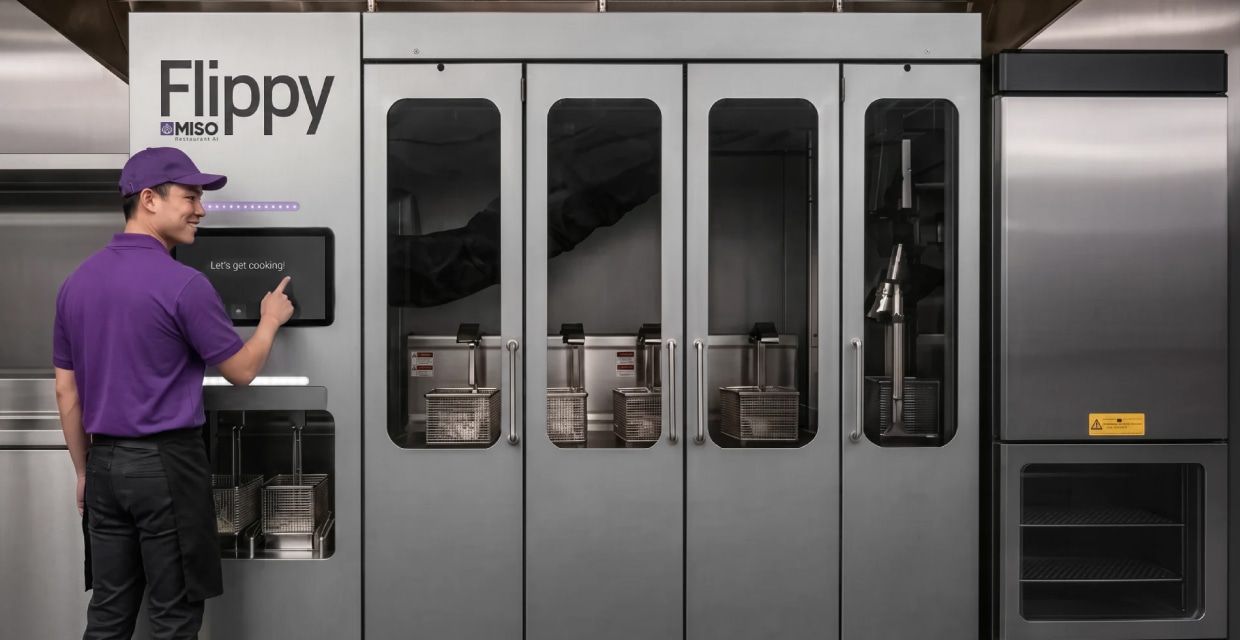
That’s where Miso Robotics comes in. With a strategic investment by restaurant industry leader Ecolab, $70 billion NYSE company, and major productivity improvements built through a collaboration with NVIDIA, Miso’s technology is primed for expansion in the $1 trillion QSR sector.*
Modernizing the restaurant kitchen
Over the last several years, restaurant kitchen robots have evolved from novelty products into a genuine growth market. Few companies are as well-positioned in this shift as Miso, maker of the Flippy Fry Station AI robot.
And now, thanks to its recent acquisition of the technology and ~300 patents of pizza-robotics pioneer Zume Pizza, a company once valued at over $2 billion, making Miso one of the largest owners t of food-related AI and robotics patents.
Miso saw restaurant staffing as a major problem in need of clear solutions. As CEO Rich Hull told Fortune, restaurant operators are always telling his team, “We can’t hire enough… And everybody originally kind of thought that was temporary, but in reality, it just accelerated something that was already happening.”4
Miso identified fry stations as perhaps the largest pain-point: they’re messy, physically demanding, carry a high risk of burns, and are among the hardest restaurant positions to keep staffed.
Labor turnover costs for the average restaurant owner are $6,109 per front-line employee per year.5 Meanwhile, 98% of restaurant operators identified rising labor costs as a major business concern in an industry with notoriously thin margins.6
That’s in large part why analysts peg the global restaurant food-automation market at roughly $28 billion this year.7 And that’s the critical role Flippy is designed to play in this growing market.
Miso aims to define the food robotics category
Miso built its business around the increasing pressure point of labor challenges – especially at the fry station.
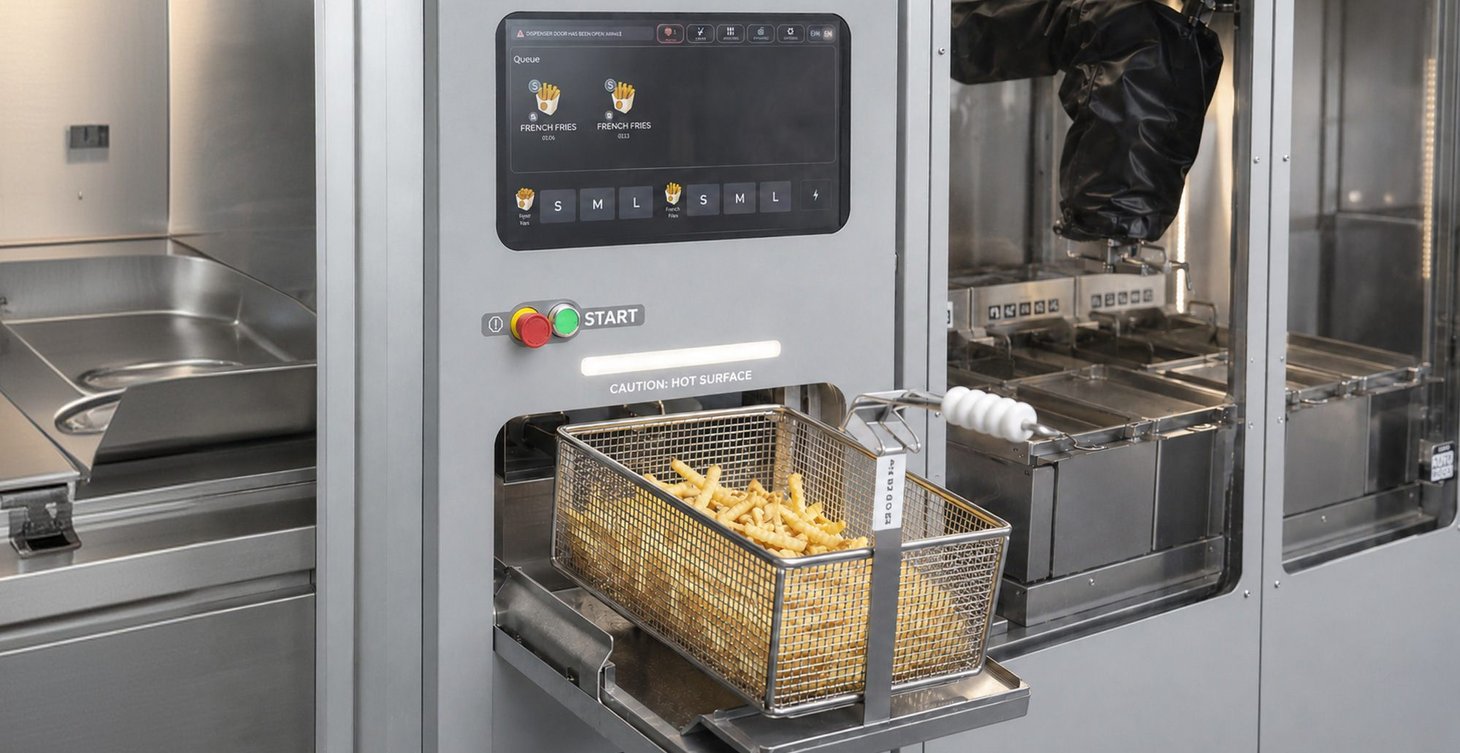
The company’s Flippy Fry Station AI robot is capable of frying and portioning more than 40 menu items, while cutting staff interaction with the fryer by roughly 90%. This frees up the human workers to focus on quality control and revenue generation through upsells, taste tests, order preparation, and customer interactions.
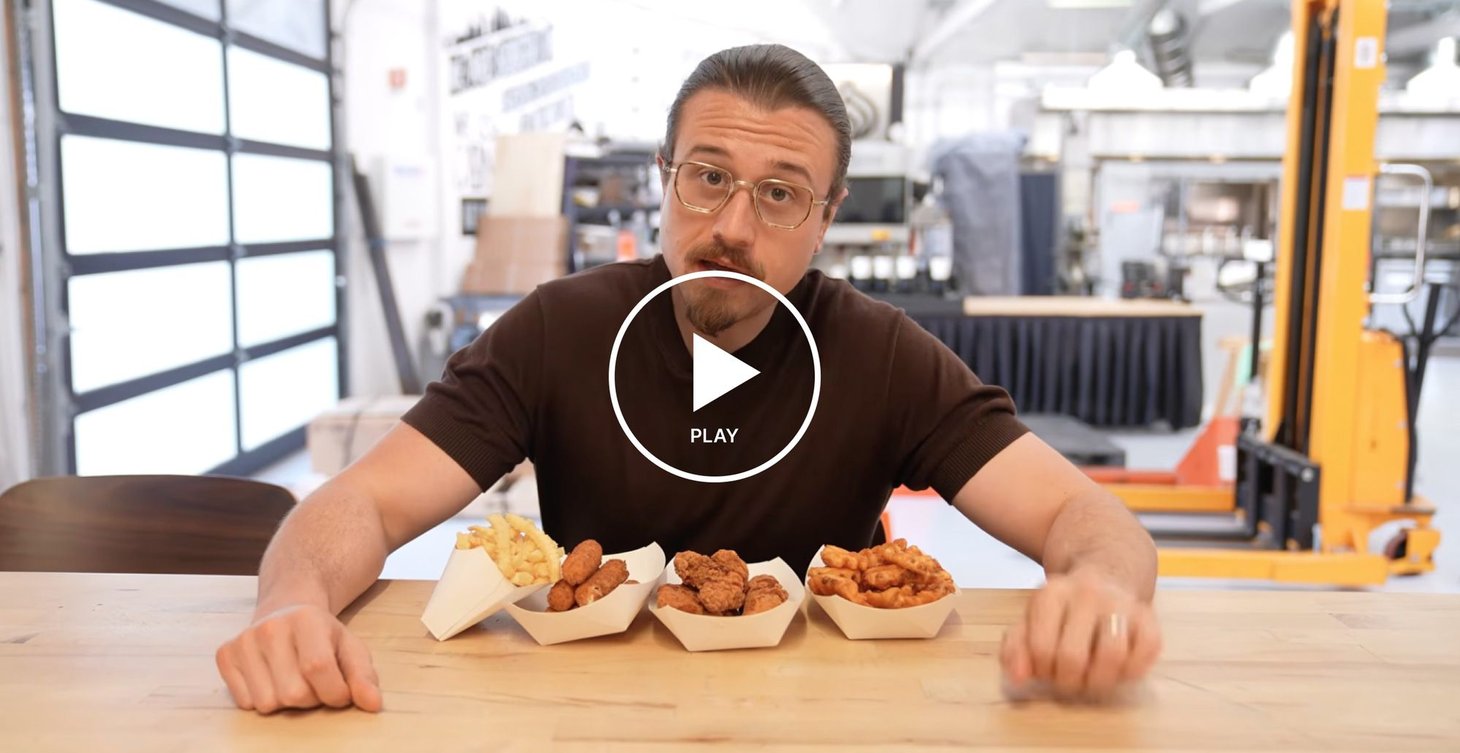
And the food tastes great. That’s the assessment of chef Joshua Weissman, a well-known food influencer with over 13 million followers, who recently tasted a variety of items cooked by Flippy.9
“Honestly, that’s one of the crunchiest chicken tenders I’ve had in a while,” he says. “It’s [also] actually a really good waffle fry. I think we’ve witnessed the future.”
Flippy just surpassed 5 million fried baskets across live commercial deployments. It currently operates in White Castle stores with testing underway that allows Flippy to anticipate demand and start cooking orders before they are even placed.10 Flippy recently expanded into its seventh U.S. state and its first NBA arena.11
The economics support this expansion: Flippy’s hardware cost has fallen about 80% over five years, bringing customer pricing down to around $5,000 a month. There’s no longer a need for restaurants to make a major investment upfront, and Hull notes that this is “less than you would pay the equivalent human,” while doubling the output of a short-order cook.12
Flippy’s recent speed-of-service jump owes heavily to Miso’s collaboration with tech giant NVIDIA. Miso built Flippy’s motion planning with the help of NVIDIA and its novel Isaac Sim product. Now Flippy’s new third generation can cook over 100 baskets per hour13 – generally twice as fast as a human. Miso’s NVIDIA collaboration also drives an AI infrastructure layer called the Miso Hub, the software brain that can power every product in the Miso ecosystem.14
Along with Ecolab’s strategic investment, Miso gains access to Ecolab’s best-in-class sales and distribution channel that can be a material competitive advantage.
To assist Flippy in its nationwide rollout, Miso partnered with robot field-service firm Roboworx to handle installation, preventative maintenance, and ongoing field support across all deployments.15 This collaboration cut Flippy’s installation time by 75% and let Miso install a new Flippy overnight.16
Extending the AI power of Flippy
Earlier this year, Miso announced it had acquired restaurant operations software company Zignyl, which it is combining with its Zippy product. The technology allows restaurant operators and frontline employees to align on point-of-sale, scheduling, and payroll information in real-time, helping owners and workers alike to make more money.17 Together, Zignyl and Zippy extend the kind of AI power behind Flippy into the restaurant operators’ hands.
Miso’s software products are already in use across operators of major restaurant brands, such as Auntie Annie’s Pretzels, Jersey Mike’s, Rocky Mountain Chocolate Factory, and Cinnabon. The efficiency, labor, and operations problems that Miso solves could help QSRs increase profits up to $24 billion per year.*
Miso’s industry-leading IP portfolio
On June 24, Miso announced the acquisition of the technology and IP of Zume Pizza, one of the highest-profile companies in the first wave of food robotics, and the industry took notice.18 Over nearly a decade, Zume built mobile, robot-assisted pizza kitchens, raised more than $450 million, and reached a valuation north of $2 billion.19
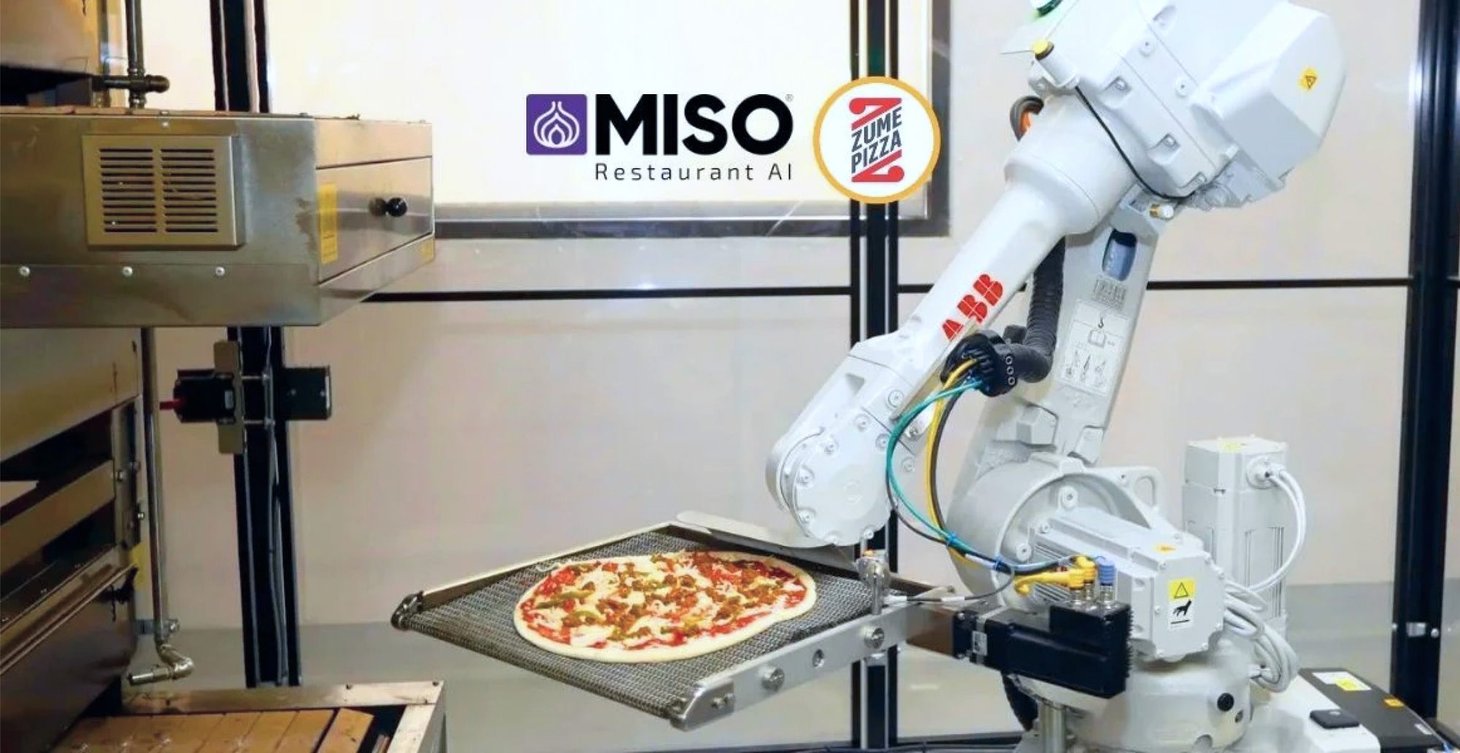
During that time, Zume amassed ~300 patents and patent filings covering robotic food preparation, delivery, and packaging. The deal grows Miso’s patent holdings by 10x, dramatically increasing the size of its competitive moat.20
“Zume created the most important portfolio of technology in food robotics’ first wave,” Miso CEO Hull says. “Now combined with Miso’s existing technology related to AI and robotic frying, grilling, and beverages, we believe that this transaction creates the food industry’s largest AI and robotics patent portfolio, and further solidifies Miso’s market-leading position as the restaurant and hospitality industry’s trusted, one-stop technology solution for modernization.” 21
Miso is betting that labor scarcity and rising costs give modernization a structural tailwind in the restaurant industry. By owning what it believes to be the largest patent stack in food robotics, the company believes that it will achieve the leverage to define the category.*
CEO Rich Hull will be hosting a webinar to share the full Miso Robotics story on Wednesday July 29 at 2pm ET (11am PT). Register here.
You can explore the current Miso Robotics offering on Republic and make an investment by clicking here.
1 Fortune
2 Modern Restaurant Management
3 Ecolab
4 Fortune
5 OrbisPay
6 Fortune
7 National Restaurant Association
8 Fortune
9 YouTube
10 QSR
11 QSR
12 Fortune
13 QSR Web
14 QSR
15 Robotics 247
16 QSR Web
17 QSR
19 QSR
20 QSR Web
21 QSR