


 Oops! We couldn’t find any results...






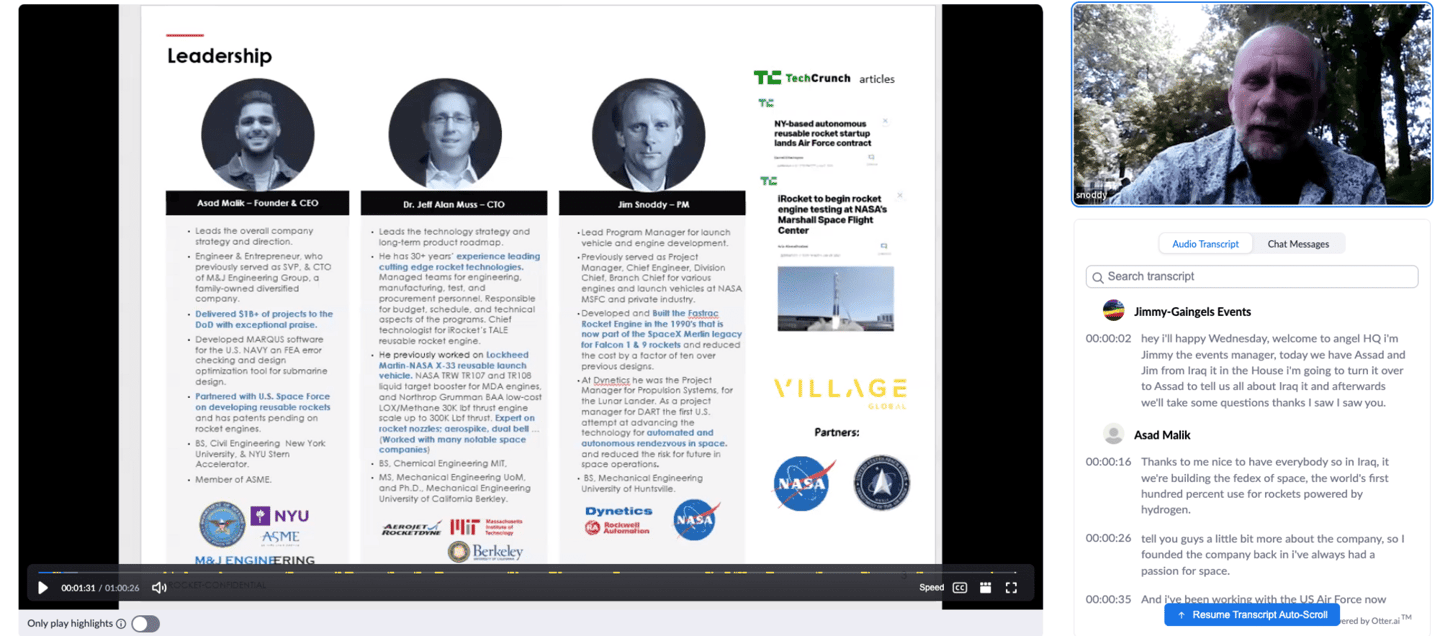
Our friends at Gaingels hosted a webinar with their team and were kind enough to share the recording with us. You can access it below:
Topic: Gaingels Q&A <> iROCKET
Meeting Recording: here
Access Passcode: GaingelsConfidential1!
iRocket in the News:
Problem
Access To Space Is Expensive!
Government & commercial customers are seeking more efficient solutions.
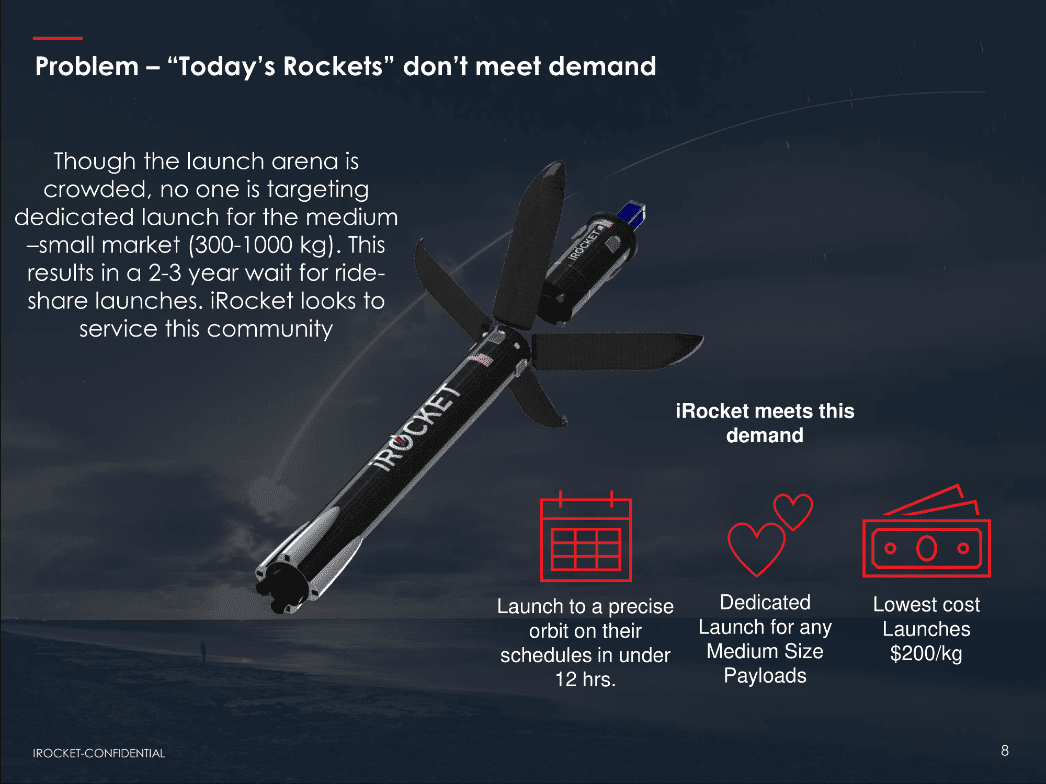
Though the launch arena is crowded, no one is targeting dedicated launch for the medium –small market (300-1000 kg). This results in a 2-3 year wait for ride- share launches. iRocket looks to service this community.
Small satellite constellation customers want to go to a precise orbit on their schedules and as of of Nov. 2021, there is an additional demand to deploy 38,000 new broadband satellites.
These customers are looking for the cheapest access and Rapid Deployment to space. With that, launches have depended on costly, outdated systems & technology, making them expensive, inefficient and one-time use.
Solution
iRocket’s 100% Fully Reusable Rockets
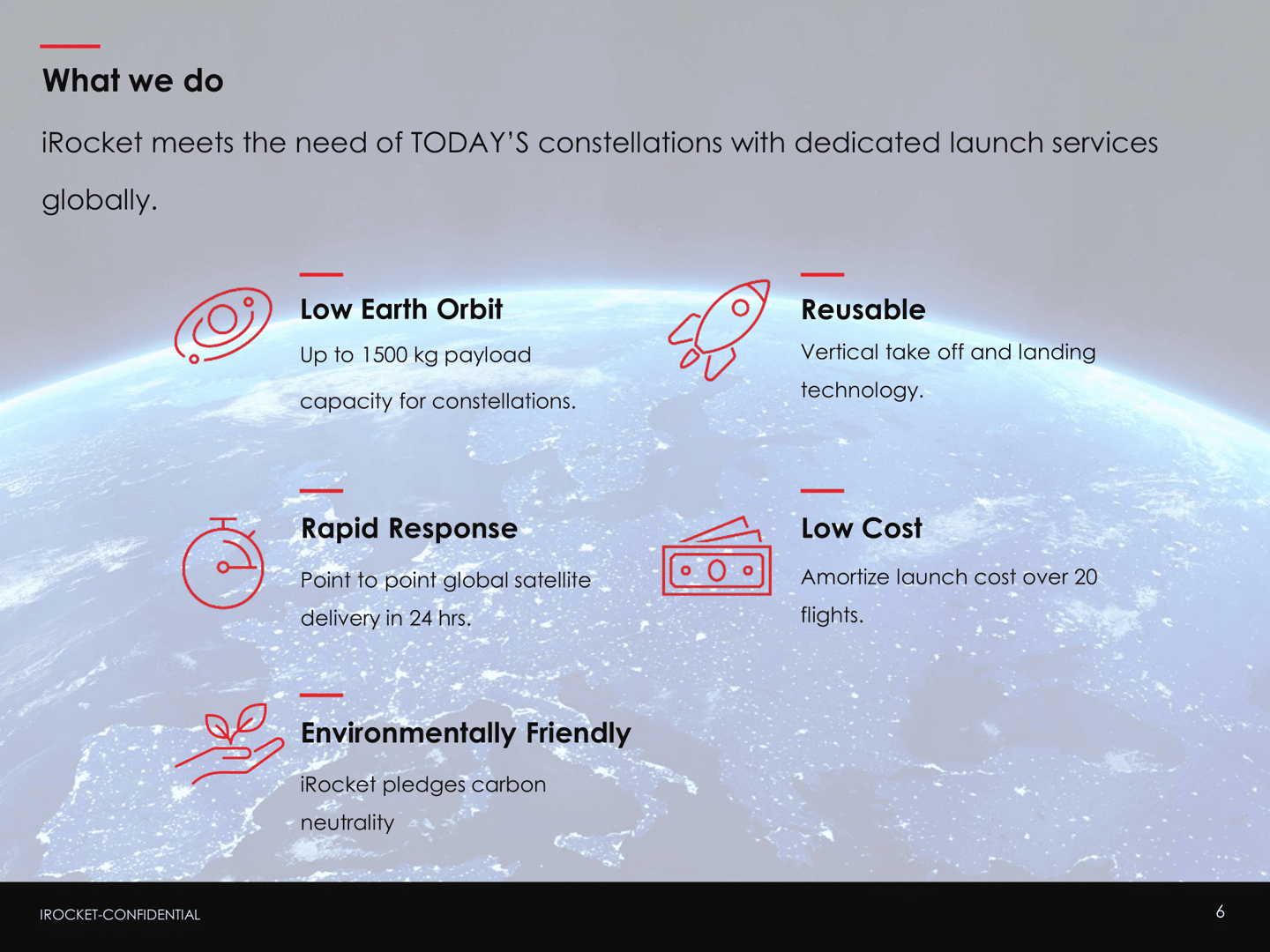
iRocket is developing the future of light, reusable small launch vehicles.
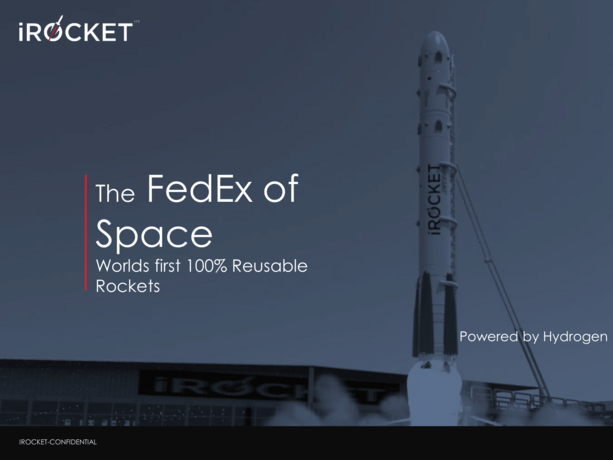
Dedicated small launcher for high-frequency & rapid deployment to Low Earth Orbit (LEO), the FedEx of Space.
Breakthrough fully reusable small launch vehicle technology will improve market access.
Reusable rockets allow us to amortize expenses over 20 launches, reducing our average costs of production and launch. Providing low-cost access.
Founders
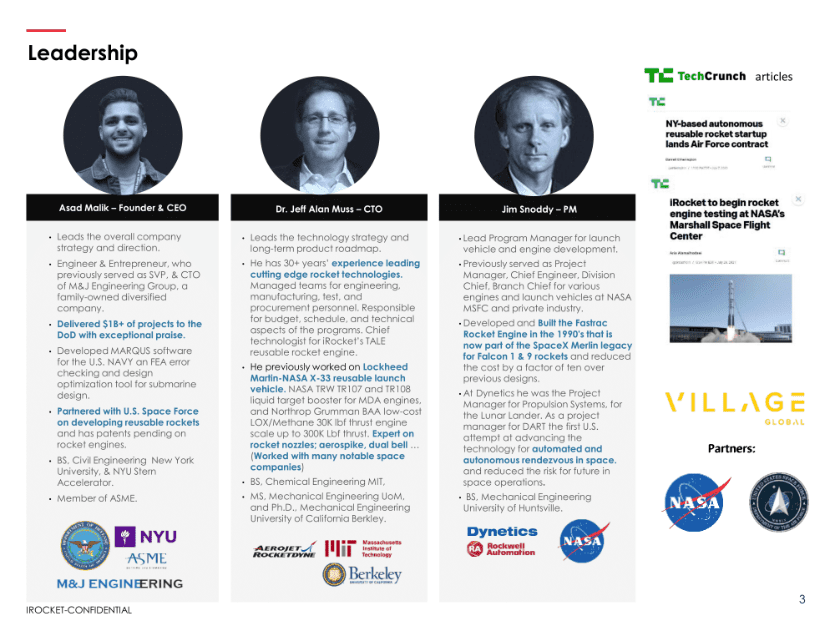
Asad Malik, Founder & CEO leads the overall company strategy and direction, and has background as an engineer & entrepreneur, who previously served as SVP, & CTO of M&J Engineering Group, a family-owned diversified company. Notable achievements include delivering $1B+ of projects to the DoD with exceptional praise, and Developing MARQUS software for the U.S. NAVY, an FEA error checking and design optimization tool for submarine design. He also partnered with the U.S. Space Force on developing reusable rockets, and has patents pending on rocket engines.
He is joined by a team with backgrounds at USSF, NASA, SpaceX & ASTRA who possess significant aerospace & reusable rocket experience. This includes people like Jeff Muss, who joined as CTO in March 2021 after working on the Lockheed Martin-NASA X-33 reusable launch vehicle, and Jim Snoddy, who heads up Program Management, is responsible for building the Fastrac Rocket Engine in the 1990's that is now part of the SpaceX Merlin legacy for Falcon 1 & 9 rockets.
Product
iRocket is developing fully reusable rockets, starting with its Shockwave launch vehicles, which it says will be ready to go to orbit in two years time. The autonomous 3D-printed Shockwave will be capable of supporting payloads with a maximum size of around 300 kg (661 lbs.) and 1,500 kg (around 3,300 lbs.)
Additional important features include the reusability of the rocket through vertical take off and landing. This will enable autonomous precision landing back to launch site, and the adaptability of rockets to bring back high value add items like biotech research experiments as well as handling space junk. VTNL enables rapid deployment and increases launch cadence, in addition to lowering the cost for every launch.
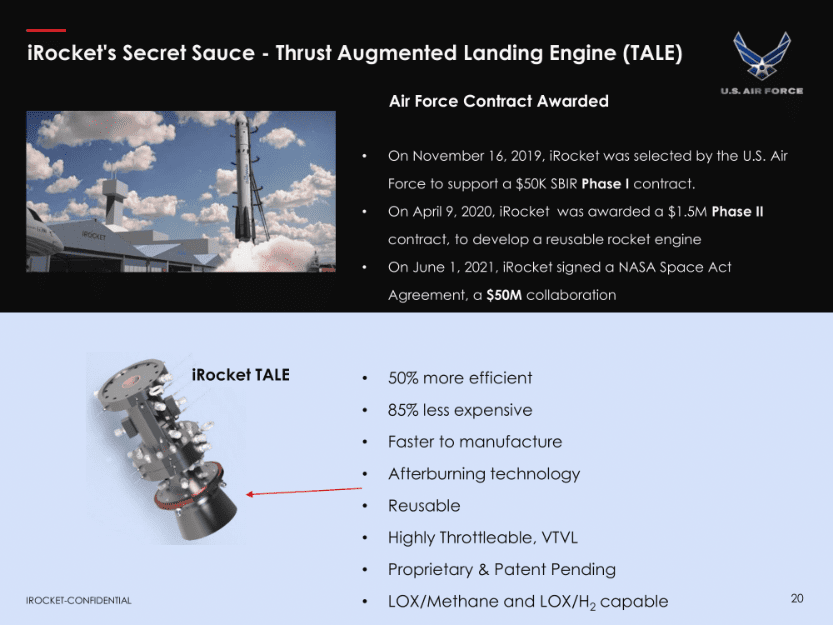
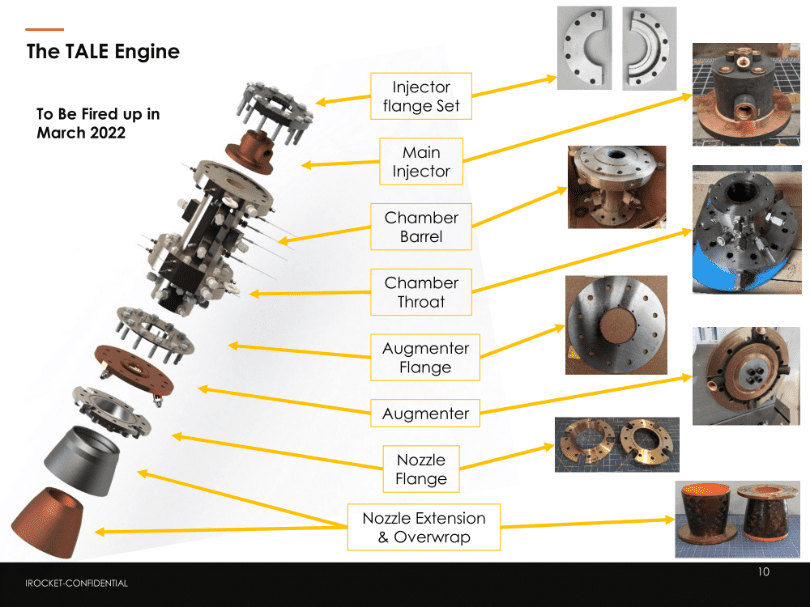
iRocket's secret sauce is its Thrust Augmented Landing Engine (TALE), which received an Air Force award for being 50% more efficient, 85% less expensive, faster to manufacture, highly throttleable, and reusable.
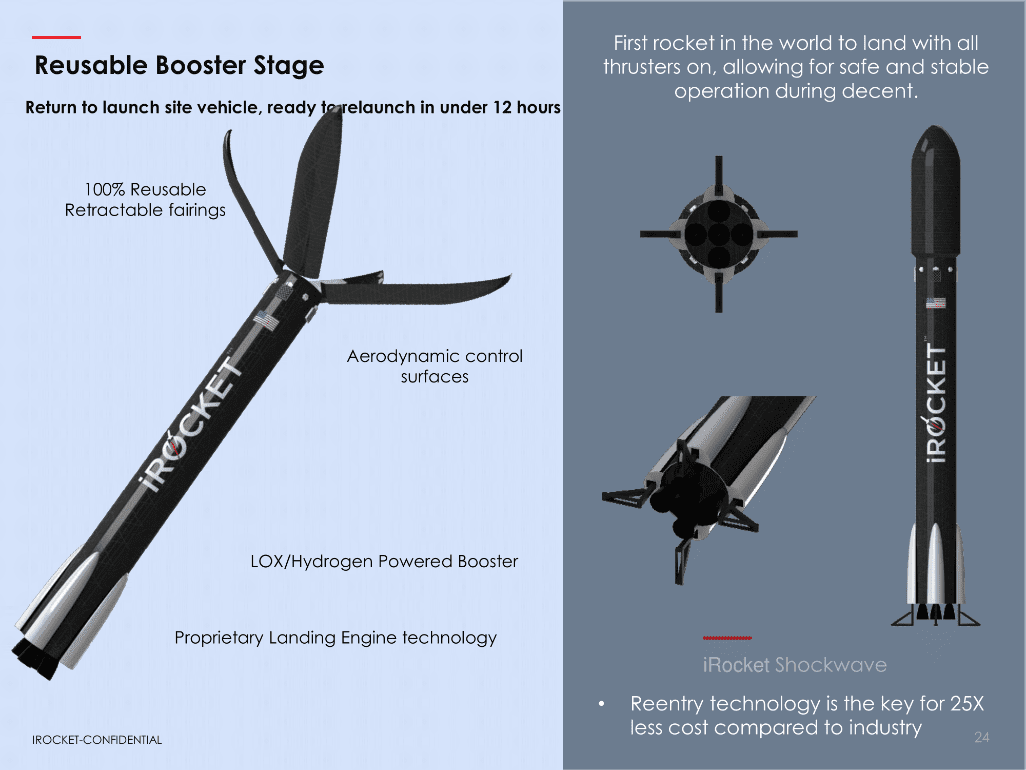
Unlike other launch companies iRocket’s engine cycle is open expander, and its fuel is LOX/Methane and LOX/H2 capable. iRocket is capable of refurbishing and reusing a rocket within 24 hours, which will enable to have the lowest launch cost and to meet customers’ launch schedules.
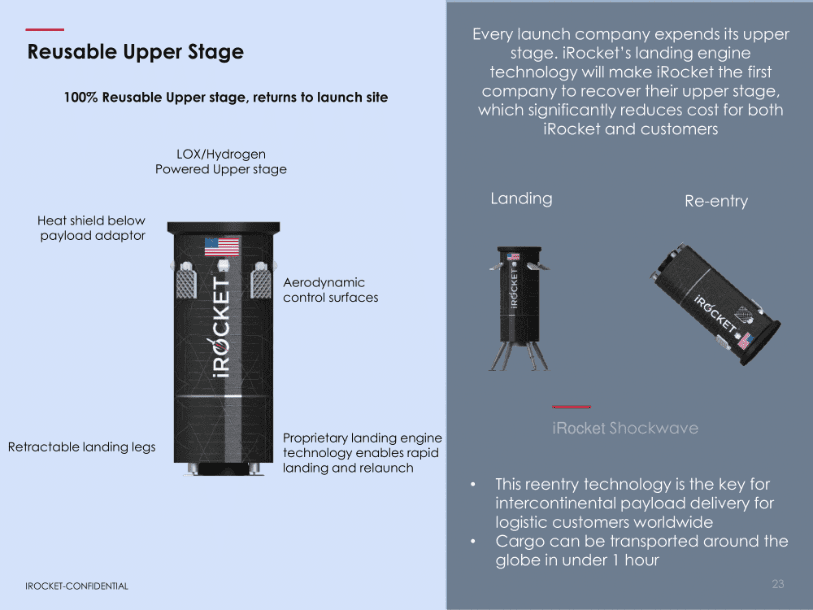
iRocket’s landing engine technology will make iRocket the first company to recover their upper stage, which significantly reduces cost for both iRocket and customers. They have the first rocket in the world to land with all thrusters on, allowing for safe and stable operation during decent, and this reentry technology is the key for intercontinental payload delivery for logistics customers.
Traction
In July, iRocket announced that the company signed a Space Act Agreement with NASA Marshall Space Flight Center in Huntsville, AL. Under this agreement, NASA will help accelerate iRocket’s next-gen reusable engine development by providing testing and engineering support up to $50M over 5 years.
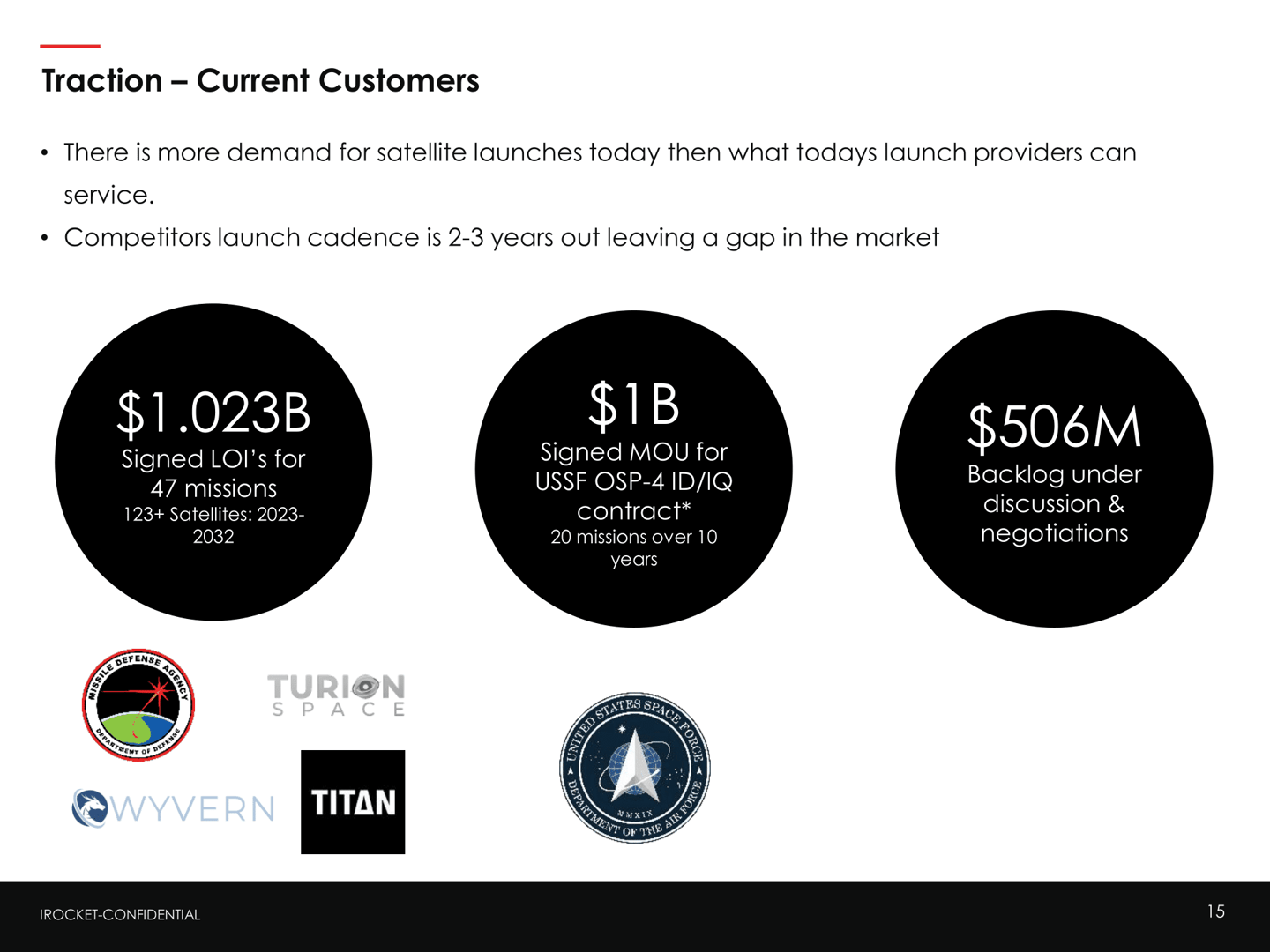
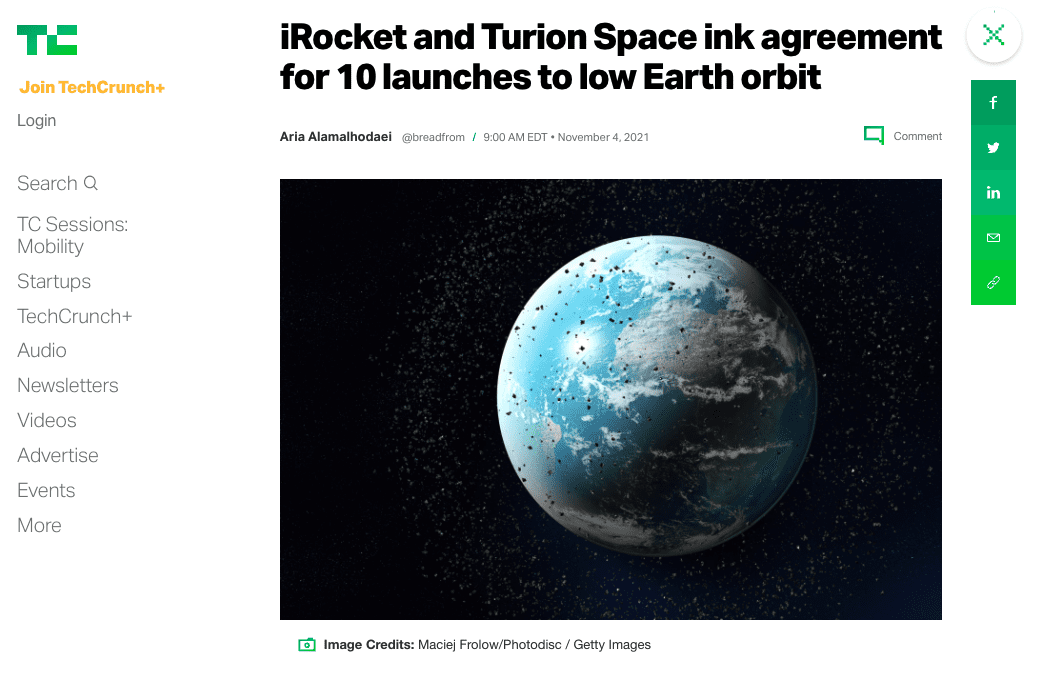
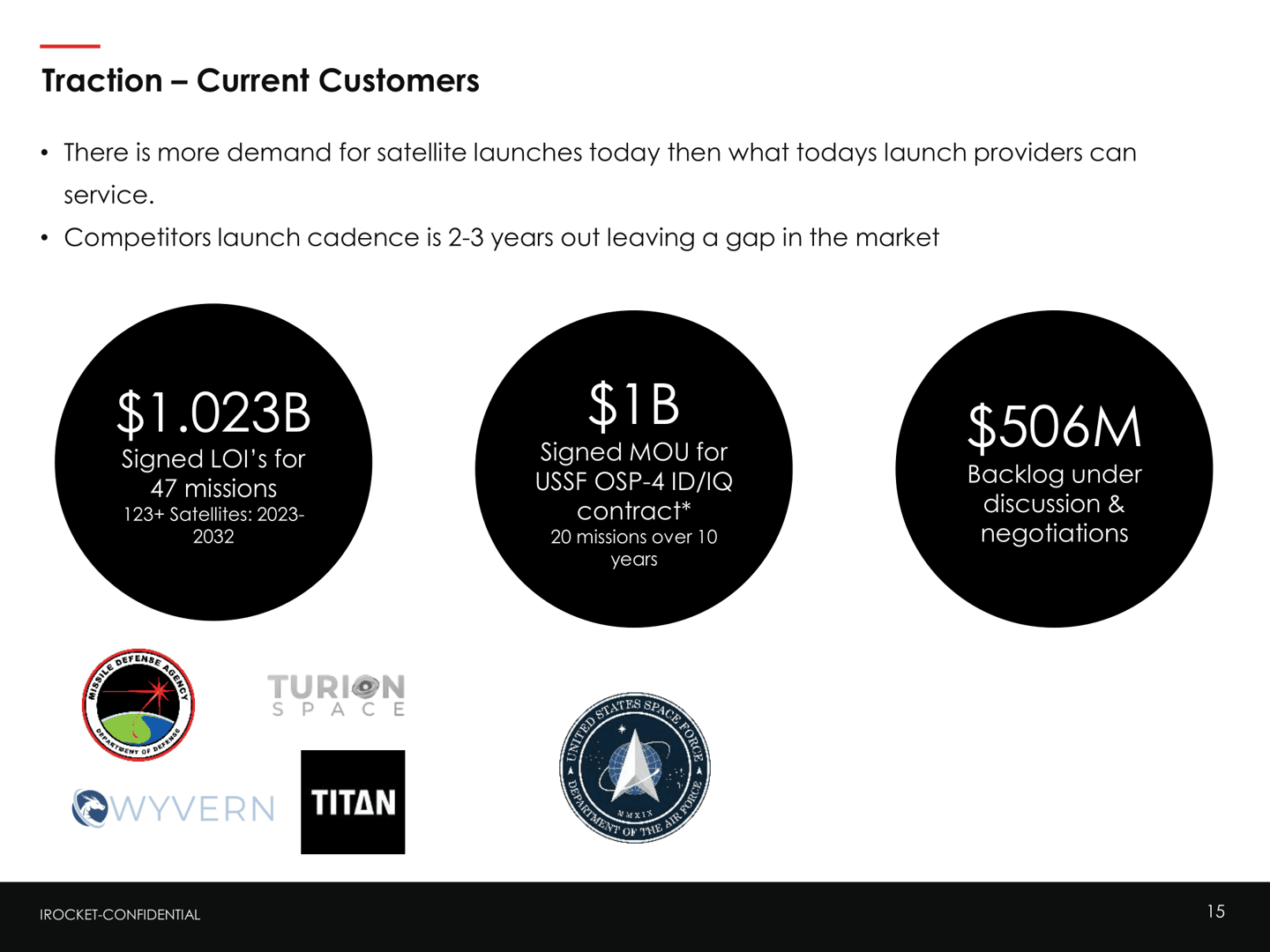
It also landed Turion Space as its first commercial customer, signing them to a multi-launch agreement in November. According to the terms of the agreement, iRocket will send 20 of Turion’s forthcoming Droid satellites to orbit across 10 launches.
Customers
Current Customers
Future Customers
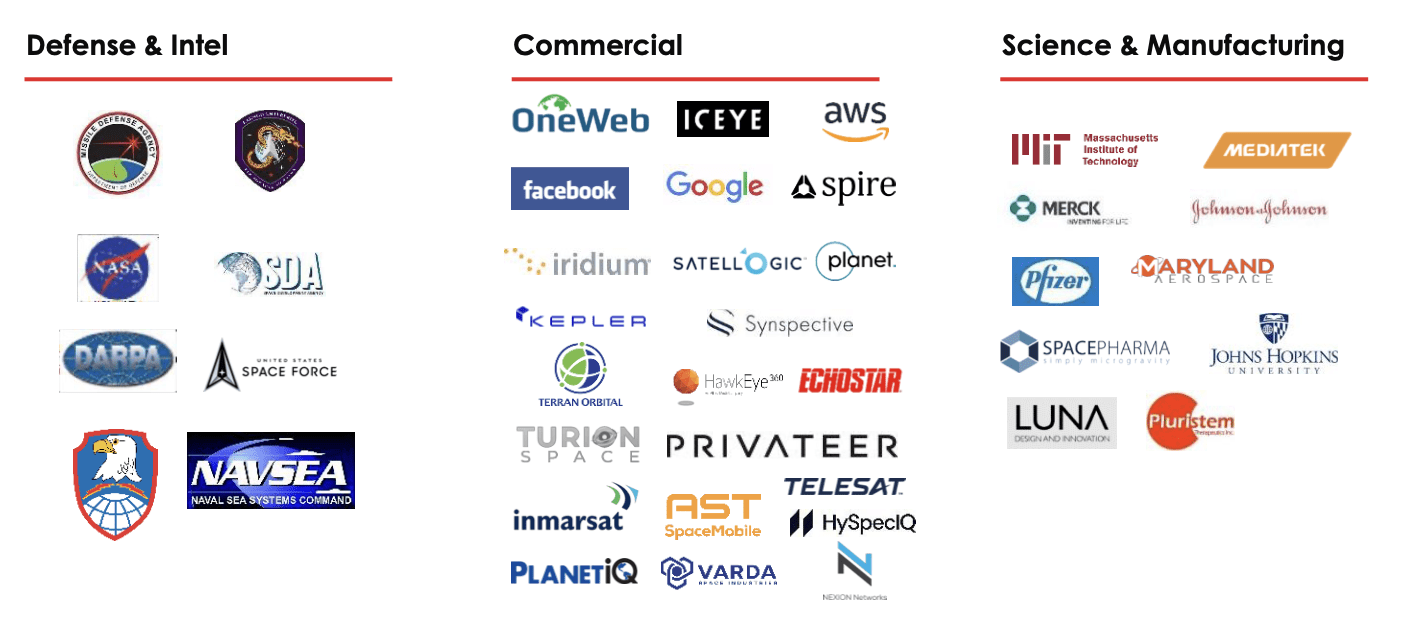 Customers want to deploy IoT, 5G, BioTech, Aerospace & Defense satellites. Almost all Small sat companies are utilizing expendable rockets and can benefit from using iRocket's reusable rockets.
Business model
Though the launch arena is crowded, no one is targeting dedicated launch for the medium –small market (300-1000 kg). This results in a 2-3 year wait for ride-share launches. iRocket looks to service this community. The company’s goal is to offer customers the ability to launch to a precise orbit on their schedules in under 12 hours, and they stated that the dedicated launch for any medium size payload will be offered at an industry low $200/kg.
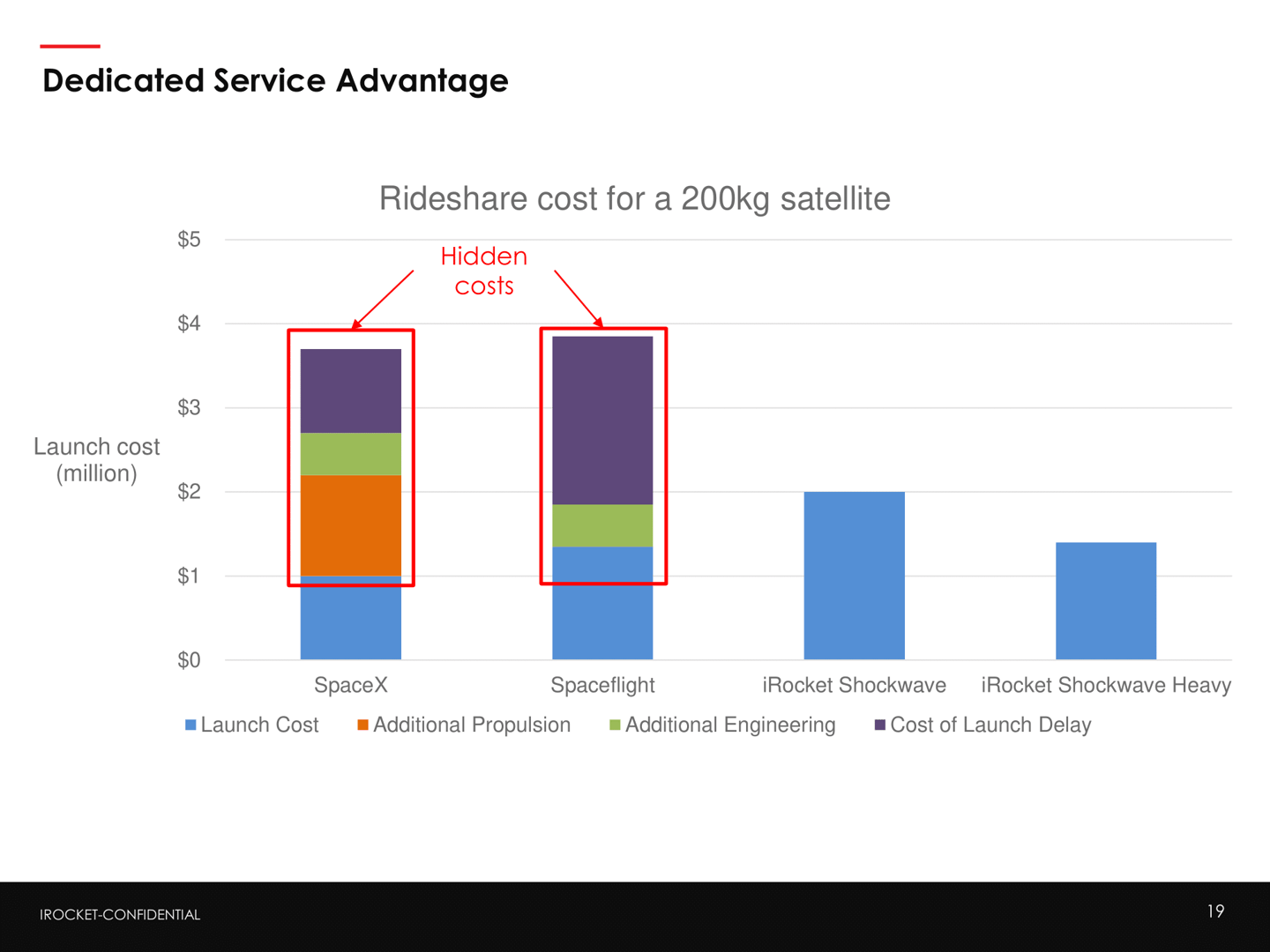
iRocket’s low cost offering comes as a result of its fully reusable small launch vehicle technology. Reusable rockets allow the company to amortize expenses over 20 launches, reducing average costs of production and launch. Reusability will also help the business scale, because the fast turnaround time will result in higher revenue per rocket, which in turn will justify building more
Competition
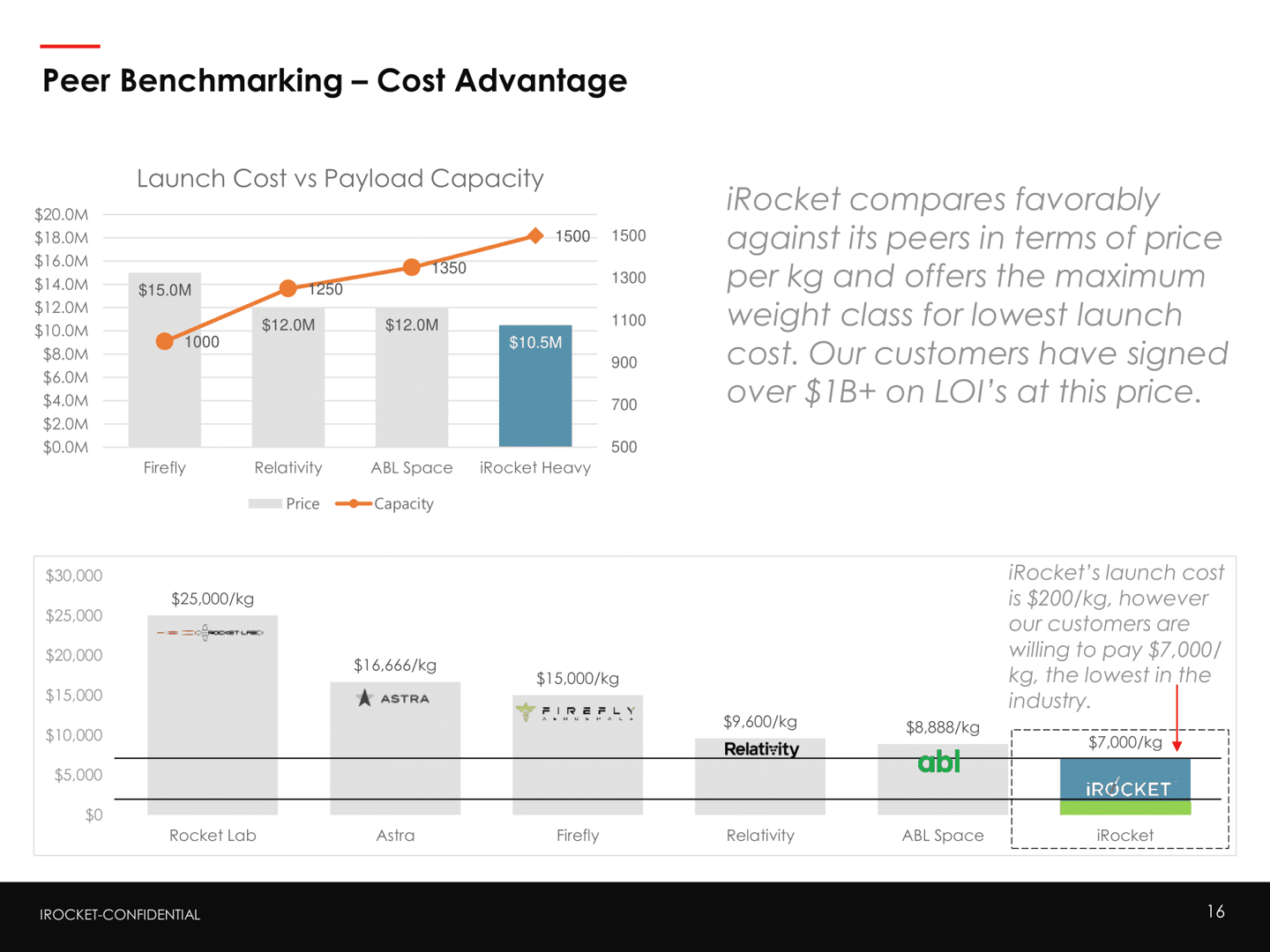
Based off scale, SpaceX is iRocket’s biggest competitor, but it is not clear however, if they will be able to meet demand without considerable customer wait times. iRocket compares favorably against its peers in terms of price per kg and offers the maximum weight class for lowest launch cost. Its customers have signed over $1B+ on LOI’s at this price.
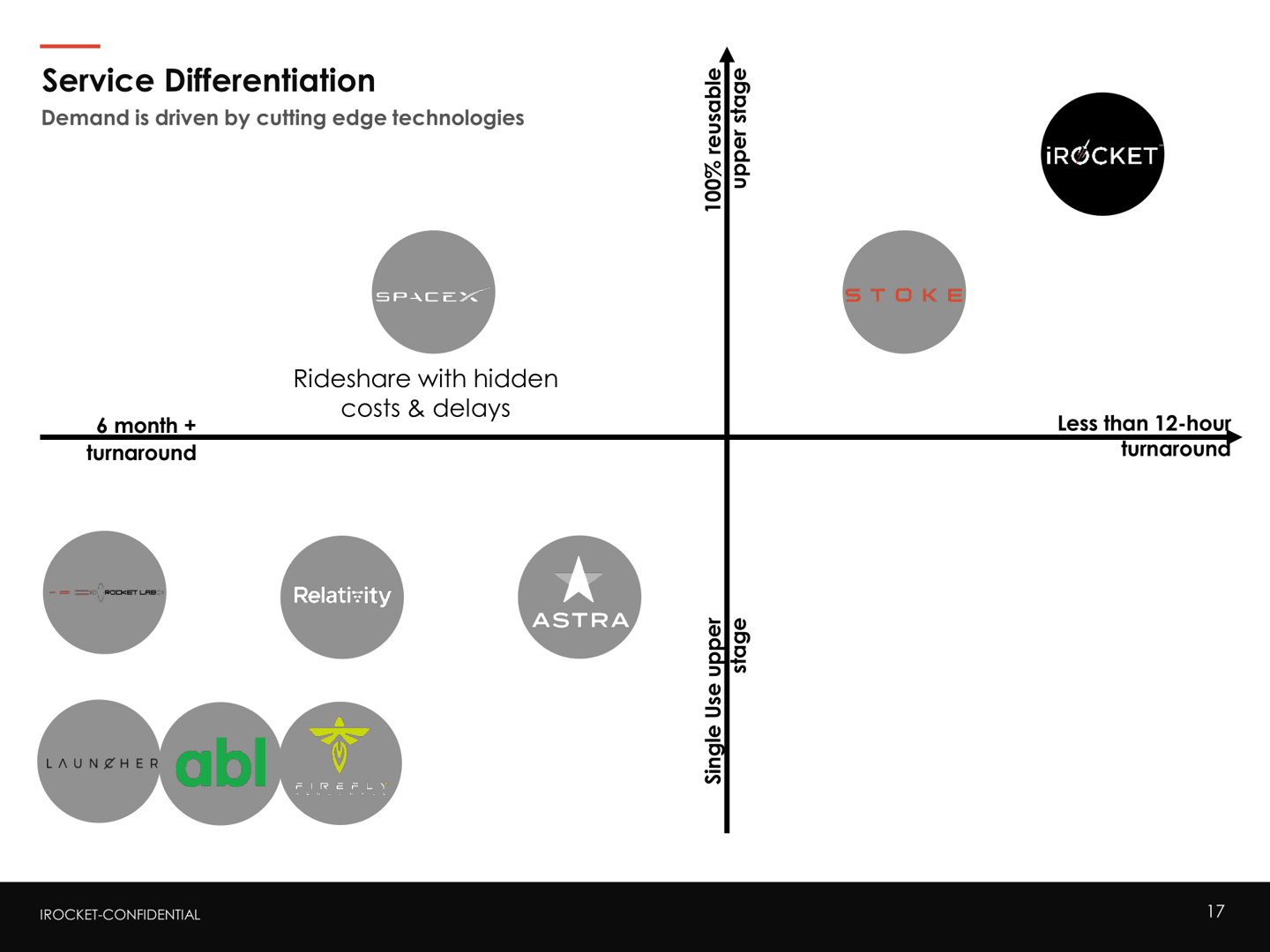
iRocket believes that its edge will come from its reusable rocket engine with a setup that allows for high performance and long life. In contrast, competitors have modified expendable engines or converted into reusable ones, with non-optimal setup and limited life.
Vision and strategy
Funding
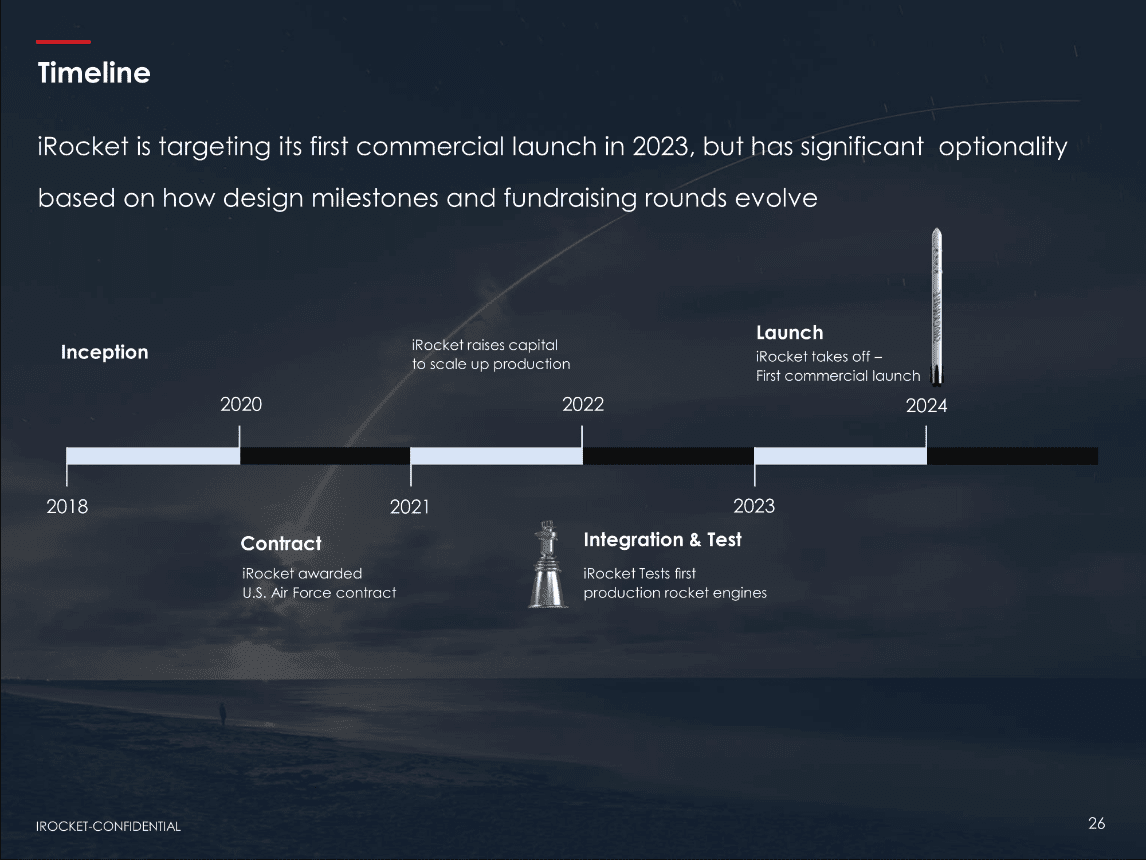
iRocket intends to use the funds of this seed round to scale up production to progress toward their goal of integration and testing in 2023, when its first rocket engines will be produced. The company expects to achieve its first commercial launch in 2024.
Disclaimers
In addition to the carried interest Republic Deal Room Advisor LLC is entitled to for the syndicated investments it organizes, certain principals of Republic Deal Room Advisor LLC may have a personal interests in these investments, as disclosed below. When making an investment decision please review any applicable disclosures as they represent pre-existing financial interests held by those principals of Republic Deal Room Advisor LLC.
We do not represent that the information contained herein is accurate or complete, and it should not be relied upon as such. Opinions expressed herein are subject to change without notice. Certain information contained herein (including any forward-looking statements and economic and market information) has been obtained from and/or prepared by the Company or other third-party sources and in certain cases has not been updated through the date hereof. While such sources are believed to be reliable, Republic Deal Room Advisor LLC does not assume any responsibility for the accuracy or completeness of such information. Republic Deal Room Advisor LLC does not undertake any obligation to update the information contained herein as of any future date.