Republic Republic Republic
  • Log in
Open account
Oops! We couldn’t find any results...
Can’t find a deal? Try advanced search.
Is something missing? Add your suggestion here.
Primary market Live deals Trading Buy and sell Republic Note Own a piece of Republic's upside
Republic Ventures Opportunities for accredited investors
Republic Capital Multi-stage venture firm
Wallet Manage your digital assets Mobile app Available on iOS or Android Learning center Explore investor resources FAQ Get your questions answered
Capital fundraising Raise on Republic Tokenized assets Design, launch, manage tokenized assets Sharedrops Gift equity as a reward Founder Academy A complete guide to raising funds
Advisory Access veteran web3 advisors Infrastructure Stake your digital assets Tokenization Deploy your assets on-chain
Republic Capital In-house Venture Capital fund Broker dealer Regulated capital services
Republic Republic Republic
Oops! We couldn’t find any results...
Can’t find a deal? Try advanced search.
Is something missing? Add your suggestion here.
  • US

  • Log in
  • Open account
All investors
Primary market Live deals Trading Buy and sell
Republic Note Own a piece of Republic's upside
Accredited only
Republic Ventures Opportunities for accredited investors
Institutional
Republic Capital Multi-stage venture firm
More
Wallet Manage your digital assets Mobile app Available on iOS or Android Learning center Explore investor resources FAQ Get your questions answered
Growth capital solutions
Capital fundraising Raise on Republic Tokenized assets Design, launch, manage tokenized assets Sharedrops Gift equity as a reward Founder Academy A complete guide to raising funds
Web3 services
Advisory Access veteran web3 advisors Infrastructure Stake your digital assets
Tokenization Deploy your assets on-chain
Institutional services
Republic Capital In-house Venture Capital fund
Broker dealer Regulated capital services

44 East isn't accepting new investments

Explore new investment opportunities:

View companies raising now

44 East

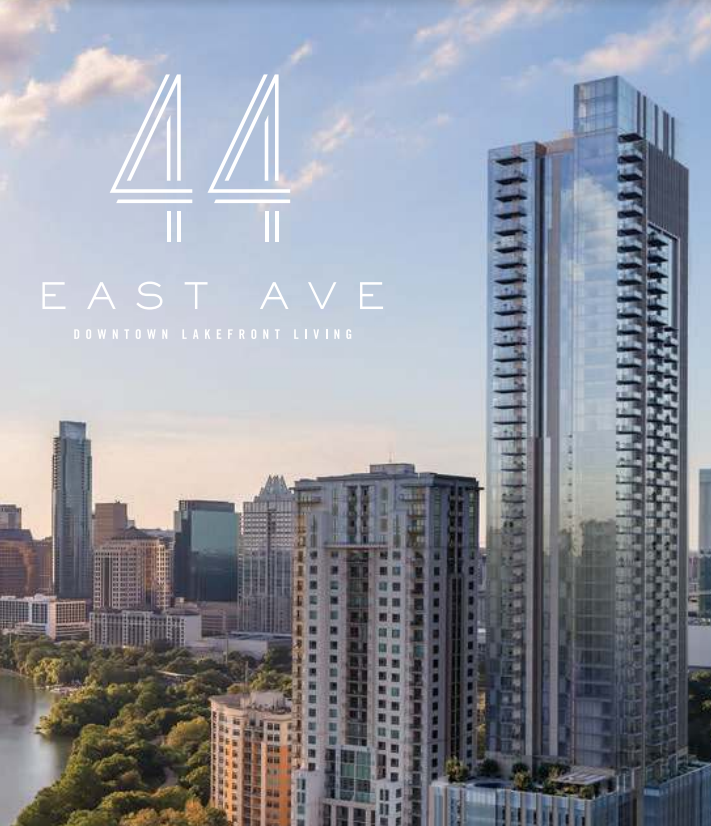
Invest in 44 East, one of Austin's most spectacular new residential condos.
Real Estate B2C Residential Real Estate
Facebook Telegram Twitter LinkedIn
Featured image of 44 East
44 East has withdrawn its campaign
All investments have
been refunded.

Check out other startups
Invest in 44 East
Campaign closed

Open for investment

Investors in 44 East also invested in these companies. View more
Logo of Rentberry

Rentberry

Invest Pre-IPO in the AI Revolution Transforming $13...

Republic Funding Portal · Reg CF
Logo of  Metaintro

Metaintro

The Bloomberg of Labor Markets - AI-powered workforc...

Republic Funding Portal · Reg CF
Logo of Lumida Wealth

Lumida Wealth

Lumida is Scaling. Invest in the AI Platform Disrupt...

Republic Funding Portal · Reg CF
Logo of The Sports Bra

The Sports Bra

The world's first sports bar fully dedicated to wome...

Republic Funding Portal · Reg CF
Logo of Code Blue

Code Blue

AI that calls for help when you can’t

Republic Funding Portal · Reg CF
Loading...
Pitch Discussion 99 Updates 3 Reviews 125
Invest Invest in 44 East
Facebook Telegram Twitter LinkedIn
Property Offering Market
About Team Press FAQ Risks Discussion

Documents

Republic (OpenDeal Portal LLC, CRD #283874) is hosting this Reg CF securities offering by Compound Projects, LLC Series #44 East. View the official SEC filing and all updates:
Official SEC Logo Form C SEC.gov
Company documents
44 East IPA 44 East Form C.pdf
Loading

Hear from some of the 0 investors in 44 East


Show more

Highlights


  • Potential returns from rental income & profit from the sale of the property
  • Austin is the #1 place to live according to US World & News
  • Offering equity interests in a 1 bedroom, 1 bath condominium at 44 East
  • One of Austin's newest and most inspiring developments
  • A mix of spectacular indoor and outdoor amenity space
  • Austin home prices have risen 27.7% (Zillow) since our contract date

Property


A study in urban sophistication, 44 East Ave, a 49-story, 322-unit residential condominium has been designed to make the most of the unique location and to fully capture the spectacular views of Lady Bird Lake and downtown Austin — a bridge between the natural environment and the city. Every detail of each floor plan has been carefully considered and designed to take advantage of the expansive view from each home.

A multitude of gathering spaces comprise over 13,000 square feet of beautiful common areas and amenity spaces, all designed by award-winning architect Michael Hsu Office of Architecture. Outside, “green” exterior walls and massive heritage trees blend seamlessly with the lake, park, and Austin’s downtown.

The lobby is highlighted by the glass atrium which amplifies the neighboring park, water, and urban settings.

* All images are renderings

Our Unit

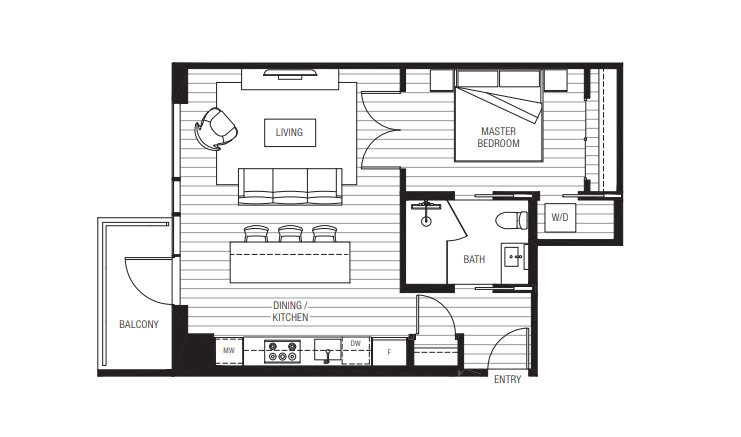
Unit #2211, a 768 square foot, one bedroom, one bath apartment with South-facing views of Lady Bird Lake.

The kitchen includes premium Bosch appliances with Itakraft millwork and cabinetry that is both elegant and more efficient than is typically found in condominium homes.

The elegant bathroom includes engineered stone tile blanketing the walls and floor.

* All images are renderings.

Floor Plan

Unit 2211 | 768 Sq. Ft. | 1 Bedroom | 1 Bathroom    

Offering


We think everybody should be able to participate in the growth and prosperity of the cities and neighborhoods they are helping to build.

Compound is the easy way to build a diversified portfolio of beautiful apartments in some of the world's best cities. Compound slices each apartment into 100,000 equity interests so investors can realize the economic benefits of ownership without the hassles and headaches. Receive potential dividends from rental income and build wealth through potential appreciation.

Financial Overview

On January 7th, 2020 we entered into a purchase and sale agreement to acquire unit 2211 for $570,750. We have estimated a total capitalization for the acquisition to be $645,000 which includes closing costs associated with the purchase of the property, offering costs, (for this offering and other equity offerings), fees paid to Republic, and operating and capital reserves. In the event that we have overestimated the total capital required, we intend to distribute any excess capital to investors. The closing of the acquisition is expected to take place in the Fall of 2021.

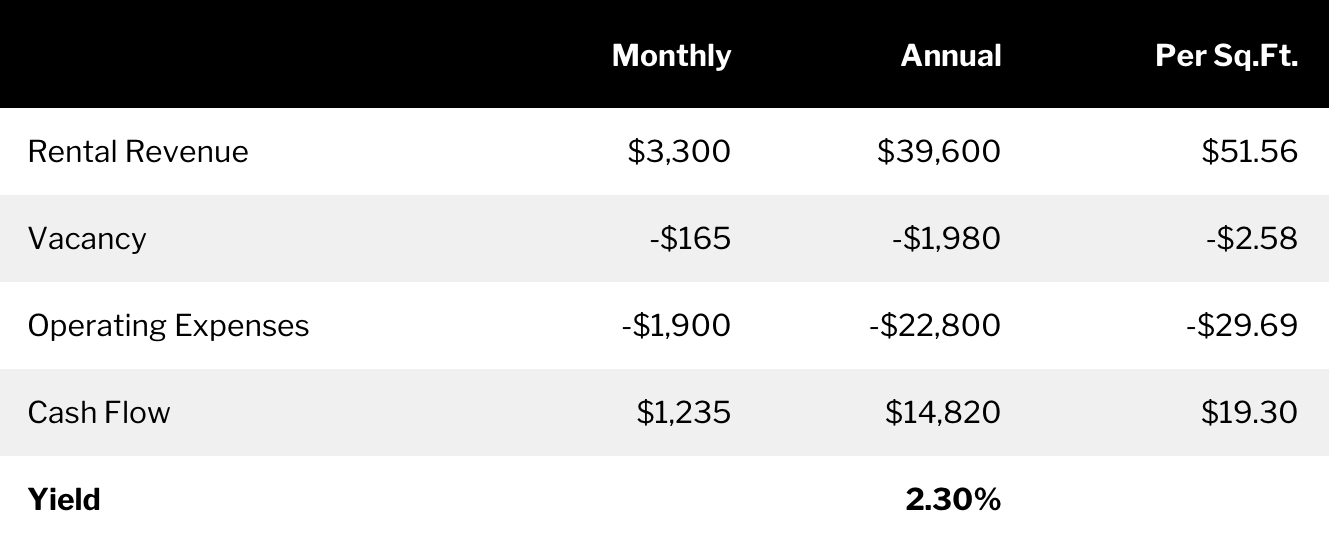
Following the completion of the purchase and sale, we intend to lease the apartment and operate as a traditional rental unit. Once the property is rented, we intend to make semi-annual dividend payments based on cash available.

* All financial figures are estimates only. These estimates are not based on actual investment results and are not guaranteed of future results.

Returns

We intend to hold the property for a period of 3-5 years after we complete the acquisition. Total return on investment will consist of a combination of current income that will be received during the time we hold this property and capital appreciation that may be realized when we sell the property. 

Market


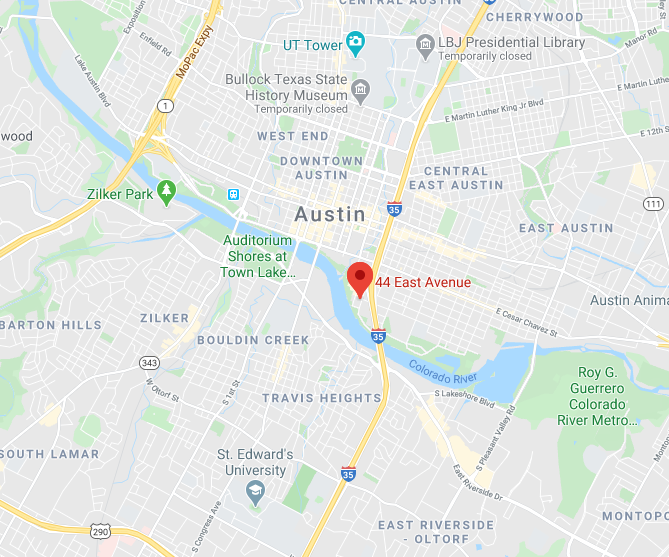
44 East Avenue, Austin, Texas

Austin

Austin is the "Live Music Capital of the World", the capital of Texas and also the home of the University of Texas at Austin. Over the past 25 years, Austin has emerged as a center for technology and business. A number of Fortune 500 companies have headquarters or regional offices in Austin, including Amazon, Apple, Google, and Whole Foods Market. Dell's worldwide headquarters is located in the nearby suburb of Round Rock.

Inc.'s recently published “50 Best U.S. Cities for Starting a Business in 2020,” Austin topped the charts at number one (which surprised nobody). Rankings considered a number of factors, including job creation, early-stage funding deals, and population growth, among other indicators.

It isn't just the corporate and startup types who love Austin, but plenty of celebrities are choosing to make Austin their homes, too. Matthew McConaughey, Ciara, Owen Wilson, Sandra Bullock, Lance Armstrong, Andy Roddick and Elijah Wood are long-time residents.

Rainey Street Historic District

The Rainey Street Historic District is a neighborhood of historic homes, many of them bungalow style, in downtown Austin. Rainey Street is lined with craftsman houses that are actually bars, string-light covered patios, food trucks, craft cocktails, and a constant stream of people looking to party.

But fear not, Rainey Street has definitely not lost its charm; homey bungalows and fairy lights line the patios. This area embodies the ideal combination; giving you neighborhood feels and an itch to party all at the same time.

Market Data

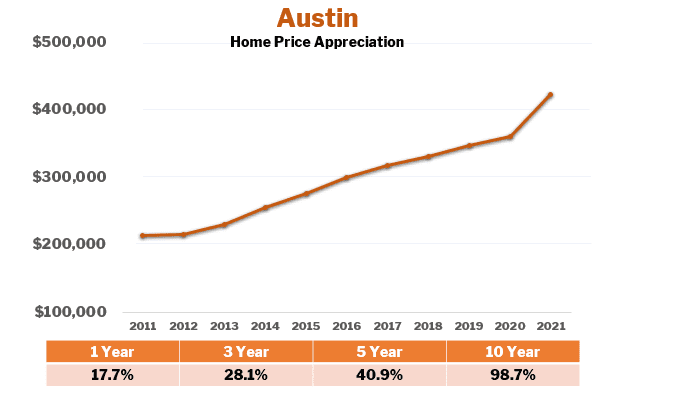
Home values in Austin have appreciated by 98.7% over the past 10 years including 17.7% over the past year. 

* Zillow Home Value Index (ZHVI) for the Austin MSA: A smoothed, seasonally adjusted measure of the typical home value and market changes across a given region and housing type. Based on data as of 3/31/21.

Property details


Name
44 East
Address
44 East Avenue
Austin, TX
Type
Condo
Investment profile
New development
Year built
2021
The property was built (or is expected to be completed) in 2021.
Total capitalization
$645,000
The total cost of the property or project.
Anticipated hold period
3-5 Years
The amount of time the property will be held before being sold.
Annual dividend
2.3%
Financial ratio that shows how much is paid in dividends each year relative to the capital invested. Note: this is an estimate.

Deal terms


Minimum investment

$258

The smallest investment amount that 44 East is accepting.
Learn more

Maximum investment

$64,500

The largest investment amount that 44 East is accepting.
Learn more

Funding goal

$443.71K

44 East must achieve its minimum goal of $32.25K before the deadline. The maximum amount the offering can raise is $443.71K.
Learn more

Deadline
44 East needs to reach their minimum funding goal before the deadline ( ). If they don’t, all investments will be refunded.
Learn more
Type of security

Crowd IPA

Crowd IPA (Interests Purchase Agreement) is a simple agreement to acquire membership units of a limited liability company.
Learn more

Price per security

$6.45

The price of each membership unit.
Learn more

How it works

Documents

Republic (OpenDeal Portal LLC, CRD #283874) is hosting this Reg CF securities offering by Compound Projects, LLC Series #44 East. View the official SEC filing and all updates:
Official SEC Logo Form C SEC.gov
Company documents
44 East IPA 44 East Form C.pdf

About

Legal Name
Compound Projects, LLC Series #44 East
Founded
Sep 2019
Form
Delaware LLC
Employees
0
Website
republic.co/real-estate
Social Media
Headquarters
Google Map location of of 44 East
335 Madison Avenue 16 , New York, NY
Headquarters
335 Madison Avenue, 16, New York, NY, United States 10017

Team
Everyone helping build , not limited to employees

Profile picture of Janine Yorio
Janine Yorio
Chief Executive Officer
Profile picture of Jesse Stein
Jesse Stein
Chief Operating Officer
Janine Yorio
Chief Executive Officer
Jesse Stein
Chief Operating Officer

Press

Austin's Top Chef competitor to open Mexican eatery in tr...
CultureMap Austin CultureMap Austin
·
Apr 30, 2021

A taste of the Yucatan is coming to the Rainey Street District, care of an Austin-based top chef. Chef Gabe Erales, curre...

What we love about the Historic Rainey Street District
Medium Medium
·
Jan 16, 2020

It's as clear as day why we're big fans of Rainey. When serial nightclub owner Bob Woody (also known as the Mayor of Aust...

Point, Click, Own: Firms Transform How to Buy Investment ...
WSJ WSJ
·
Jan 7, 2020

This article is part of a Property Report package looking at small investors and real estate, from new ways for individua...

FAQ

What if a property needs more money? Are there any capital calls?

What if a property needs more money? Are there any capital calls?

No additional cash outlays or capital calls are required.  In the rare event that shortfalls exceed the reserves, then Compound can lend money to the project to fund the shortfall.

What fees does Compound charge?

What fees does Compound charge?

Compound does not charge any asset management fees. We also do not take a piece of the profits.

What tax forms do I receive?

What tax forms do I receive?

At the end of every year, investors will receive an annual 1099-DIV.

Who handles property management?

Who handles property management?

Compound typically engages local property management firms to handle leasing and day to day property management. In addition, most of our properties are in full service condominium buildings that provide maintenance services.

What am I investing in?

What am I investing in?

You are investing in a single condominium unit, the ownership of which has been divided into 100,000 equity interests. For example, if you buy 10,000 interests, you would own 10% of that condominium’s stock.

What is Compound?

What is Compound?

Compound Asset Management, LLC ("Compound"), a subsidiary of Republic Real Estate, is a real estate asset management company led by an experienced team of real estate veterans. Compound is the managing member of Compound Projects, a real estate investment company that acquires and manages residential condominiums in major U.S. real estate markets.

Still have questions? Check the discussion section.
Show all FAQ

Risks

We anticipate involvement in a variety of litigation.
We anticipate involvement in a range of legal actions in the ordinary course of business. These actions may include eviction proceedings and other landlord-tenant disputes, challenges to title and ownership rights and issues with local housing officials arising from the condition or maintenance of one or more of our residential properties. These actions can be time consuming and expensive. We cannot assure you that we will not be subject to expenses and losses that may adversely affect our operating results.
The U.S. Securities and Exchange Commission does not pass upon the merits of any securities offered or the terms of the offering, nor does it pass upon the accuracy or completeness of any offering document or literature.
You should not rely on the fact that our Form C is accessible through the U.S. Securities and Exchange Commission’s EDGAR filing system as an approval, endorsement or guarantee of compliance as it related to this Offering.
Neither the Offering nor the Securities have been registered under federal or state securities laws, leading to an absence of certain regulation applicable to the Company.
No governmental agency has reviewed or passed upon this Offering, the Company or any Securities of the Company. The Company also has relied on exemptions from securities registration requirements under applicable state securities laws. Investors in the Company, therefore, will not receive any of the benefits that such registration would otherwise provide. Prospective Investors must therefore assess the adequacy of disclosure and the fairness of the terms of this Offering on their own or in conjunction with their personal advisors. Compliance with the criteria for securing exemptions under federal securities laws and the securities laws of the various states is extremely complex, especially in respect of those exemptions affording flexibility and the elimination of trading restrictions in respect of securities received in exempt transactions and subsequently disposed of without registration under the Securities Act or state securities laws.
The Company has the right to limit individual Investor commitment amounts based on the Company’s determination of an Investor’s sophistication.
The Company may prevent any Investor from committing more than a certain amount in this Offering based on the Company’s determination of the Investor’s sophistication and ability to assume the risk of the investment. This means that your desired investment amount may be limited or lowered based solely on the Company’s determination and not in line with relevant investment limits set forth by the Regulation CF rules. This also means that other Investors may receive larger allocations of the Offering based solely on the Company’s determination.
The Company has the right to extend the Offering deadline. The Company has the right to end the Offering early.
The Company may extend the Offering deadline beyond what is currently stated herein. This means that your investment may continue to be held in escrow while the Company attempts to raise the Target Offering Amount even after the Offering deadline stated herein is reached. While you have the right to cancel your investment in the event the Company extends the Offering, if you choose to reconfirm your investment, your investment will not be accruing interest during this time and will simply be held until such time as the new Offering deadline is reached without the Company receiving the Target Offering Amount, at which time it will be returned to you without interest or deduction, or the Company receives the Target Offering Amount, at which time it will be released to the Company to be used as set forth herein. Upon or shortly after release of such funds to the Company, the Securities will be issued and distributed to you. The Company may also end the Offering early; if the Offering reaches its target Offering amount after 21-calendary days but before the deadline, the Company can end the Offering with 5 business days’ notice. This means your failure to participate in the Offering in a timely manner, may prevent you from being able to participate – it also means the Company may limit the amount of capital it can raise during the Offering by ending it early.
The Company has the right to conduct multiple closings during the Offering.
If the Company meets certain terms and conditions, an intermediate close of the Offering can occur, which will allow the Company to draw down on half of the proceeds committed and captured in the Offering during the relevant period. The Company may choose to continue the Offering thereafter. Investors should be mindful that this means they can make multiple investment commitments in the Offering, which may be subject to different cancellation rights. For example, if an intermediate close occurs and later a material change occurs as the Offering continues, Investors whose investment commitments were previously closed upon will not have the right to re-confirm their investment as it will be deemed to have been completed prior to the material change.
Both we and the Manager have limited operating history, which makes our future performance difficult to predict.
Both we and the Manager have limited operating history. You should consider an investment in our Interests in light of the risks, uncertainties and difficulties frequently encountered by other newly formed companies with similar objectives. To be successful in this market, we and the Manager must, among other things: ● identify and acquire real estate assets consistent with our investment strategies; ● increase awareness of our name within the investment products market; ● attract, integrate, motivate and retain qualified personnel to manage our day-to-day operations; and ● build and expand our operations structure to support our business. We have minimal operating capital and for the foreseeable future will be dependent upon our ability to finance our operations from the sale of equity or other financing alternatives. The failure to successfully raise operating capital, could result in our bankruptcy or other event which would have a material adverse effect on us and our Investors. There can be no assurance that we will achieve our investment objectives.
Competition could limit our ability to acquire attractive investment opportunities and increase the costs of those opportunities which may adversely affect us, including our profitability, and impede our growth.
The real estate market is highly competitive. We will compete with other entities engaged in real estate investment activities to locate suitable properties to acquire and purchasers for our properties. These competitors will include REITs, private real estate funds, domestic and foreign financial institutions, life insurance companies, pension trusts, partnerships and individual investors. Some of these competitors have substantially greater marketing and financial resources than we will have and generally may be able to accept more risk than we can prudently manage, including risks with respect to the creditworthiness of tenants. In addition, these same entities seek financing through similar channels to our Company. This competition could increase prices for properties of the type we may pursue and adversely affect our profitability and impede our growth.
An investment in an Offering constitutes only an investment in that Series and not in the Company or directly in any Property.
An Investor in an Offering will acquire an ownership interest in the Series related to that Offering and not, for the avoidance of doubt, in (i) the Company, (ii) any other Series, (iii) the Manager, (iv) directly in a Property associated with the Series or any Property owned by any other Series. This results in limited voting rights of the Investor, which are solely related to a particular Series, and are further limited by the Operating Agreement, described further herein. Investors will have voting rights only with respect to certain matters, primarily relating to amendments to the Operating Agreement that would adversely change the rights of the Interest Holders and removal of the Manager for “cause.” The Manager thus retains significant control over the management of the Company, each Series and the Property. Furthermore, because the Interests in a Series do not constitute an investment in the Company as a whole, holders of the Interests in a Series are not expected to receive any economic benefit from, or be subject to the liabilities of, the assets of any other Series. In addition, the economic interest of a holder in a Series will not be identical to owning a direct undivided interest in a Property.
Each of our Company’s Series will hold an interest in a single property, a non-diversified investment.
We intend for each of our Series, through its subsidiaries, to own and operate a single Property. Each Series’ return on its investment will depend on the revenues generated by such Property and the appreciation of the value of the Property over time. These, in turn, are determined by such factors as national and local economic cycles and conditions, financial markets and the economy, competition from existing properties as well as future properties and government regulation (such as tax and building code charges). The value of a Property may decline substantially after a Series purchases its interest in it.
There is currently no trading market for our securities. An active market in which investors can resell their Interests may not develop.
There is currently no public trading market for any Interests, and an active market may not develop or be sustained. If an active public or private trading market for our securities does not develop or is not sustained, it may be difficult or impossible for you to resell your Interests at any price. Accordingly, you may have no liquidity for your Interests, particularly if the Property in respect of that Interest is never sold. Even if a public or private market does develop, the market price of the Interests could decline below the amount you paid for your Interests.
There may be state law restrictions on an Investor’s ability to sell the Interests.
Each state has its own securities laws, often called “blue sky” laws, which (1) limit sales of securities to a state’s residents unless the securities are registered in that state or qualify for an exemption from registration and (2) govern the reporting requirements for broker-dealers and stockbrokers doing business directly or indirectly in the state. Before a security is sold in a state, there must be a registration in place to cover the transaction, or it must be exempt from registration. We do not know whether our securities will be registered, or exempt, under the laws of any states. A determination regarding registration will be made by broker-dealers, if any, who agree to serve as the market-makers for our Interests. There may be significant state blue sky law restrictions on the ability of Investors to sell, and on purchasers to buy, our Interests. Investors should consider the resale market for our securities to be limited. Investors may be unable to resell their securities, or they may be unable to resell them without the significant expense of state registration or qualification.
There can be no guarantee that the Company will reach its funding target from potential investors with respect to any Series or future proposed Series.
Due to the start-up nature of the Company and the Manager, there can be no guarantee that the Company will reach its funding target from potential investors with respect to any Series or future proposed Series. In the event the Company does not reach a funding target, it may not be able to achieve its investment objectives by acquiring additional properties through the issuance of further Series Interests and monetizing them to generate distributions for Investors. In addition, if the Company is unable to raise funding for additional Series, this may impact any Investors already holding Interests as they will not see the benefits which arise from economies of scale following the acquisition by other Series of additional Properties.
We may not be able to control our operating costs or our expenses may remain constant or increase, even if our revenues do not increase, causing our results of operations to be adversely affected.
Factors that may adversely affect our ability to control operating costs include the need to pay for insurance and other operating costs, including real estate taxes, which could increase over time, the need periodically to repair, renovate and re-lease space, the cost of compliance with governmental regulation, including zoning, environmental and tax laws, the potential for liability under applicable laws, interest rate levels, principal loan amounts and the availability of financing. If our operating costs increase as a result of any of the foregoing factors, our results of operations may be adversely affected. The expense of owning and operating a property is not necessarily reduced when circumstances such as market factors and competition cause a reduction in income from a property. As a result, if revenues decline, we may not be able to reduce our expenses accordingly. Costs associated with real estate investments, such as real estate taxes, insurance, loan payments and maintenance, generally will not be reduced even if a property is not fully occupied or other circumstances cause our revenues to decrease. If we are unable to decrease operating costs when demand for our properties decreases and our revenues decline, our financial condition, results of operations and our ability to make distributions to our Investors may be adversely affected.
Competition may impede our ability to attract or retain tenants or re-lease space, which could adversely affect our results of operations and cash flow.
The leasing of residential real estate is highly competitive. We will compete based on a number of factors that include location, rental rates, security, suitability of a property’s design to prospective tenants’ needs and the manner in which a property is operated and marketed. The number of competing properties could have a material effect on our occupancy levels, rental rates and on the operating expenses of certain of our properties. If other lessors and developers of similar spaces in our markets offer leases at prices comparable to or less than the prices we offer on the properties we acquire, we may be unable to attract or retain tenants or re-lease space in our properties, which could adversely affect our results of operations and cash flow.
The terms of the Operating Agreement make it so that it may adversely affect our inclination to end our relationship with the Manager.
Under the terms of the Operating Agreement, we may terminate the Manger for “cause” following an affirmative vote of two-thirds of the Company’s Investors. The term “cause” is limited to those circumstances described under “The Manager and the Operating Agreement-Term and Removal of the Manager” which include certain material breaches, certain acts constituting fraud, misappropriation of funds, embezzlement and gross negligence, certain bankruptcy matters and the dissolution of the Manager. Unsatisfactory financial performance does not constitute “cause” under the Operating Agreement. These provisions make it difficult to end the Company’s relationship with the Manager, even if we believe the Manager’s performance is not satisfactory.
Disruptions in the financial markets or deteriorating economic conditions could adversely impact the residential real estate market, which could hinder our ability to implement our business strategy and generate returns to you.
The success of our business is significantly related to general economic conditions and, accordingly, our business could be harmed by an economic slowdown and downturn in real estate asset values. Periods of economic slowdown or recession, significantly rising interest rates, declining employment levels, decreasing demand for real estate, declining real estate values, or the public perception that any of these events may occur, may result in a general decline in acquisition, disposition and leasing activity, as well as a general decline in the value of real estate and in rents, which in turn would reduce the value of our Interests. During an economic downturn, it may also take longer for us to dispose of real estate investments or the selling prices may be lower than originally anticipated. As a result, the carrying value of our real estate investments may become impaired and we could record losses as a result of such impairment or we could experience reduced profitability related to declines in real estate values or rents. Further, as a result of our target leverage, our exposure to adverse general economic conditions will be heightened. All the conditions described above could adversely impact our business performance and profitability, which could result in our failure to make distributions to our investors and could decrease the value of an investment in us. In addition, in an extreme deterioration of our business, we could have insufficient liquidity to meet our debt service obligations when they come due in future years. If we fail to meet our payment or other obligations under secured loans, the lenders will be entitled to proceed against the collateral granted to them to secure the debt owed.
You may be more likely to sustain a loss on your investment because the Manager does not have as strong an economic incentive to avoid losses as do managers who have made significant equity investments in their companies.
Because it has not made a significant equity investment in our Company, the Manager will have little exposure to loss in the value of a Series’ Interests. Without this exposure, our investors may be at a greater risk of loss because the Manager does not have as much to lose from a decrease in the value of our Interests as do those Managers who make more significant equity investments in their companies.
Any adverse changes in the Manager’s financial health or our relationship with the Manager or its affiliates could hinder our operating performance and the return on your investment.
The Manager will utilize the Manager’s personnel to perform services on its behalf for us. Our ability to achieve our investment objectives and to pay distributions to our Investors is dependent upon the performance of the Manager and its affiliates as well as the Manager’s real estate professionals in the identification and acquisition of investments, the management of our assets and operation of our day-to-day activities. Any adverse changes in the Manager’s financial condition or our relationship with the Manager could hinder the Manager’s ability to successfully manage our operations and our Properties.
Compliance with governmental laws, regulations and covenants that are applicable to our residential properties may adversely affect our business and growth strategies.
Residential rental properties are subject to various covenants, local laws and regulatory requirements, including permitting and licensing requirements. Local regulations, including municipal or local ordinances, zoning restrictions and restrictive covenants imposed by community developers, may restrict our use of our residential properties and may require us to obtain approval from local officials or community standards organizations at any time with respect to our residential properties, including prior to acquiring any of our residential properties or when undertaking renovations. Among other things, these restrictions may relate to fire and safety, seismic, asbestos-cleanup or hazardous material abatement requirements. We cannot assure you that existing regulatory policies will not adversely affect us or the timing or cost of any future acquisitions or renovations, or that additional regulations will not be adopted that would increase such delays or result in additional costs. Our business and growth strategies may be materially and adversely affected by our ability to obtain permits, licenses and zoning approvals. Our failure to obtain such permits, licenses and zoning approvals could have a material adverse effect on us and cause the value of our Interests to decline.
If the Company’s series limited liability company structure is not respected, then Investors may have to share any liabilities of the Company with all Investors and not just those who hold the same Series as them.
The Company is structured as a Delaware series limited liability company that issues Interests in a separate Series for each Property. Each Series will merely be a separate Series and not a separate legal entity. Under the Delaware Limited Liability Company Act (the “LLC Act”), if certain conditions (as set forth in Section 18-215(b) of the LLC Act) are met, the liability of Investors holding Interests in one Series is segregated from the liability of Investors holding Interests in another Series and the assets of one Series are not available to satisfy the liabilities of other Series. Although this limitation of liability is recognized by the courts of Delaware, there is no guarantee that if challenged in the courts of another U.S. State or a foreign jurisdiction, such courts will uphold a similar interpretation of Delaware corporation law, and in the past certain jurisdictions have not honored such interpretation. If the Company’s series limited liability company structure is not respected, then Investors may have to share any liabilities of the Company with all Investors and not just those who hold the same Series Interests as them. Furthermore, while we intend to maintain separate and distinct records for each Series and account for them separately and otherwise meet the requirements of the LLC Act, it is possible a court could conclude that the methods used did not satisfy Section 18-215(b) of the LLC Act and thus potentially expose the assets of a Series to the liabilities of another Series. The consequence of this is that Investors may have to bear higher than anticipated expenses which would adversely affect the value of their Interests or the likelihood of any distributions being made by a particular Series to its Investors. In addition, we are not aware of any court case that has tested the limitations on inter-series liability provided by Section 18-215(b) in federal bankruptcy courts and it is possible that a bankruptcy court could determine that the assets of one Series should be applied to meet the liabilities of the other Series or the liabilities of the Company generally where the assets of such other Series or of the Company generally are insufficient to meet our liabilities.
Funds from purchasers accompanying subscriptions for the Interests will not accrue interest while in escrow.
The funds paid by an Investor for Interests will be held in a non-interest-bearing escrow account until the admission of the subscriber as an Investor in the applicable Series, if such subscription is accepted. Purchasers will not have the use of such funds or receive interest thereon pending the completion of the Offering. No subscriptions will be accepted, and no Interests will be sold unless valid subscriptions for the Offering are received and accepted prior to the termination of the applicable Offering. If we terminate an Offering prior to accepting a subscriber’s subscription, escrowed funds will be returned promptly, without interest or deduction, to the proposed Investor.
If the Company were to be required to register under the Investment Company Act or the Manager were to be required to register under the Investment Advisers Act, it could have a material and adverse impact on the results of operations and expenses of each Series and the Manager may be forced to liquidate and wind up each Series or rescind the Offerings for any of the Series or the offering for any other.
The Company is not registered and will not be registered as an investment company under the Investment Company Act of 1940, as amended (the “Investment Company Act”), and the Manager is not and will not be registered as an investment adviser under the Investment Advisers Act of 1940, as amended (the “Investment Advisers Act”) and the Interests do not have the benefit of the protections of the Investment Company Act or the Investment Advisers Act. The Company, the Manager has taken the position that the Properties are not “securities” within the meaning of the Investment Company Act or the Investment Advisers Act, and thus the Company’s assets will consist of less than 40% investment securities under the Investment Company Act and the Manager is not and will not be advising with respect to securities under the Investment Advisers Act. This position, however, is based upon applicable case law that is inherently subject to judgments and interpretation. If the Company were to be required to register under the Investment Company Act or the Manager were to be required to register under the Investment Advisers Act, it could have a material and adverse impact on the results of operations and expenses of each Series and the Manager may be forced to liquidate and wind up each Series or rescind the Offerings for any of the Series or the offering for any other Series.
Possible Changes in Federal Tax Laws.
The Code is subject to change by Congress, and interpretations of the Code may be modified or affected by judicial decisions, by the Treasury Department through changes in regulations and by the Internal Revenue Service through its audit policy, announcements, and published and private rulings. Although significant changes to the tax laws historically have been given prospective application, no assurance can be given that any changes made in the tax law affecting an investment in any Series of the Company would be limited to prospective effect. For instance, prior to effectiveness of the Tax Cuts and Jobs Act of 2017, an exchange of the Interests of one Series for another might have been a non-taxable ‘like-kind exchange’ transaction, while transactions now only qualify for that treatment with respect to real property. Accordingly, the ultimate effect on an Investor’s tax situation may be governed by laws, regulations or interpretations of laws or regulations which have not yet been proposed, passed or made, as the case may be.
There is no market for the Securities and transfers of the Securities will be subject to material restrictions.
An investment in the Company will require a long-term commitment. The Securities have not been registered under the Securities Act or any state securities laws and are subject to substantial restrictions on transfer and cannot be resold in the United States except pursuant to Rule 501 of Regulation CF. There will be no trading market for any of the Securities and none is expected to develop in the foreseeable future. The Securities may not be sold, pledged or otherwise transferred without registration under the Securities Act and applicable state securities laws or an exemption therefrom. In addition, the Securities are subject to further substantial restrictions on transfer set forth in the Operating Agreement.
We are dependent on the Manager and its affiliates and their key personnel who provide services to us through the Operating Agreement, and we may not find a suitable replacement if the Operating Agreement is terminated, or if key personnel leave or otherwise become unavailable to us, which could have a material adverse effect on our performance.
We do not expect to have any employees and we are completely reliant on the Manager to provide us with investment and advisory services. We expect to benefit from the personnel, relationships and experience of the Manager’s executive team and other personnel and investors of Republic Real Estate and expect to benefit from the same highly experienced personnel and resources we need for the implementation and execution of our investment strategy. Each of our executive officers will also serve as an officer of Republic Real Estate. The Manager will have significant discretion as to the implementation of our investment and operating policies and strategies. Accordingly, we believe that our success will depend to a significant extent upon the efforts, experience, diligence, skill and relationships of the executive officers and key personnel of the Manager. The executive officers and key personnel of the Manager will evaluate, negotiate, close and monitor our Properties. Our success will depend on their continued service. In addition, we offer no assurance that the Manager will remain the Manager or that we will continue to have access to the Manager’s principals and professionals. If the Operating Agreement is terminated and no suitable replacement is found to manage us, our ability to execute our business plan will be negatively impacted.
The ability of the Manager and its officers and other personnel to engage in other business activities, including managing other similar companies, may reduce the time the Manager spends managing the business of our Company and may result in certain conflicts of interest.
Certain of the Manager’s officers also serve or may serve as officers or employees of Republic Real Estate which intends to be involved in additional business activities outside of the Company. These other business activities may reduce the time these persons spend managing our business. Further, if and when there are turbulent conditions in the real estate markets or distress in the credit markets or other times when we will need focused support and assistance from the Manager, the attention of the Manager’s personnel and our executive officers and the resources of Republic Real Estate may also be required by the additional business activities. In such situations, we may not receive the level of support and assistance that we may receive if we were internally managed or if we were not managed by the Manager. In addition, these persons may have obligations to those entities, the fulfillment of which might not be in the best interests of us, or any of our Investors. Our officers and the Manager may face conflicts of interest in allocating sale, financing, leasing and other business opportunities among the real properties owned by the companies.
The Operating Agreement contains provisions that reduce or eliminate duties (including fiduciary duties) of the Manager.
The Operating Agreement provides that Compound Asset Management, LLC, the Manager, in exercising its rights in its capacity as the Manager, will be entitled to consider only such interests and factors as it desires, including its own interests, and will have no duty or obligation (fiduciary or otherwise) to give any consideration to any interest of or factors affecting us or any of our Investors and will not be subject to any different standards imposed by our bylaws, or under any other law, rule or regulation or in equity. These modifications of fiduciary duties are expressly permitted by Delaware law.
There are conflicts of interest among us, the Manager and its affiliates.
Each of our executive officers is an executive officer of the Manager, which is a subsidiary of Republic Real Estate. All the agreements and arrangements between such parties, including those relating to compensation, are not the result of arm’s-length negotiations. Some of the conflicts inherent in the Company’s transactions with the Manager and its affiliates, and the limitations on such parties adopted to address these conflicts, are described below. The Manager and its affiliates will try to balance our interests with their own. However, to the extent that such parties take actions that are more favorable to other entities than us, these actions could have a negative impact on our financial performance and, consequently, on distributions to Investors and the value of our Interests. The Operating Agreement provides the Manager with broad powers and authority which may exacerbate the existing conflicts of interest among your interests and those of the Manager, its executive officers and its other affiliates. Potential conflicts of interest include, but are not limited to, the following: ● the Manager, its executive officers and its other affiliates may continue to offer other real estate investment opportunities, including other equity offerings similar to this offering, and may make investments in real estate assets for their own respective accounts, whether or not competitive with our business; ● the Manager, its executive officers and its other affiliates will not be required to disgorge any profits or fees or other compensation they may receive from any other business they own separately from us, and you will not be entitled to receive or share in any of the profits or fees or other compensation from any other business owned and operated by the Manager, its executive officers and/or its other affiliates for their own benefit; ● we may engage the Manager or affiliates of the Manager to perform services at prevailing market rates. Prevailing market rates are determined by the Manager based on industry standards and expectations of what the Manager would be able to negotiate with third party on an arm’s length basis; and ● the Manager, its executive officers and its other affiliates are not required to devote all of their time and efforts to our affairs.
We do not have a policy that expressly prohibits our directors, officers, security holders or affiliates from having a direct or indirect pecuniary interest in any transaction to which we or any of our subsidiaries has an interest or engaging for their own account in business activities of the types conducted by us.
We do not have a policy that expressly prohibits our directors, officers, security holders or affiliates from having a direct or indirect pecuniary interest in any asset to be acquired or disposed of by us or any of our subsidiaries or in any transaction to which we or any of our subsidiaries are a party or have an interest. Nor do we have a policy that expressly prohibits any such persons from engaging for their own account in business activities of the types conducted by us. However, our code of business conduct and ethics contains a conflict of interest policy that prohibits our directors, officers and employees from engaging in any transaction that involves an actual or apparent conflict of interest with us. In addition, our management agreement with the Manager does not prevent the Manager and its affiliates from engaging in additional management or investment opportunities, some of which could compete with us.
The Manager’s liability is limited under the Operating Agreement, and we have agreed to indemnify the Manager against certain liabilities. As a result, we may experience poor performance or losses of which the Manager would not be liable.
Pursuant to the Company’s Operating Agreement, the Manager will not assume any responsibility other than to render the services called for thereunder. Our Manager maintains a contractual, as opposed to a fiduciary, relationship with us and our Investors. Under the terms of the Operating Agreement, the Manager, its officers, investors, members, managers, directors and personnel, any person controlling or controlled by the Manager and any person providing sub-advisory services to the Manager will not be liable to us, any subsidiary of ours, or our Investors, members or partners or any subsidiary’s Investors, members or partners for acts or omissions performed in accordance with and pursuant to the Operating Agreement, except by reason of acts or omissions constituting bad faith, willful misconduct, gross negligence, or reckless disregard of their duties under Accordingly, we and our Investors will only have recourse and be able to seek remedies against the Manager to the extent it breaches its obligations pursuant to the Operating Agreement. Furthermore, we have agreed to limit the liability of the Manager and to indemnify the Manager against certain liabilities. We have agreed to reimburse, indemnify and hold harmless the Manager, its officers, investors, members, managers, directors and personnel, any person controlling or controlled by the Manager and any person providing sub-advisory services to the Manager with respect to all expenses, losses, damages, liabilities, demands, charges and claims in respect of, or arising from, acts or omissions of such indemnified parties not constituting bad faith, willful misconduct, gross negligence, or reckless disregard of the Manager’s duties, which has a material adverse effect on us. In addition, we may choose not to enforce, or to enforce less vigorously, our rights under the Operating Agreement because of our desire to maintain our ongoing relationship with the Manager.
Our real estate assets will be subject to the risks typically associated with real estate.
Our real estate assets will be subject to the risks typically associated with real estate. The value of real estate may be adversely affected by a number of risks, including: ● natural disasters such as hurricanes, earthquakes and floods; ● acts of war or terrorism, including the consequences of terrorist attacks; ● adverse changes in national and local economic and real estate conditions; ● an oversupply of (or a reduction in demand for) space in the areas where particular properties are located and the attractiveness of particular properties to prospective tenants; ● changes in governmental laws and regulations, fiscal policies and zoning ordinances and the related costs of compliance therewith and the potential for liability under applicable laws; ● costs of remediation and liabilities associated with environmental conditions affecting properties; and; ● the potential for uninsured or underinsured property losses. The value of each Property is affected significantly by its ability to generate cash flow and net income, which in turn depends on the amount of rental or other income that can be generated net of expenses required to be incurred with respect to a Property. Many expenditures associated with a Property (such as operating expenses and capital expenditures) cannot be reduced when there is a reduction in income from the Property. These factors may have a material adverse effect on the value that we can realize from our assets.
Many factors impact the residential rental market, and if rents do not increase sufficiently to keep pace with rising costs of operations, our income and distributable cash will decline.
The success of our business model depends, in part, on conditions in the residential rental market. Our acquisitions will be premised on assumptions about occupancy levels and rental rates, and if those assumptions prove to be inaccurate, our cash flows and profitability will be reduced.
We may be subject to unknown or contingent liabilities related to properties that we acquire for which we may have limited or no recourse against the sellers.
Assets and entities that we may acquire in the future may be subject to unknown or contingent liabilities for which we may have limited or no recourse against the sellers. Unknown or contingent liabilities might include liabilities for clean-up or remediation of environmental conditions, claims of tenants, vendors or other persons dealing with the acquired entities, tax liabilities and other liabilities whether incurred in the ordinary course of business or otherwise. In the future we may enter into transactions with limited representations and warranties or with representations and warranties that do not survive the closing of the transactions or that only survive for a limited period, in which event we would have no or limited recourse against the sellers of such properties. While we expect to usually require the sellers to indemnify us with respect to breaches of representations and warranties that survive, such indemnification is often limited and subject to various materiality thresholds, a significant deductible or an aggregate cap on losses. As a result, there is no guarantee that we will recover any amounts with respect to losses due to breaches by the sellers of their representations and warranties. In addition, the total amount of costs and expenses that we may incur with respect to liabilities associated with acquired properties and entities may exceed our expectations, which may adversely affect our business, financial condition, results of operations and cash flow. Finally, we expect that indemnification agreements between us and the sellers will typically provide that the sellers will retain certain specified liabilities relating to the assets and entities acquired by us. While the sellers are generally contractually obligated to pay all losses and other expenses relating to such retained liabilities, there can be no guarantee that such arrangements will not require us to incur losses or other expenses as well.
We may not be able to sell our properties at a price equal to, or greater than, the price for which we purchased such properties, which may lead to a decrease in the value of our assets.
The value of a Property to a potential purchaser may not increase over time, which may restrict our ability to sell a property, or if we are able to sell such property, may lead to a sale price less than the price that we paid to purchase a Property.
We may be unable to renew leases or re-lease space as leases expire.
If tenants do not renew their leases upon expiration, we may be unable to re-lease the vacated space. Even if the tenants do re-lease the lease or we are able to re-lease to a new tenant, the terms and conditions of the new lease may not be as favorable as the terms and conditions of the expired lease. If the rental rates for our properties decrease or we are not able to release a significant portion of our available and soon-to-be-available space, our financial condition, results of operations, cash flow, the market value of our Interests and our ability to satisfy our debt obligations and to make distributions to our Investor could be adversely affected.
The actual rents we receive for a Property may be less than estimated market rents, and we may experience a decline in realized rental rates from time to time, which could adversely affect our financial condition, results of operations and cash flow.
As a result of potential factors, including competitive pricing pressure in the residential rental market, a general economic downturn and the desirability of our properties compared to other, we may be unable to realize our estimated market rents for a Property. In addition, depending on market rental rates at any given time as compared to expiring leases in our Properties, from time to time rental rates for expiring leases may be higher than starting rental rates for new leases. If we are unable to obtain sufficient rental rates for a Property, then our ability to generate cash flow growth will be negatively impacted.
Properties that have significant vacancies could be difficult to sell, which could diminish the return on these properties.
A Property may incur vacancies either by the expiration of tenant leases or the continued default of tenants under their leases. If vacancies continue for a long period of time, we may suffer reduced revenues resulting in less cash available for distribution to our Investors. In addition, the resale value of the property could be diminished because the market value of our properties may depend in part upon the value of the cash flow generated by the leases associated with that property. Such a reduction in the resale value of a Property could also reduce the value of our Investors’ investment. Further, a decline in general economic conditions could lead to an increase in tenant defaults, lower rental rates and less demand for residential real estate space in that market. As a result of these trends, we may be more inclined to provide leasing incentives to our tenants in order to compete in a more competitive leasing environment. Such trends may result in reduced revenue and lower resale value of properties, which may reduce your return.
We may be required to make rent or other concessions and/or significant capital expenditures to improve the Properties in order to retain and attract tenants, generate positive cash flow or to make real estate properties suitable for sale, which could adversely affect us, including our financial condition, results of operations and cash flow.
In the event there are adverse economic conditions in the real estate market which leads to an increase in tenant defaults, lower rental rates and less demand for residential real estate space in that market, we may be more inclined to increase tenant improvement allowances or concessions to tents, accommodate increased requests for renovations and offer improvements or provide additional services to our tenants in order to compete in a more competitive leasing environment, all of which could negatively affect our cash flow. If the necessary capital is unavailable, we may be unable to make these potentially significant capital expenditures. This could result in non-renewals by tenants upon expiration of their leases and our vacant space remaining untenanted, which could adversely affect our financial condition, results of operations, cash flow and the market value of our Interests.
Our dependence on rental revenue may adversely affect us, including our profitability, our ability to meet our debt obligations and our ability to make distributions to our Investors.
Our income will be primarily derived from rental revenue from real property. As a result, our performance will depend on our ability to collect rent from tenants. Our income and funds for distribution would be adversely affected if a significant number of our tenants: ● delay lease commencements; ● decline to extend or renew leases upon expiration; ● fail to make rental payments when due; or ● declare bankruptcy. Any of these actions could result in the termination of such tenants’ leases with us and the loss of rental revenue attributable to the terminated leases. In these events, we cannot assure you that such tenants will renew those leases or that we will be able to re-lease spaces on economically advantageous terms or at all. The loss of rental revenues from our tenants and our inability to replace such tenants may adversely affect us, including our profitability, our ability to meet our debt and other financial obligations and our ability to make distributions to our Investors.
We may engage in development, redevelopment or repositioning activities in the future, which could expose us to different risks that could adversely affect us, including our financial condition, cash flow and results of operations.
We may engage in development, redevelopment or repositioning activities with respect to properties that we acquire as we believe market conditions dictate. If we engage in these activities, we will be subject to certain risks, which could adversely affect us, including our financial condition, cash flow and results of operations. These risks include, without limitation: ● the availability and pricing of financing on favorable terms or at all; ● the availability and timely receipt of zoning and other regulatory approvals; ● the potential for the fluctuation of occupancy rates and rents at development and redeveloped properties, which may result in our investment not being profitable; ● start up, development, repositioning and redevelopment costs may be higher than anticipated; ● cost overruns and untimely completion of construction (including risks beyond our control, such as weather or labor conditions or material shortages); and ● changes in the pricing and availability of buyers and sellers of such properties. These risks could result in substantial unanticipated delays or expenses and could prevent the initiation or the completion of development and redevelopment activities, any of which could have an adverse effect on our financial condition, results of operations, cash flow, the market value of our Interests and our ability to satisfy our debt obligations and to make distributions to our Investors.
Our Properties may be subject to impairment charges.
We will periodically evaluate our real estate investments for impairment indicators. The judgment regarding the existence of impairment indicators is based on factors such as market conditions, tenant performance and legal structure. For example, the early termination of, or default under, a lease by a tenant may lead to an impairment charge. If we determine that an impairment has occurred, we would be required to make a downward adjustment to the net carrying value of a Property. Impairment charges also indicate a potential permanent adverse change in the fundamental operating characteristics of the impaired property. There is no assurance that these adverse changes will be reversed in the future and the decline in the impaired property’s value could be permanent.
If a tenant declares bankruptcy, we may be unable to collect balances due under relevant leases, which could adversely affect our financial condition and ability to pay distributions to our Investors.
Any of our tenants, or any guarantor of a tenant’s lease obligations, could be subject to a bankruptcy proceeding pursuant to Chapter 11 of the United States bankruptcy code. A bankruptcy filing by one of our tenants or any guarantor of a tenant’s lease obligations would bar all efforts by us to collect pre-bankruptcy debts from these entities or their properties, unless we receive an enabling order from the bankruptcy court. There is no assurance the tenant or its trustee would agree to assume the lease. If a lease is rejected by a tenant in bankruptcy, we would have only a general unsecured claim for damages that is limited in amount and which may only be paid to the extent that funds are available and in the same percentage as is paid to all other holders of unsecured claims. A tenant or lease guarantor bankruptcy could delay efforts to collect past due balances under the relevant leases and could ultimately preclude full collection of these sums. A tenant or lease guarantor bankruptcy could cause a decrease or cessation of rental payments that would mean a reduction in our cash flow and the amount available to pay distributions to our Investors.
Joint venture investments could be adversely affected by our lack of sole decision-making authority, our reliance on the financial condition of co-venturers and disputes between us and our co-venturers.
We may enter into joint ventures, partnerships and other co-ownership arrangements (including preferred equity investments) for the purpose of making investments. In such event, we would not be in a position to exercise sole decision-making authority regarding the joint venture. Investments in joint ventures may, under certain circumstances, involve risks not present were a third party not involved, including the possibility that partners or co-venturers might become bankrupt or fail to fund their required capital contributions. Co-venturers may have economic or other business interests or goals which are inconsistent with our business interests or goals, and may be in a position to take actions contrary to our policies or objectives. Such investments may also have the potential risk of impasses on decisions, such as a sale, because neither we nor the co-venturer would have full control over the joint venture. In addition, to the extent our participation represents a minority interest, a majority of the participants may be able to take actions which are not in our best interests because of our lack of full control. Disputes between us and co-venturers may result in litigation or arbitration that would increase our expenses and prevent our officers from focusing their time and effort on our business. Consequently, actions by or disputes with co-venturers might result in subjecting properties owned by the joint venture to additional risk. In addition, we may in certain circumstances be liable for the actions of our co-venturers.
Property taxes could increase due to property tax rate changes or reassessment, which could impact our cash flow.
Even if a Series qualifies as a REIT for U.S. federal income tax purposes, the Series generally will be required to pay state and local taxes on its Property. The real property taxes on our Properties may increase as property tax rates change or as our properties are assessed or reassessed by taxing authorities. If the property taxes we pay increase, our financial condition, results of operations, cash flow, the value of our Interests and our ability to satisfy our principal and interest obligations and to make distributions to our Investors could be adversely affected.
Actions of any joint venture partners that we may have in the future could reduce the returns on joint venture investments and decrease our Investors’ overall return.
We may enter into joint ventures to acquire properties. We may also purchase and develop properties in joint ventures or in partnerships, co-tenancies or other co-ownership arrangements. Such investments may involve risks not otherwise present with other methods of investment, including, for example, the following risks: ● that our co-venturer, co-tenant or partner in an investment could become insolvent or bankrupt; ● that such co-venturer, co-tenant or partner may at any time have economic or business interests or goals that are or that become inconsistent with our business interests or goals; ● that such co-venturer, co-tenant or partner may be in a position to take action contrary to our instructions or requests or contrary to our policies or objectives; or ● that disputes between us and our co-venturer, co-tenant or partner may result in litigation or arbitration that would increase our expenses and prevent our officers from focusing their time and effort on our operations. Any of the above might subject a property to liabilities in excess of those contemplated and thus reduce our returns on that investment and the value of your investment.
Uninsured losses relating to real property or excessively expensive premiums for insurance coverage, including due to the non-renewal of the Terrorism Risk Insurance Act of 2002, or the TRIA, could reduce our cash flows and the return on our Investors’ investments.
There are types of losses, generally catastrophic in nature, such as losses due to wars, acts of terrorism, earthquakes, floods, hurricanes, pollution or environmental matters that are uninsurable or not economically insurable, or may be insured subject to limitations, such as large deductibles or co-payments. Insurance risks associated with such catastrophic events could sharply increase the premiums we pay for coverage against property and casualty claims. This risk is particularly relevant with respect to potential acts of terrorism. The TRIA, under which the U.S. federal government bore a significant portion of insured losses caused by terrorism, will expire on December 31, 2020, and there can be no assurance that Congress will act to renew or replace the TRIA following its expiration. If the TRIA is not renewed or replaced, terrorism insurance may become difficult or impossible to obtain at reasonable costs or at all, which may result in adverse impacts and additional costs to us. Changes in the cost or availability of insurance due to the non-renewal of the TRIA or for other reasons could expose us to uninsured casualty losses. If any of our properties incurs a casualty loss that is not fully insured, the value of our assets will be reduced by any such uninsured loss, which may reduce the value of our Investors’ investments. In addition, other than any working capital reserve or other reserves we may establish, we have no source of funding to repair or reconstruct any uninsured property. Also, to the extent we must pay unexpectedly large amounts for insurance, we could suffer reduced earnings that would result in lower distributions to Investors. Additionally, mortgage lenders insist in some cases that multifamily property owners purchase coverage against terrorism as a condition for providing mortgage loans. Accordingly, to the extent terrorism risk insurance policies are not available at reasonable costs, if at all, our ability to finance or refinance our properties could be impaired. In such instances, we may be required to provide other financial support, either through financial assurances or self-insurance, to cover potential losses. We may not have adequate, or any, coverage for such losses.
Climate change may adversely affect our business.
To the extent that climate change does occur and affects the markets that we invest in, we may experience extreme weather and changes in precipitation and temperature, all of which may result in physical damage or a decrease in demand for a property that we acquire. Should the impact of climate change be material in nature or occur for lengthy periods of time, the financial condition or results of operations for a Property and its related Series would be adversely affected. In addition, changes in federal and state legislation and regulation on climate change could result in increased capital expenditures to improve the energy efficiency of a Property that we acquire in order to comply with such regulations.
Acquiring or attempting to acquire multiple properties in a single transaction may adversely affect our operations.
From time to time, we may attempt to acquire multiple properties in a single transaction. Multiple property portfolio acquisitions are more complex and expensive than single-property acquisitions, and the risk that a portfolio acquisition does not close may be greater than in a single-property acquisition. A seller may require that a group of properties be purchased as a package even though we may not want to purchase one or more properties in the portfolio. In these situations, if we are unable to identify another person or entity to acquire the unwanted properties, we may be required to operate or attempt to dispose of these properties. To acquire multiple properties in a single transaction we may be required to accumulate a large amount of cash. We would expect the returns that we earn on such cash to be less than the ultimate returns in real property and therefore, accumulating such cash could reduce the funds available for distributions to our Investors.
Tenant relief laws may negatively impact our rental income and profitability.
As landlord of numerous residential properties, we may be involved in evicting residents who are not paying their rent or are otherwise in material violation of the terms of their lease. Eviction activities will impose legal and managerial expenses that will raise our costs. The eviction process is typically subject to legal barriers, mandatory “cure” policies and other sources of expense and delay, each of which may delay our ability to gain possession and stabilize the home. Additionally, state and local landlord-tenant laws may impose legal duties to assist residents in relocating to new housing or restrict the landlord’s ability to recover certain costs or charge residents for damage that residents cause to the landlord’s premises. We and any property managers we hire will need to be familiar with and take all appropriate steps to comply with all applicable landlord-tenant laws, and we will need to incur supervisory and legal expenses to ensure such compliance. To the extent that we do not comply with state or local laws, we may be subjected to civil litigation filed by individuals, in class actions or by state or local law enforcement. We may be required to pay our adversaries’ litigation fees and expenses if judgment is entered against us in such litigation or if we settle such litigation.
Rent control or rent stabilization laws could prevent us from raising rents to offset increases in operating costs.
Various states, cities, or municipalities have a system of rent regulations known as rent stabilization and rent control. Tenants of regulated apartments are entitled to receive required services, to have their leases renewed, and may not be evicted except on grounds allowed by law. If we acquire properties that include regulated apartments, these regulations could limit the amount of rent we are able to collect, which could have a material adverse effect on our ability to fully take advantage of the investments that we make in our properties. In addition, there can be no assurance that changes to rent control or rent stabilization laws will not have a similar or greater negative impact on our ability to collect rents.
Our targeted investments may include condominium interests. Condominium interests are subject to special risks that may reduce your return on investment.
Our targeted investments may include condominium interests, which is a type of common ownership interest. Common ownership interests are subject to special risks that may reduce your return on investment. For example, common ownership interests are governed by associations which we, as a condominium unit owner, have a vote. We may be outvoted by the other members of the condominium respecting matters that materially impact the management, appearance, safety or financial soundness of the dwelling or of the association. The value of common ownership interests may be decreased by the default of other Interest Holders on their homeowners association, or HOA, fees or similar fees. If enough holders default on their fees, the HOA’s liquidity and net worth may decrease dramatically. If the HOA or board is forced to foreclose on any delinquent Interests representing the condominium interests, a lowered value realized at the foreclosure sale may adversely impact the market value of every other unit. We, as a common ownership interest owner, will also be required to pay HOA fees. If we default in our payment, we may be obligated to pay financial penalties or, in severe circumstances, our unit may be foreclosed on by the board or the HOA. If the board or HOA is mismanaged or if the applicable property suffers from neglect or deferred maintenance, HOA may increase, which may reduce our cash flow from operations and your ability to receive distributions.
Costs imposed pursuant to governmental laws and regulations may reduce our net income and the cash available for distributions to our Investors.
Real property and the operations conducted on real property are subject to federal, state and local laws and regulations relating to protection of the environment and human health. We could be subject to substantial liability in the form of fines, penalties or damages for noncompliance with these laws and regulations. Even if we are not subject to liability, other costs, which we would undertake to avoid or mitigate any such liability, such as the cost of removing or remediating hazardous or toxic substances could be substantial. These laws and regulations generally govern wastewater discharges, air emissions, the operation and removal of underground and above-ground storage tanks, the use, storage, treatment, transportation and disposal of solid and hazardous materials, the remediation of contamination associated with the release or disposal of solid and hazardous materials, the presence of toxic building materials and other health and safety-related concerns. Some of these laws and regulations may impose joint and several liability on the tenants, owners or operators of real property for the costs to investigate or remediate contaminated properties, regardless of fault, whether the contamination occurred prior to purchase, or whether the acts causing the contamination were legal. Activities of our tenants, the condition of properties at the time we buy them, operations in the vicinity of our properties, such as the presence of underground storage tanks, or activities of unrelated third parties may affect our Properties. The presence of hazardous substances, including hazardous substances that have not been detected, or the failure to properly manage or remediate these substances, may hinder our ability to sell, rent or pledge such property as collateral for future borrowings. Any material expenditures, fines, penalties or damages we must pay will reduce our ability to make distributions to our Investors and may reduce the value of your investment. Certain environmental laws and common law principles could be used to impose liability for the release of and exposure to hazardous substances, including asbestos-containing materials and lead-based paint. Third parties may seek recovery from real property owners or operators for personal injury or property damage associated with exposure to released hazardous substances and governments may seek recovery for natural resource damage. The costs of defending against claims of environmental liability, of complying with environmental regulatory requirements, of remediating any contaminated property, or of paying personal injury, property damage or natural resource damage claims could reduce the amounts available for distribution to our Investors. The cost of defending against claims of liability, of compliance with environmental regulatory requirements, of remediating any contaminated property, or of paying personal injury claims could materially adversely affect our business, assets or results of operations and, consequently, amounts available for distribution to our Investors. We may be subject to all the risks described here even if we do not know about the hazardous materials and if the previous owners did not know about the hazardous materials on the property. In addition, when excessive moisture accumulates in buildings or on building materials, mold growth may occur, particularly if the moisture problem remains undiscovered or is not addressed over a period of time. Some molds may produce airborne toxins or irritants. Concern about indoor exposure to mold has been increasing, as exposure to mold may cause a variety of adverse health effects and symptoms, including allergic or other reactions. As a result, the presence of significant mold at any of our projects could require us to undertake a costly remediation program to contain or remove the mold from the affected property or development project, which would adversely affect our operating results. Environmental laws also may impose liens on property or restrictions on the manner in which property may be used or businesses may be operated, and these restrictions may require substantial expenditures or prevent us or our property manager and its assignees from operating such properties. Some of these laws and regulations have been amended so as to require compliance with new or more stringent standards as of future dates. Compliance with new or more stringent laws or regulations or stricter interpretation of existing laws may require us to incur material expenditures. Future laws, ordinances or regulations may impose material environmental liability.
Real estate investments are relatively illiquid and may limit our flexibility.
Real estate investments are relatively illiquid, which may tend to limit our ability to react promptly to changes in economic or other market conditions. Our ability to dispose of assets in the future will depend on prevailing economic and market conditions. Our inability to sell our properties on favorable terms or at all could have an adverse effect on our sources of working capital and our ability to satisfy our debt obligations. In addition, real estate can at times be difficult to sell quickly at prices we find acceptable. When we sell any of our assets, we may recognize a loss on such sale. The Internal Revenue Code also imposes restrictions on REITs, which are not applicable to other types of real estate companies, on the disposal of properties. For example, our ability to sell our properties may also be limited by our need to avoid the 100% prohibited transactions tax that is imposed on gain recognized by a REIT from the sale of property characterized as dealer property. In order to ensure that we avoid such characterization, we may be required to hold our properties for a minimum period of time and comply with certain other requirements in the Internal Revenue Code or dispose of our properties through a “taxable REIT subsidiary,” or TRS. These potential difficulties in selling real estate may limit our ability to promptly change, or reduce our exposure to, the properties we acquire in response to changes in economic or other conditions.
The failure of any bank in which we deposit our funds could reduce the amount of cash we have available to pay distributions to our Investors and make additional investments.
We intend to diversify our cash and cash equivalents among several banking institutions in an attempt to minimize exposure to any one of these entities. However, the Federal Deposit Insurance Corporation, or FDIC, only insures amounts up to $250,000 per depositor per insured bank. We expect to have cash and cash equivalents and restricted cash deposited in certain financial institutions in excess of federally insured levels. If any of the banking institutions in which we have deposited funds ultimately fails, we may lose our deposits over $250,000.
The occurrence of a cyber incident, or a deficiency in our cyber security, could negatively impact our business by causing a disruption to our operations, a compromise or corruption of our confidential information, or damage to our business relationships, all of which could negatively impact our financial results.
We collect and retain certain personal information provided by our Investors and tenants in the Properties owned by the Series. While expect to implement a variety of security measures to protect the confidentiality of this information and periodically review and improve our security measures, we can provide no assurance that we will be able to prevent unauthorized access to this information. A cyber incident is considered to be any adverse event that threatens the confidentiality, integrity, or availability of our information resources. More specifically, a cyber incident is an intentional attack or an unintentional event that can include gaining unauthorized access to systems to disrupt operations, corrupt data, or steal confidential information. As our reliance on technology has increased, so have the risks that could directly result from the occurrence of a cyber incident including operational interruption, damage to our relationship with our tenants, and private data exposure, any of which could negatively impact our reputation and financial results.
We may enter into long-term leases with tenants in certain Properties, which may not result in fair market rental rates over time.
We may enter into long-term leases with tenants of certain of the Properties or include renewal options that specify a maximum rate increase. These leases would provide for rent to increase over time; however, if we do not accurately judge the potential for increases in market rental rates, we may set the terms of these long-term leases at levels such that, even after contractual rent increases, the rent under our long-term leases is less than then-current market rates. Further, we may have no ability to terminate those leases or to adjust the rent to then-prevailing market rates. As a result, our cash available for distribution to our Investors could be lower than if we did not enter into long-term leases.
We will depend on tenants for our revenue, and lease defaults or terminations could reduce our net income and limit our ability to make distributions to our Investors.
The success of our investments materially depends on the financial stability of our tenants. A default or termination by a tenant on its lease payments to us would cause us to lose the revenue associated with such lease and require us to find an alternative source of revenue to meet mortgage payments and prevent a foreclosure, if the property is subject to a mortgage. If a tenant defaults we may experience delays in enforcing our rights as landlord and may incur substantial costs in protecting our investment and re-leasing our property. If a tenant defaults on or terminates a lease, we may be unable to lease the property for the rent previously received or sell the property without incurring a loss. These events could cause us to reduce the amount of distributions to our Investors.
Potential development and construction delays and resultant increased costs and risks may hinder our operating results and decrease our net income.
From time to time we may acquire unimproved real property or properties that are under development or construction. Investments in such properties will be subject to the uncertainties associated with the development and construction of real property, including those related to re-zoning land for development, environmental concerns of governmental entities and community groups and our builders’ ability to build in conformity with plans, specifications, budgeted costs and timetables. If a builder fails to perform, we may resort to legal action to rescind the purchase or the construction contract or to compel performance. A builder’s performance may also be affected or delayed by conditions beyond the builder’s control. Delays in completing construction could also give tenants the right to terminate preconstruction leases. We may incur additional risks when we make periodic progress payments or other advances to builders before they complete construction. These and other factors can result in increased costs of a project or loss of our investment. In addition, we will be subject to normal lease-up risks relating to newly constructed projects. We also must rely on rental income and expense projections and estimates of the fair market value of property upon completion of construction when agreeing upon a purchase price at the time we acquire the property. If our projections are inaccurate, we may pay too much for a property, and the return on our investment could suffer.
Costs associated with complying with the Americans with Disabilities Act and similar laws (including but not limited to Fair Housing Amendments Act of 1988 and the rehabilitation Act of 1973) may decrease cash available for distributions to our Investors.
Our Properties may be subject to the Americans with Disabilities Act of 1990, as amended, or the ADA. Under the ADA, all places of public accommodation are required to comply with federal requirements related to access and use by disabled persons. The Fair Housing Amendments Act of 1988 requires apartment communities first occupied after March 13, 1991 to comply with design and construction requirements for disabled access. For projects receiving federal funds, the Rehabilitation Act of 1973 also has requirements regarding disabled access. If one or more of our properties that we acquire are not in compliance with such laws, then we could be required to incur additional costs to bring the property into compliance. We cannot predict the ultimate amount of the cost of compliance with such laws. Noncompliance with these laws could also result in the imposition of fines or an award of damages to private litigants. Substantial costs incurred to comply with such laws, as well as fines or damages resulting from actual or alleged noncompliance with such laws, could adversely affect us, including our future results of operations and cash flows.
Declines in the market values of the assets we invest in may adversely affect periodic reported results of operations and credit availability, which may reduce earnings and, in turn, cash available for distribution to our Investors.
Some of the assets we invest in may be classified for accounting purposes as “available-for-sale.” These investments will be carried at estimated fair value and temporary changes in the market values of those assets will be directly charged or credited to Investors’ equity without impacting net income on the income statement. Moreover, if we determine that a decline in the estimated fair value of an available-for-sale asset falls below its amortized value and is not temporary, we will recognize a loss on that asset on the income statement, which will reduce our earnings in the period recognized. A decline in the market value of the assets we invest in may adversely affect us particularly in instances where we have borrowed money based on the market value of those assets. If the market value of those assets declines, the lender may require us to post additional collateral to support the loan. If we were unable to post the additional collateral, we may have to sell assets at a time when we might not otherwise choose to do so. A reduction in credit available may reduce our earnings and, in turn, cash available for distribution to our Investors. Further, credit facility providers may require us to maintain a certain amount of cash reserves or to set aside unlevered assets sufficient to maintain a specified liquidity position, which would allow us to satisfy our collateral obligations. As a result, we may not be able to leverage our assets as fully as we would choose, which could reduce our return on equity. If we are unable to meet these contractual obligations, our financial condition could deteriorate rapidly. Market values of our investments may decline for a number of reasons, such as changes in prevailing market rates, increases in defaults, increases in voluntary prepayments for those investments that we have that are subject to prepayment risk, widening of credit spreads and downgrades of ratings of the securities by ratings agencies.
A prolonged economic slowdown, a lengthy or severe recession or declining real estate values could harm our operations.
Our investments may be susceptible to economic slowdowns or recessions, which could lead to financial losses in our investments and a decrease in revenues, net income and assets. An economic slowdown or recession, in addition to other non-economic factors such as an excess supply of properties, could have a material negative impact on the values of, and the cash flows from, residential real estate properties, which could significantly harm our revenues, results of operations, financial condition, business prospects and our ability to make distributions to our Investors.
Deficiencies in our internal control over financial reporting could adversely affect our ability to present accurately our financial statements and could materially and adversely affect us, including our business, reputation, results of operations, financial condition or liquidity.
Effective internal control is necessary for us to accurately report our financial results. There can be no guarantee that our internal control over financial reporting will be effective in accomplishing all control objectives all of the time. As we grow our business, our internal control will become more complex, and we may require significantly more resources to ensure our internal control remains effective. Deficiencies, including any material weakness, in our internal control over financial reporting which may occur in the future could result in misstatements of our results of operations that could require a restatement, failing to meet our reporting obligations and causing investors to lose confidence in our reported financial information. These events could materially and adversely affect us, including our business, reputation, results of operations, financial condition or liquidity.
The failure of a Series to qualify or remain qualified as a REIT would subject the Series to U.S. federal income tax and potentially state and local tax and would adversely affect the Series’ operations and the market price of the Series’ Interests.
We intend for each Series to elect and qualify to be taxed as a REIT under Sections 856 through 860 of the Internal Revenue Code, commencing with the first full taxable year following the Closing of a The Offering and intend to operate such Series in a manner that would allow us to continue to qualify as a REIT. However, we may terminate a Series’ REIT qualification, if the Manager determines that not qualifying as a REIT is in the best interests of a Series, or inadvertently. A Series’ qualification as a REIT depends upon its ability to meet, through actual annual operating results, distribution levels, and diversity of stock ownership, the various and complex REIT qualification tests imposed under the Internal Revenue Code. To qualify as a REIT, a Series must comply with certain highly technical and complex requirements. We cannot be certain that a Series has complied or will comply with these requirements because there are few judicial and administrative interpretations of these provisions. In addition, facts and circumstances that may be beyond our control may affect our ability for each Series to qualify as a REIT. We cannot assure you that new legislation, regulations, administrative interpretations or court decisions will not change the tax laws significantly with respect to a Series’ qualification as a REIT or with respect to the federal income tax consequences of qualification. We cannot assure you that we will qualify or will remain qualified as a REIT. If a Series fail to qualify as a REIT, it will not be allowed to deduct distributions to Investors in computing taxable income and will be subject to federal income tax at regular rates. In addition, the Series may be barred from qualification as a REIT for the four taxable years following disqualification. The additional tax incurred at regular corporate rates would significantly reduce the taxable cash flow available for distribution to Investors and for debt service. Furthermore, the Series would no longer be required by the Internal Revenue Code to make any distributions to our Investors as a condition of REIT qualification. Any distributions to Investors would be taxable as ordinary income to the extent of the Series current and accumulated earnings and profits. Corporate distributees, however, may be eligible for the dividends received deduction on the distributions, subject to limitations under the Internal Revenue Code.
The ability of the Manager to revoke the REIT qualification of a Series without Investor approval may subject a Series to U.S. federal income tax and reduce distributions to our Investors.
The Operating Agreement provides that the Manager may revoke or otherwise terminate a Series’ REIT election, without the approval of our Investors, if it determines that it is no longer in a Series’ best interest to continue to qualify as a REIT. While we intend for each Series to elect and qualify to be taxed as a REIT, a Series may not elect to be treated as a REIT or may terminate its REIT election if we determine that qualifying as a REIT is no longer in the best interests of our Investors. If a Series ceases to be a REIT, it would become subject to U.S. federal income tax on its taxable income and would no longer be required to distribute most of its taxable income to our Investors, which may have adverse consequences on the total return to our Investors and on the market price of the Series’ Interests.
Even if a Series qualifies as a REIT, in certain circumstances, it may incur tax liabilities that would reduce its cash available for distribution to our Investors.
Even if a Series qualifies and maintains its status as a REIT, it may be subject to U.S. federal, state and local income taxes. For example, net income from the sale of properties that are “dealer” properties sold by a REIT (a “prohibited transaction” under the Internal Revenue Code) will be subject to a 100% excise tax, and some state and local jurisdictions may tax some or all of our income because not all states and localities treat REITs the same as they are treated for U.S. federal income tax purposes. A Series may not make sufficient distributions to avoid excise taxes applicable to REITs. A Series also may decide to retain net capital gain we earn from the sale or other disposition of our property and pay U.S. federal income tax directly on such income. In that event, our Investors would be treated as if they earned that income and paid the tax on it directly. However, Investors that are tax-exempt, such as charities or qualified pension plans, would have no benefit from their deemed payment of such tax liability unless they file U.S. federal income tax returns and thereon seek a refund of such tax. A Series also will be subject to corporate tax on any undistributed REIT taxable income. Cash used for paying taxes will not be available for distribution or reinvestment by the Series.
The taxation of distributions to our Investors can be complex; however, distributions that we make to our Investors generally will be taxable as ordinary income or constitute a return of capital, which may reduce your anticipated return from an investment in us.
Distributions that a Series makes to our taxable Investors out of current and accumulated earnings and profits (and not designated as capital gain dividends or qualified dividend income) generally will be taxable as ordinary income. However, a portion of our distributions may (1) constitute a return of capital generally to the extent that they exceed our accumulated earnings and profits as determined for U.S. federal income tax purposes, (2) be designated by us as capital gain dividends generally taxable as long-term capital gain to the extent that they are attributable to net capital gain recognized by us, or (3) be designated by us as qualified dividend income generally to the extent they are attributable to dividends we receive from our TRSs. A return of capital is not taxable, but has the effect of reducing the basis of an Investor ‘s investment in our Interests. Due to our investment in real estate, depreciation deductions and interest expense may reduce our earnings and profits in our early years with the result that a large portion of distributions to our Investors in early years may constitute a return of capital rather than ordinary income.
Dividends payable by REITs generally do not qualify for the reduced tax rates available for some dividends.
Qualified dividend income payable to U.S. Investors that are individuals, trusts, and estates is subject to the reduced maximum tax rate applicable to long-term capital gains. Dividends payable by REITs, however, generally are not eligible for this reduced rate. For taxable years beginning after December 31, 2017 and before January 1, 2026, non-corporate taxpayers may deduct up to 20% of certain pass-through business income, including “qualified REIT dividends” (generally, dividends received by a REIT Investor that are not designated as capital gain dividends or qualified income), subject to certain limitations, resulting in an effective maximum federal income tax rate of 29.6% on such income. In addition, individuals, trusts, and estates whose income exceeds certain thresholds are subject to 3.8% Medicare tax on dividends received by us. Although the reduced U.S. federal income tax rate applicable to qualified dividend income does not adversely affect the taxation of REITs or dividends payable by REITs, the more favorable rates applicable to regular corporate dividends could cause investors who are individuals, trusts, and estates to perceive investments in REITs to be relatively less attractive than investments in the stocks of non-REIT corporations that pay dividends, which could adversely affect the value of the Interests of the REITs, including our Interests. Tax rates could be changed in future legislation.
If a Series were considered to actually or constructively pay a “preferential dividend” to certain of our Investors, the Series’ status as a REIT could be adversely affected.
In order to qualify as a REIT, a Series must distribute annually to its Investors at least 90% of the Series’ REIT taxable income (which does not equal net income, as calculated in accordance with GAAP), determined without regard to the deduction for dividends paid and excluding net capital gain. In order for distributions to be counted as satisfying the annual distribution requirements for REITs, and to provide the Series with a REIT-level tax deduction, the distributions must not be “preferential dividends.” A dividend is not a preferential dividend if the distribution is pro rata among all outstanding Interests within a particular class, and in accordance with the preferences among different classes of stock as set forth in our organizational documents. Currently, there is uncertainty as to the IRS’s position regarding whether certain arrangements that REITs have with their Investors could give rise to the inadvertent payment of a preferential dividend. While we believe that our operations have been structured in such a manner that we will not be treated as inadvertently paying preferential dividends, there is no de minimis exception with respect to preferential dividends. Therefore, if the IRS were to take the position that a Series inadvertently paid a preferential dividend, the Series may be deemed either to (a) have distributed less than 100% of its REIT taxable income and be subject to tax on the undistributed portion, or (b) have distributed less than 90% of its REIT taxable income and the Series status as a REIT could be terminated for the year in which such determination is made if the Series were unable to cure such failure. If, however, a Series qualifies as a “publicly offered REIT” (within the meaning of Section 562(c) of the Internal Revenue Code) in the future, the preferential dividend rules will cease to apply to us. In addition, the IRS is authorized to provide alternative remedies to cure a failure to comply with the preferential dividend rules, but as of the date hereof, no such authorized procedures have been promulgated.
Complying with REIT requirements may limit our ability to hedge our liabilities effectively and may cause us to incur tax liabilities.
The REIT provisions of the Internal Revenue Code may limit our ability to hedge our liabilities. Any income from a hedging transaction we enter into to manage risk of interest rate changes, price changes or currency fluctuations with respect to borrowings made or to be made to acquire or carry real estate assets, if properly identified under applicable Treasury Regulations, does not constitute “gross income” for purposes of the 75% or 95% gross income tests. To the extent that we enter into other types of hedging transactions, the income from those transactions will likely be treated as non-qualifying income for purposes of both of the gross income tests. As a result of these rules, we may need to limit our use of advantageous hedging techniques or implement those hedges through a TRS. This could increase the cost of our hedging activities because our TRSs would be subject to tax on gains or expose us to greater risks associated with changes in interest rates than we would otherwise want to bear. In addition, losses in a TRS generally will not provide any tax benefit, except for being carried forward against future taxable income of such TRS.
Legislative or regulatory action with respect to tax laws and regulations could adversely affect the Company and our Investors.
On December 22, 2017, H.R. 1, informally titled the Tax Cuts and Jobs Act, or the TCJA, was enacted. The TCJA made major changes to the Internal Revenue Code, including a number of provisions of the Internal Revenue Code that affect the taxation of REITs and their Investors. The long-term effect the significant changes made by the TCJA remains uncertain, and additional administrative guidance will be required in order to fully evaluate the effect of many provisions. The effect of technical corrections with respect to the TCJA could have an adverse effect on the Company and our Investors. We are also subject to state and local tax laws and regulations. Changes in state and local tax laws or regulations may result in an increase in our tax liability. A shortfall in tax revenues for states and municipalities in which we operate may lead to an increase in the frequency and size of such changes. If such changes occur, we may be required to pay additional taxes on our assets or income. These increased costs could adversely affect our financial condition, results of operations and the amount of cash available for the payment of dividends. In addition, in recent years, numerous legislative, judicial and administrative changes have been made to the federal income tax laws applicable to investments in REITs and similar entities. Additional changes to tax laws are likely to continue to occur in the future, and we cannot assure our Investors that any such changes will not adversely affect the taxation of an Investor. We cannot assure you that future changes to tax laws and regulations will not have an adverse effect on an investment in our Interests. You are urged to consult with your tax advisor with respect to the impact of recent legislation on your investment in our Interests and the status of legislative, regulatory or administrative developments and proposals and their potential effect on an investment in our Interests. Although REITs generally receive better tax treatment than entities taxed as regular corporations, it is possible that future legislation would result in a REIT having fewer tax advantages, and it could become more advantageous for a company that invests in real estate to elect to be treated for U.S. federal income tax purposes as a corporation. As a result, the Operating Agreement provides the Manager with the power, under certain circumstances, to revoke or otherwise terminate a Series’ REIT election and cause such Series to be taxed as a regular corporation, without the vote of our Investors. The Manager could only cause such changes in a Series’ tax treatment if it determines in good faith that such changes are in the best interest of the Series’ Investors.
The ownership restrictions of the Internal Revenue Code for REITs and the 9.8% ownership limit in the Operating Agreement may inhibit market activity in our Interests and restrict our business combination opportunities
The Internal Revenue Code imposes certain limitations on the ownership of the stock of a REIT. For example, not more than 50% in value of our outstanding Interests of capital stock may be owned, directly or indirectly, by five or fewer individuals (as defined in the Internal Revenue Code) during the last half of any taxable year. To protect a Series’ REIT status, the Operating Agreement prohibits any holder from acquiring more than 9.8% (in value or number of Interests, whichever is more restrictive) of the aggregate of the outstanding total capital stock of a Series or more than 9.8% (in value or number of Interests, whichever is more restrictive) of our Interests or any class or series of our outstanding preferred stock unless the Manager determines that it is no longer in a Series’ best interests to continue to qualify as a REIT or that compliance with the restriction is no longer required in order for the Series to continue to so qualify as a REIT. The ownership limitation may limit the opportunity for Investors to receive a premium for their Interests that might otherwise exist if an investor were attempting to assemble a block of Interests in excess of 9.8% of the outstanding Interests or otherwise effect a change in control.
Potential characterization of distributions or gain on sale may be treated as unrelated business taxable income to tax-exempt investors.
If (a) we are a “pension-held REIT,” (b) a tax-exempt Investor has incurred (or deemed to have incurred) debt to purchase or hold our Interests, or (c) a holder of our Interests is a certain type of tax-exempt Investor, dividends on, and gains recognized on the sale of, our Interests by such tax-exempt Investor may be subject to U.S. federal income tax as unrelated business taxable income under the Internal Revenue Code.
Lack of voting rights.
The Manager has a unilateral ability to amend the Operating Agreement and the allocation policy in certain circumstances without the consent of the Investors. The Investors only have limited voting rights in respect of the Series in which they are invested. Investors will therefore be subject to any amendments the Manager makes (if any) to the Operating Agreement and allocation policy and also any decision it takes in respect of the Company and the applicable Series, which the Investors do not get a right to vote upon. Investors may not necessarily agree with such amendments or decisions and such amendments or decisions may not be in the best interests of all of the Investors as a whole but only a limited number. Furthermore, the Manager can only be removed as manager of the Company and each Series in very limited circumstances for “Cause” following an affirmative vote of two-thirds of the Company’s Investors, and unsatisfactory financial performance does not constitute “cause.” Investors would therefore not be able to remove the Manager merely because they did not agree, for example, with how the Manager was operating a Series Property.
The offering price for the Interests determined by us may not necessarily bear any relationship to established valuation criteria such as earnings, book value or assets that may be agreed to between purchasers and sellers in private transactions or that may prevail in the market if and when our Interests can be traded publicly.
The price of the Interests is a derivative result of the cost that a Series in expected to incur in acquiring a Property. These prices do not necessarily accurately reflect the actual value of the Interests or the price that may be realized upon disposition of the Interests.
Any dispute in relation to the Operating Agreement is subject to the exclusive jurisdiction of the Court of Chancery of the State of Delaware, except where Federal law requires that certain claims be brought in Federal courts. The Operating Agreement, to the fullest extent permitted by applicable law, provides for Investors to waive their right to a jury trial.
Each Investor will covenant and agree not to bring any claim in any venue other than the Court of Chancery of the State of Delaware, or if required by Federal law, a Federal court of the United States, as in the case of claims brought under the Securities Exchange Act of 1934, as amended. Section 27 of the Exchange Act creates exclusive federal jurisdiction over all suits brought to enforce any duty or liability created by the Exchange Act or the rules and regulations thereunder. As a result, the exclusive forum provision will not apply to suits brought to enforce any duty or liability created by the Exchange Act or any other claim for which the federal courts have exclusive jurisdiction. Furthermore, Section 22 of the Securities Act creates concurrent jurisdiction for federal and state courts over all suits brought to enforce any duty or liability created by the Securities Act or the rules and regulations thereunder. As a result, the exclusive forum provisions will not apply to suits brought to enforce any duty or liability created by the Securities Act or any other claim for which the federal and state courts have concurrent jurisdiction, and Investors will not be deemed to have waived our compliance with the federal securities laws and the rules and regulations thereunder. If an Interest Holder were to bring a claim against the Company or the Manager pursuant to the Operating Agreement and such claim was governed by state law, it would have to bring such claim in the Delaware Court of Chancery. The Operating Agreement, to the fullest extent permitted by applicable law and subject to limited exceptions, provides for Investors to consent to exclusive jurisdiction to Delaware Court of Chancery and for a waiver of the right to a trial by jury, if such waiver is allowed by the court where the claim is brought. If we opposed a jury trial demand based on the waiver, the court would determine whether the waiver was enforceable based on the facts and circumstances of that case in accordance with the applicable state and federal law. To our knowledge, the enforceability of a contractual pre-dispute jury trial waiver in connection with claims arising under the federal securities laws has not been finally adjudicated by the United States Supreme Court. However, we believe that a contractual pre-dispute jury trial waiver provision is generally enforceable, including under the laws of the Delaware, which govern the Operating Agreement, by a federal or state court in the State of Delaware, which has exclusive jurisdiction over matters arising under the Operating Agreement. In determining whether to enforce a contractual pre-dispute jury trial waiver provision, courts will generally consider whether a party knowingly, intelligently and voluntarily waived the right to a jury trial. We believe that this is the case with respect to the Operating Agreement and our Interests. It is advisable that you consult legal counsel regarding the jury waiver provision before entering into the Operating Agreement. Nevertheless, if this jury trial waiver provision is not permitted by applicable law, an action could proceed under the terms of the Operating Agreement with a jury trial. No condition, stipulation or provision of the Operating Agreement or our Interests serves as a waiver by any Investor or beneficial owner of our Interests or by us of compliance with the U.S. federal securities laws and the rules and regulations promulgated thereunder. Additionally, the Company does not believe that claims under the federal securities laws shall be subject to the jury trial waiver provision, and the Company believes that the provision does not impact the rights of any Investor or beneficial owner of our Interests to bring claims under the federal securities laws or the rules and regulations thereunder. These provisions may have the effect of limiting the ability of Investors to bring a legal claim against us due to geographic limitations and may limit an Investor’s ability to bring a claim in a judicial forum that it finds favorable for disputes with us. Furthermore, waiver of a trial by jury may disadvantage an investor to the extent a judge might be less likely than a jury to resolve an action in the investor’s favor. Further, if a court were to find this exclusive forum provision inapplicable to, or unenforceable in respect of, an action or proceeding against us, then we may incur additional costs associated with resolving these matters in other jurisdictions, which could materially and adversely affect our business and financial condition.
Show all Risks

Discussion

Ask questions and share feedback with the 44 East team below. If you have support related questions for Republic, please contact investors@republic.co.
Loading
Logo of 44 East

44 East

Invest in 44 East
Republic

Giving everyone access to early-stage startup investing

For investors
  • Why invest
  • How it works
  • FAQ
  • Risks
  • Privacy policy
  • Accessibility
  • Cookie Preferences
  • Form CRS
For startups
  • Why raise
  • Learn
  • FAQ
  • Tokenized assets
Company
  • About
  • Insights
  • Events
  • Contact
  • Security
  • We're hiring!
Dollar Refer a startup, get $2,500

Invest in the app

Android app iOS app

Invest in the app

Android app iOS app

This site (the "Site") is owned and maintained by OpenDeal Inc., which is not a registered broker-dealer. OpenDeal Inc. does not give investment advice, endorsement, analysis or recommendations with respect to any securities. All securities listed here are being offered by, and all information included on this Site is the responsibility of, the applicable issuer of such securities. The intermediary facilitating the offering will be identified in such offering’s documentation.

All related securities activity is conducted by OpenDeal Broker LLC a registered broker-dealer, Member of FINRA and SiPC, an affiliate of OpenDeal Inc. and OpenDeal Portal LLC, located at 149 5th Avenue, 10th Floor, New York, NY 10010. Please check our background on FINRA’s BrokerCheck.

Certain pages discussing the mechanics and providing educational materials regarding regulation crowdfunding offerings may refer to OpenDeal Broker LLC and OpenDeal Portal LLC collectively as “Republic”, solely for explanatory purposes.

Neither OpenDeal Inc., OpenDeal Portal LLC nor OpenDeal Broker LLC make investment recommendations and no communication, through this Site, or in any other medium, should be construed as a recommendation for any security offered on or off this investment platform. Investment opportunities posted on this Site are private placements of securities that are not publicly traded, involve a high degree of risk, may lose value including the total loss of invested capital, are subject to holding period requirements and are intended for investors who do not need a liquid investment. Past performance is not indicative of future results. Investors must be able to afford the loss of their entire investment. Only qualified investors, who understand the risks of early-stage investment and who meet the Republic's investment criteria may invest. Investors may be restricted to only Accredited Investors or non-U.S. persons, to invest in offerings hosted by OpenDeal Broker. Neither OpenDeal Inc., OpenDeal Portal LLC nor OpenDeal Broker LLC, nor any of their officers, directors, agents and employees make any warranty, express or implied, of any kind whatsoever related to the adequacy, accuracy or completeness of any information on this Site or the use of information on this site. Offers to sell securities can only be made through official offering documents that contain important information about the investment and the issuers, including risks. Investors should carefully read the offering documents. Investors should conduct their own due diligence and are encouraged to consult with their tax, legal and financial advisors.

By accessing the Site and any pages thereof, you agree to be bound by the Terms of Use and Privacy Policy. Please also see OpenDeal Broker’s Business Continuity Plan and Additional Risk Disclosures. All issuers offering securities under regulation crowdfunding as hosted by OpenDeal Portal LLC are listed on the All Companies Page. The inclusion or exclusion of an issuer on the Platform Page and/or Republic’s Homepage, which includes offerings conducted under regulation crowdfunding as well as other exemptions from registration, is not based upon any endorsement or recommendation by OpenDeal Inc, OpenDeal Portal LLC, or OpenDeal Broker LLC, nor any of their affiliates, officers, directors, agents, and employees. Rather, issuers of securities may, in their sole discretion, opt-out of being listed on the Platform Page and Homepage.

Investors should verify any issuer information they consider important before making an investment.

Investments in private companies are particularly risky and may result in total loss of invested capital. Past performance of a security or a company does not guarantee future results or returns. Only investors who understand the risks of early stage investment and who meet the Republic's investment criteria may invest.

Neither OpenDeal Inc., OpenDeal Portal LLC nor OpenDeal Broker LLC verify information provided by companies on this Site and makes no assurance as to the completeness or accuracy of any such information. Additional information about companies fundraising on the Site can be found by searching the EDGAR database, or the offering documentation located on the Site when the offering does not require an EDGAR filing.

To help the government fight the funding of terrorism and money laundering activities, Federal law requires all financial institutions to obtain, verify, and record information that identifies each person who opens an account. Therefore, when you use the Services we will ask for your name, address, date of birth, and other information that will allow us to identify you. We may also ask to see your driver's license, passport or other identifying documents.

Republic and its affiliates are not and do not operate or act as a bank. Certain banking services are provided by BitGo Trust Company, a South Dakota-chartered trust company and registered money services business. BitGo Trust Company is not an FDIC member. Digital (crypto) assets and investment products are not insured by the FDIC, may lose value, and are not deposits or other obligations of BitGo Trust Company and are not guaranteed by BitGo Trust Company. Terms and conditions apply.

Invest in startups using your credit card
You can invest using your credit card

Made in SF/NYC