


 Oops! We couldn’t find any results...



Problem
Enterprise retail wholesale buying is bottlenecked
There is no effective way for wholesale buyers to scale vendor growth in real-time. Moreover, critical, fast-moving, multi-million dollar buying decisions are made based on information stuck inside data silos. The pain is increasing every day for the enterprise buyer.

- Legacy systems
- PDFs not actionable
- Can’t meet demand
- Hours wasted every day searching for winning products
Enterprise retail’s current buying
business model is collapsing
In 2021, big box and off-price stores went through the most radical change of our lifetime. Retail has found an updated business model that works, yet no one has built the buyers tools to survive in this new world.
Solution
Real-time wholesale
at retail scale
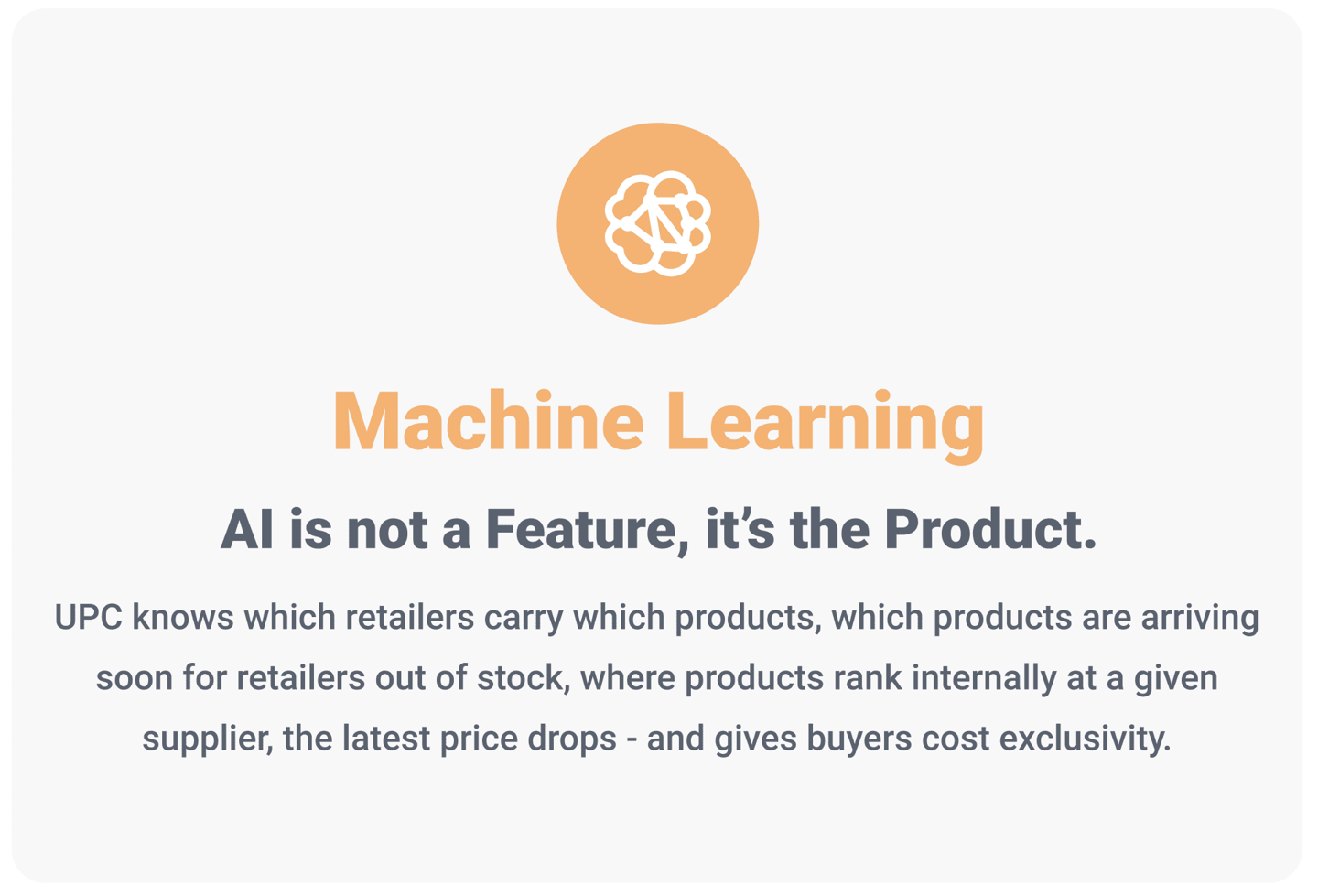
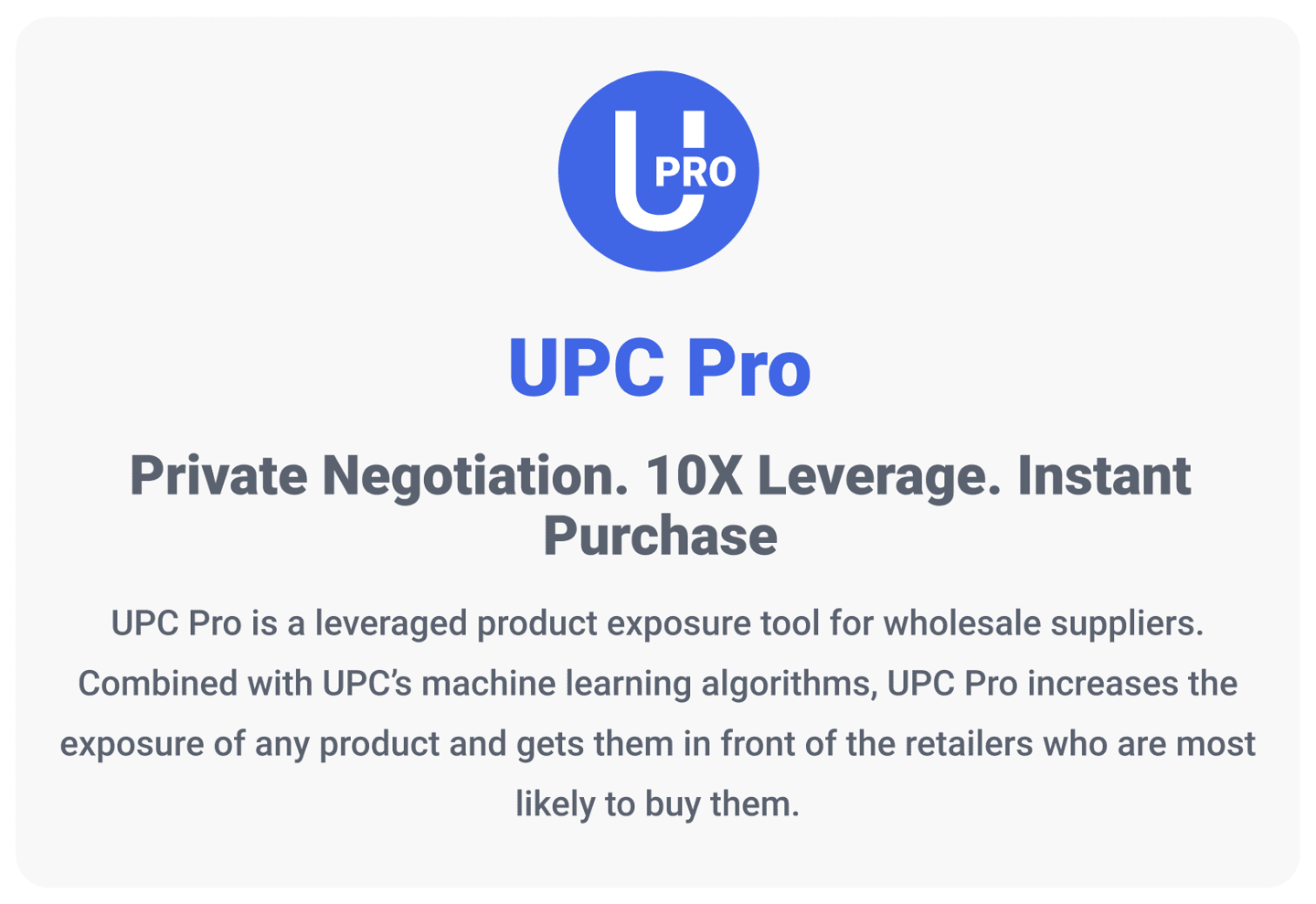
A private wholesale marketplace using the power of tech, data, and machine learning to connect enterprise retail customers
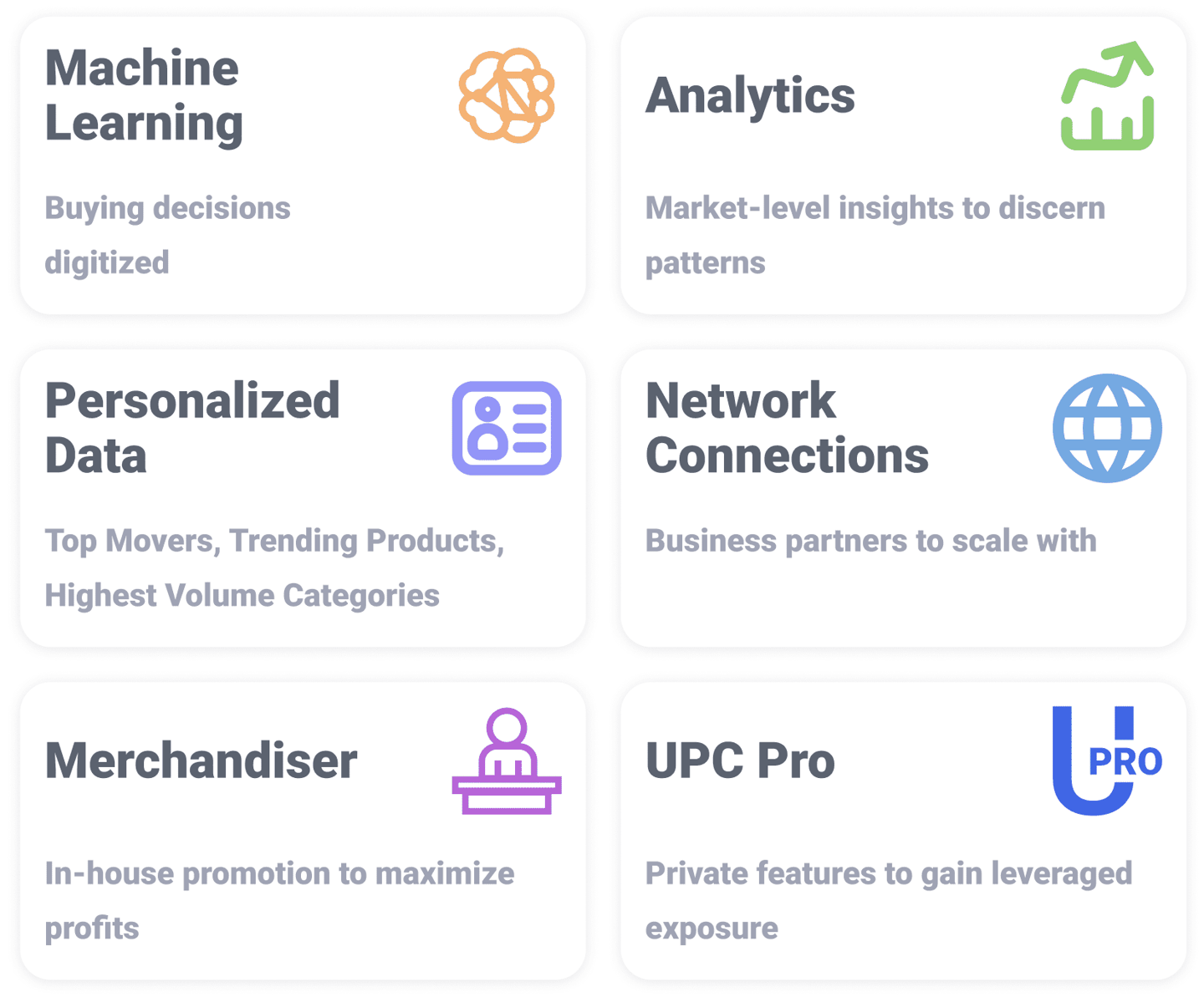
UPC aims to revolutionize the enterprise retail space.
Numerous wholesale gateways have been built recently, and proved that customers are willing to pay for efficiency. Each one of them are focused on a specific niche. These companies are going to stay in their swim lanes.
We’re going after the bigger opportunity.
Product
Rebuilding wholesale purchasing
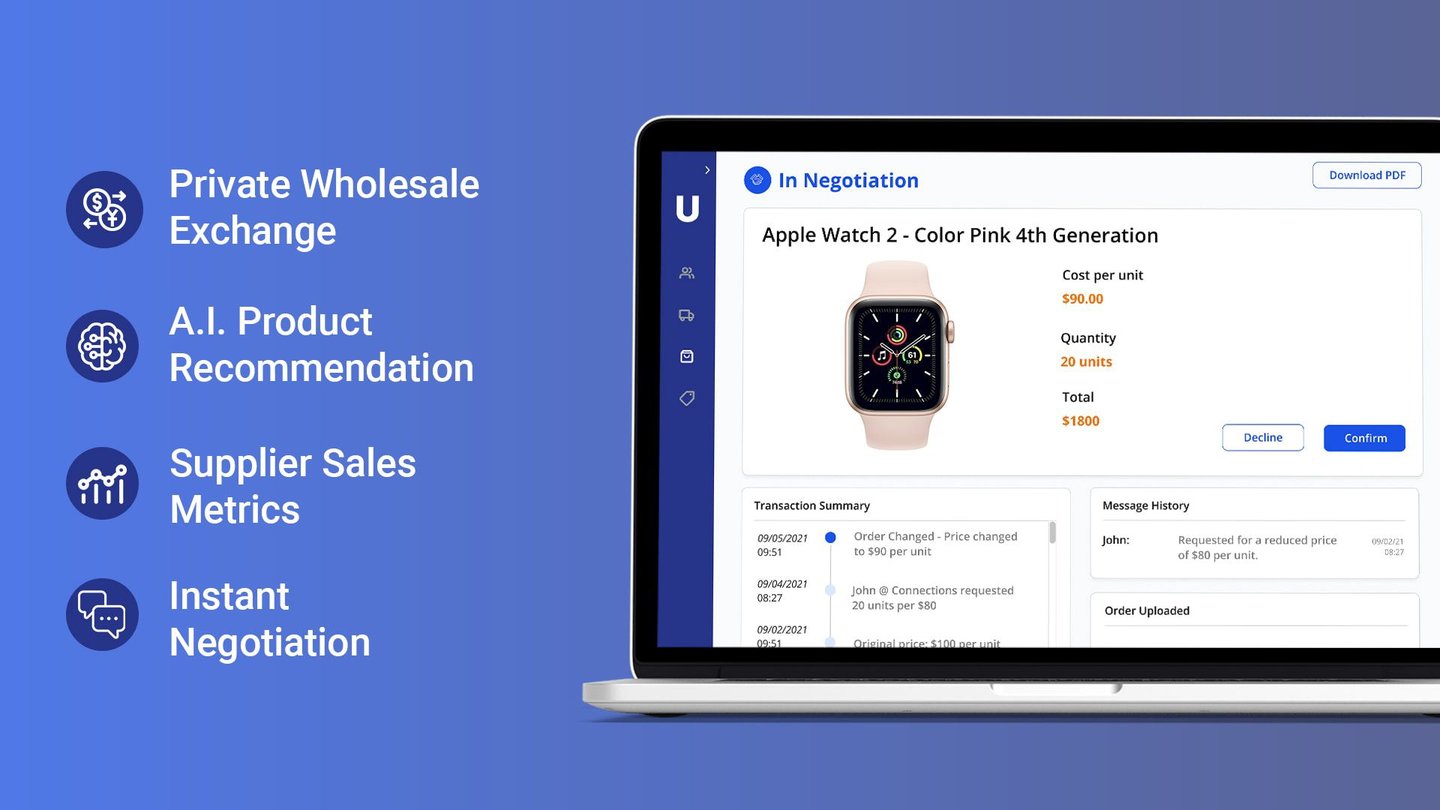
Supplier sales metrics
Retail preferences
Instant negotiation
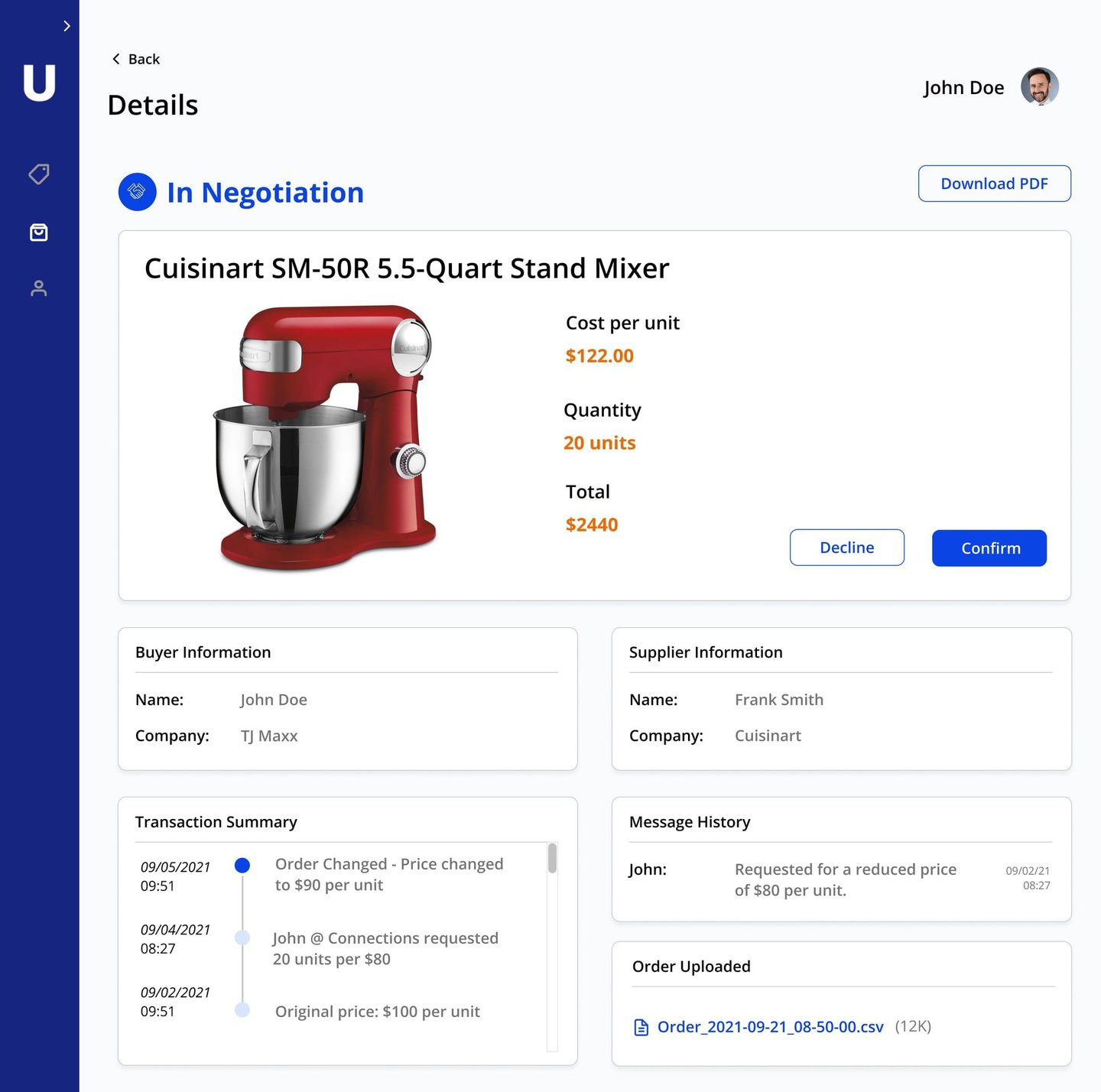
 Seamless data integration
Wholesale’s adoption of ERP systems allows for integration to happen at scale. The workflows for Enterprise Application Integrations (EAI)
 Product identity data
Point-of-sale (POS) data to understand what products sell across department stores, specialty stores, and national chains. Market evolution allows UPC to now capitalize on valuable data.
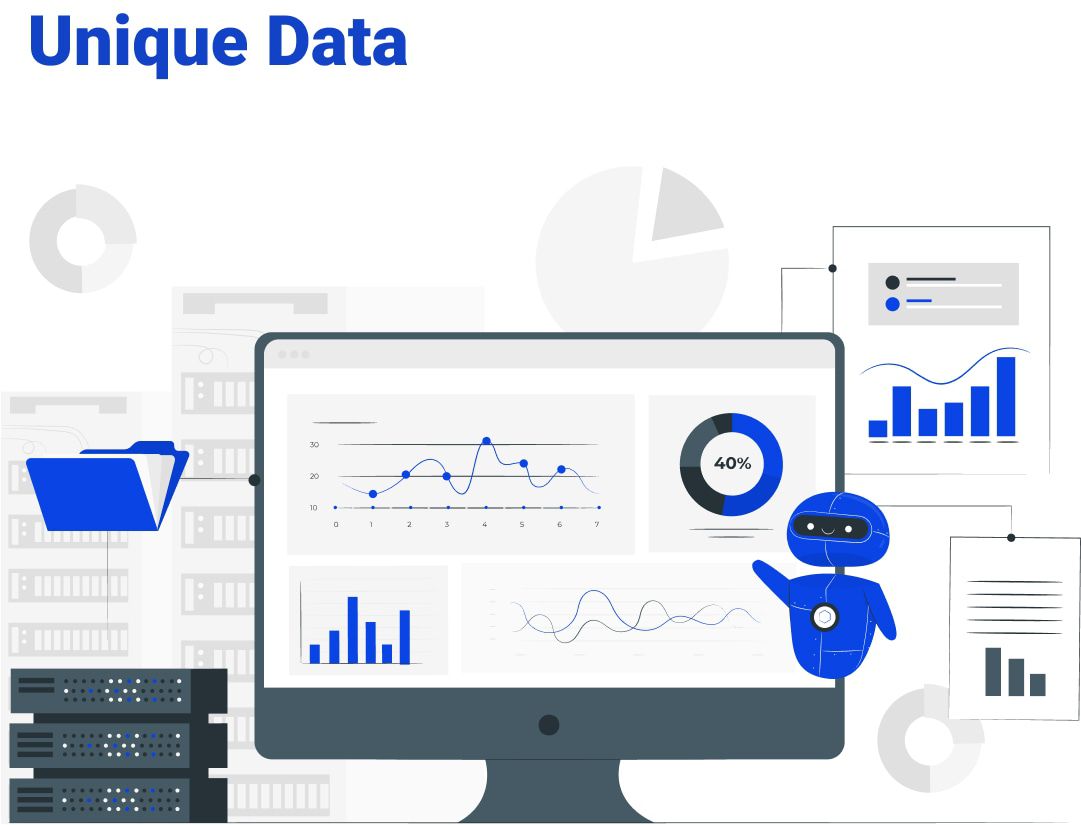
AI product recommendation
Retail buying needs, matched to product sales metrics, gives the exact product to buy—and why. The product recommendation makes you invaluable to enterprise retail.
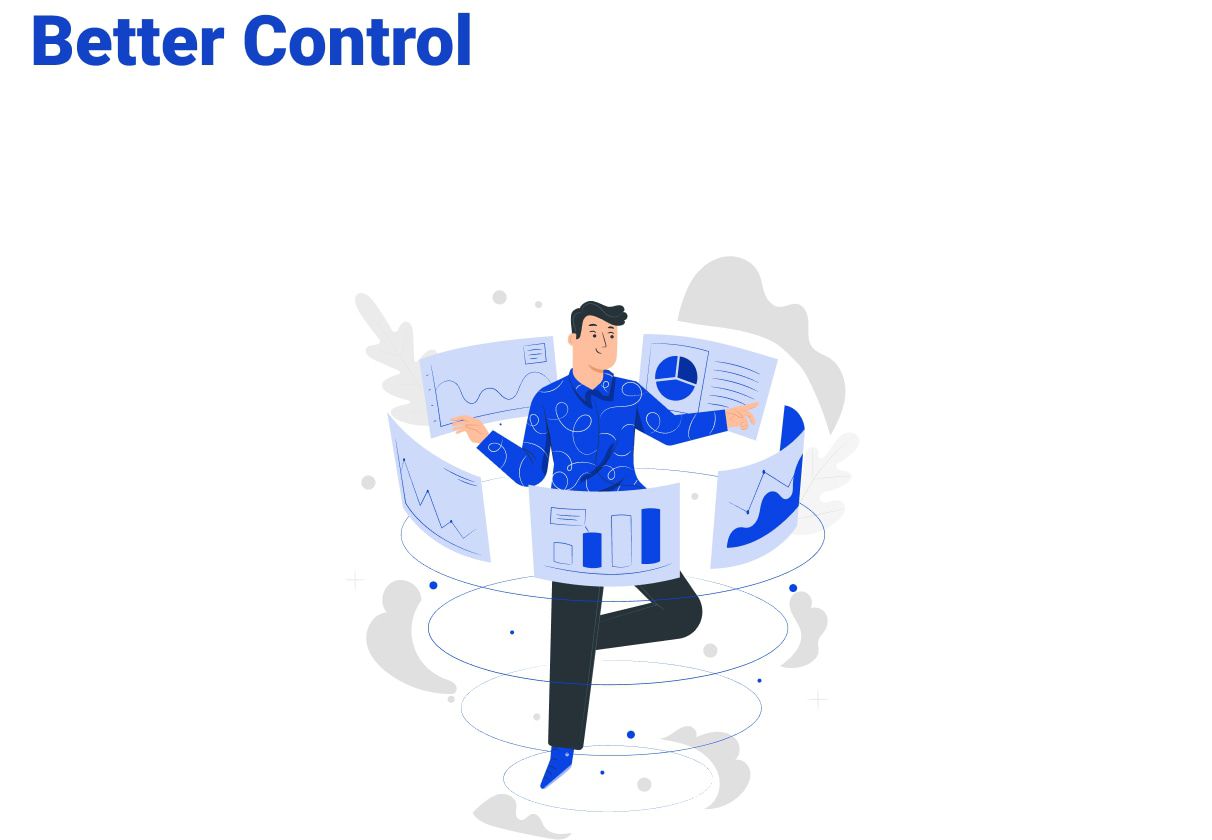
Virtual negotiation
Faster purchase order confirmation with instant counter-offers. Auto-negotiation based off a supplier’s sell-limit orders. UPC owns the relationship.
—
UPC buyer platform results
—
- Products seen faster from existing suppliers
- Products have unique sales metrics tied to them
- Real-time negotiation
- Product recommendations sent based on live retail 'open-to-buys'
Traction
Early mover
marketplace metrics
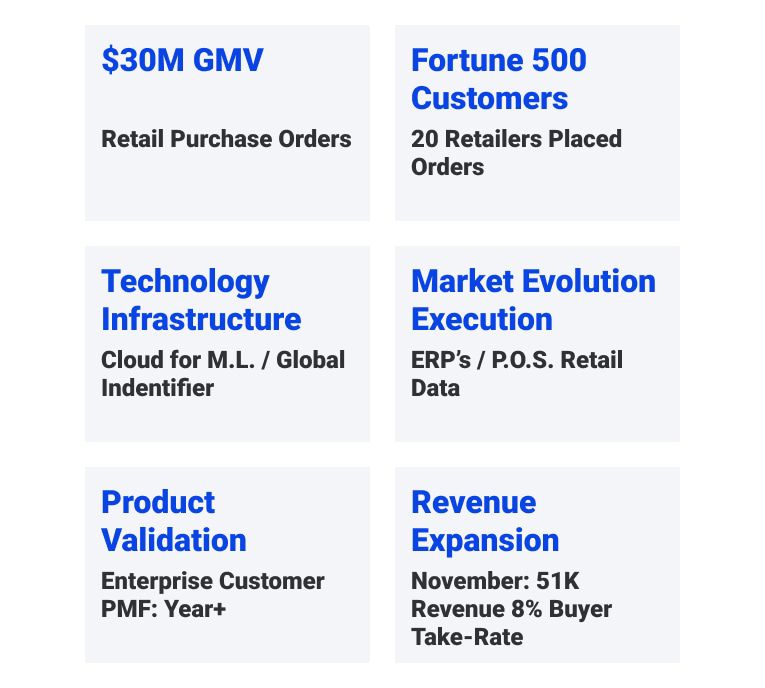
V1 Q1/ Q2 2022: Product market fit
Rapid growth fueled by unlocking pent-up demand
Consistent organic growth
More accurate recommendations = more purchase orders
—
More data, smarter feed, better recommendations
More products ingested = more accurate recommendations
Revenue path
UPC technology catches up to demand

V2 Q3/ Q4 2021: Revenue expansion
Buyer take-rate / GMV last 90 days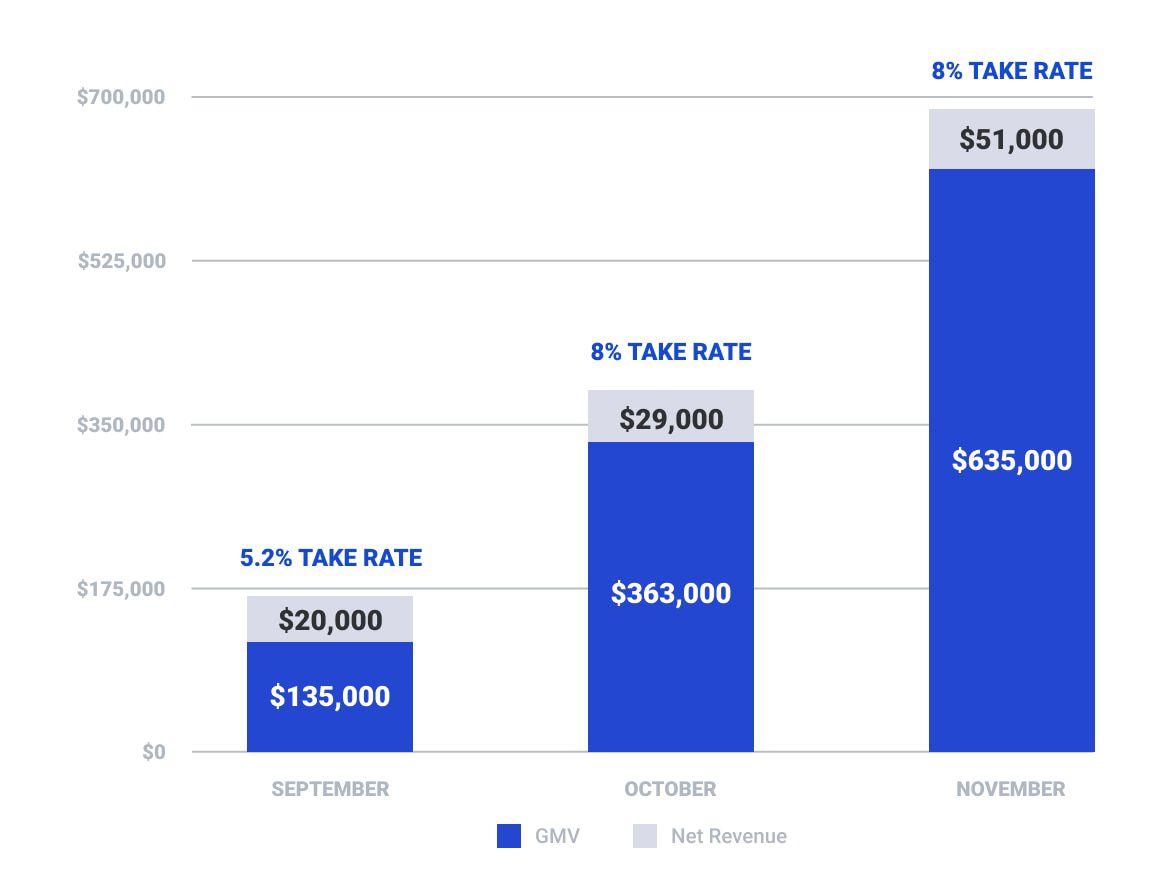
*Last 90 Days chart for 2021
Customers
Fortune 500 customers

Business model
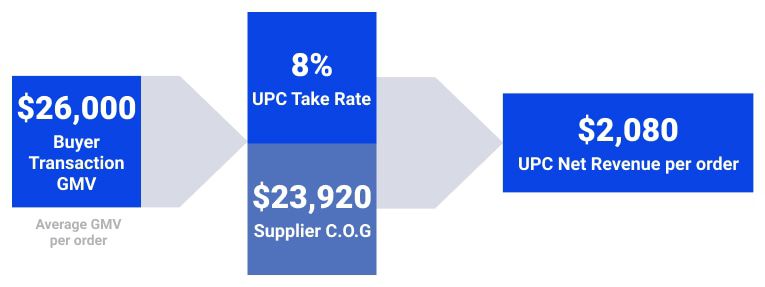
Unit economics per order
High transaction value / high frequency marketplace take rate
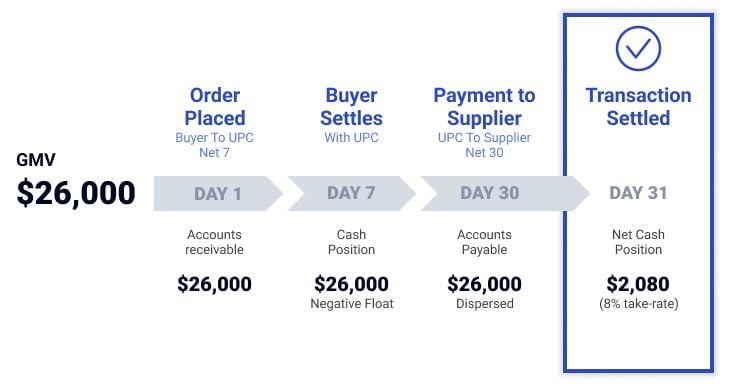
Cash flow
UPC terms generate significant cash float
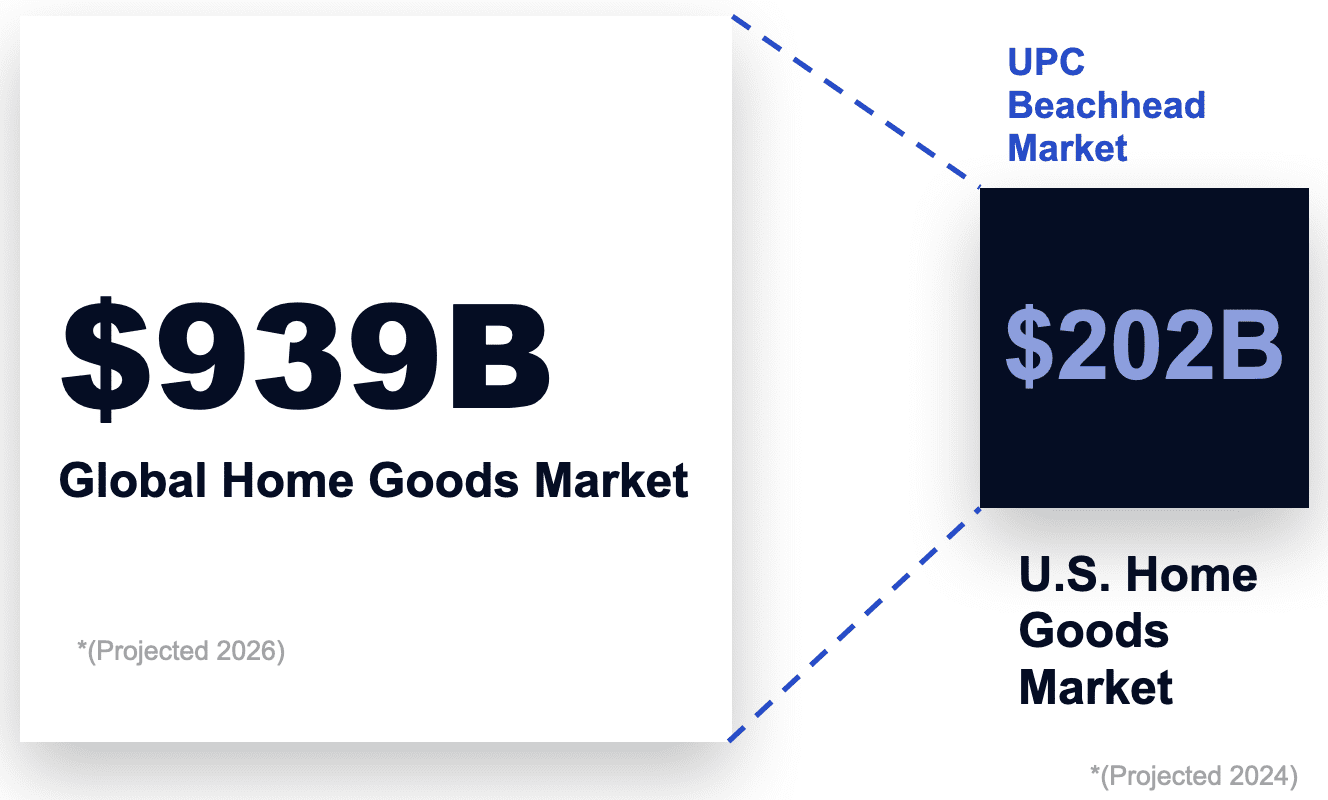
Market
Massive fragmented market
Available retail wholesale supply
200,000+
Suppliers
Competition
UPC is solving the broken enterprise retail buying business model

- Competitors either don’t carry volume on proven retail-ready products, or don’t solve the ‘time wasted searching’ problem for retail buyers. The specific domain inside of wholesale that can leverage a product recommendation to its fullest is enterprise retail.
- Each one of UPC's competitors are focused in on a specific niche inside the wholesale world. Different buying personas have unique needs when it comes to software. It’s embedded in their culture, mission statements, and tag lines. These companies are going to stay in their swim lanes.
Vision and strategy
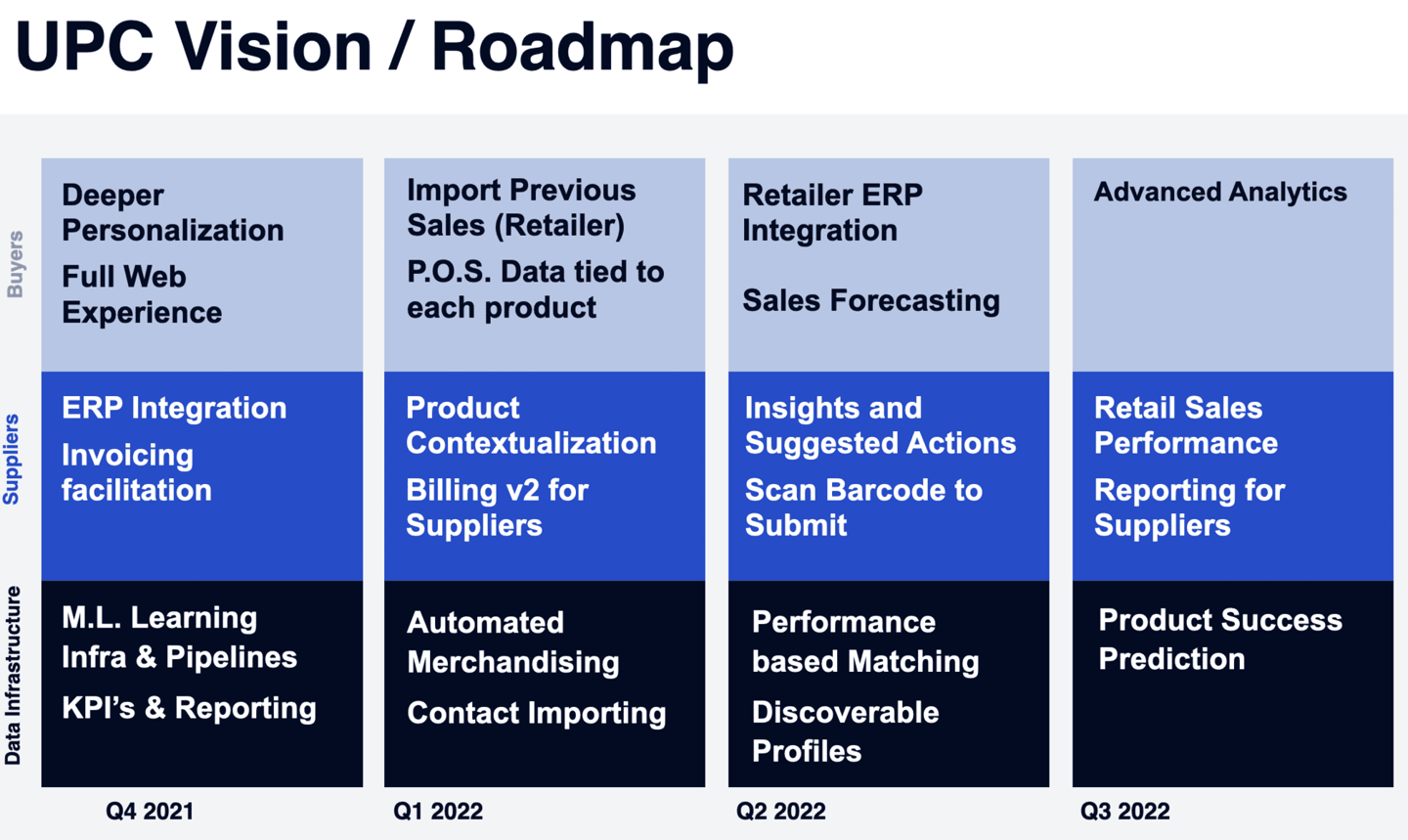
The wholesale exchange
UPC is not just a wholesale marketplace—it’s more than that. We call it a Private Wholesale Exchange, to distinguish it from typical product buying and selling, precisely because we think the problem that we solve is much broader than what happens in the typical marketplace. The right system to solve retails buying problem is private, incorporates the buyer, the seller, and the advantages of a fast moving exchange. The problem we’re solving is highly personalized.
—
Privacy – Buyer – Seller – UPC Exchange
—
- Privacy: When building for a customer that is making a 500K buying decision to fill the shelves of 200+ retail stores, there is data sharing trust at play. Pricing, relationships, and competition make privacy a core feature of UPC and any retail enterprise software that wants to achieve scale.
- Buyer: Collecting retail buying needs frequently (sub-category, brands, existing relationships) brings an entirely new level to the accuracy in the products that can be shown to buyers.
- Seller: Placing sales metrics, and rankings, onto individual products allows you to bring buyers ‘successful products your competition is carrying’—this is the holy grail for a retail.
- UPC Exchange: The point of collecting all this data, and keeping it private, is that it’s not about the products themselves anymore. The products are secondary, the specific data tied to each customer and product is what is important. The data collected (retail preferences, sales metrics) allow you to step in and close purchase orders. UPC is a place for a retail buyer to make wholesale trades inside of a fast moving, high volume, high transaction value exchange.
Funding
UPC has raised $2.5M
since 2020
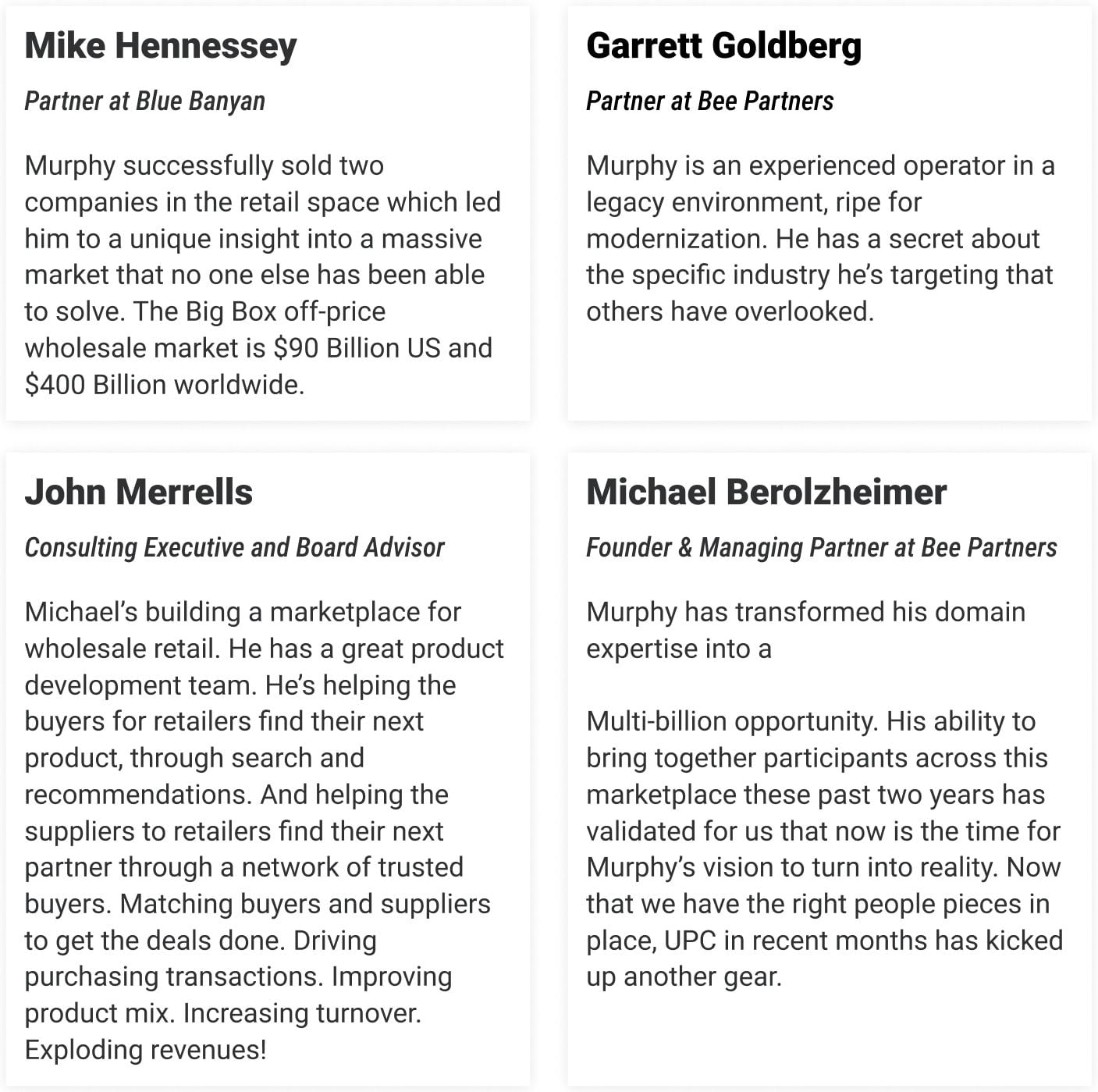
Universal Product Company, Inc. has been through two prior rounds of funding. We’ve raised a total of $2.5M+ since 2020, when we first began our seed round. We have raised money from investors including Bee Partners, Nextcoast Ventures, Paul Bohm, Mike Hennessey among others.

—
Current investors
—
Founders
 Murphy
CEO, Founder
"UPC: We believed that there were no great companies taking on retail wholesales buying infrastructure and seeking truth—so we decided to become that company."
Bio
Career spent as an entrepreneur, driving high growth and successful exits in the retail space. Founded two previous wholesale companies, acquired by Overstock.com (Nasdaq: OTSK) and (ERI) ERI Direct. His first company (Independent Rep.) became one of the largest sellers of laptops in the emerging days of e-commerce and was later acquired by Overstock.com (Nasdaq: OSTK).
After founding Liquidation Connect, a pioneering platform for independent sellers to move home and electronics directly into retail, it was quickly acquired by the largest recycling company in the U.S., Electronic Recyclers International (ERI).