Genesis Therapeutics raises $52M A round for its AI-focus...
TechCrunch
Sifting through the trillions of molecules out there that might have powerful medicinal effects is a daunting task, but t...


 Oops! We couldn’t find any results...







Investment information (provided by the Company as of August 2022):
Genesis Therapeutics in the News:
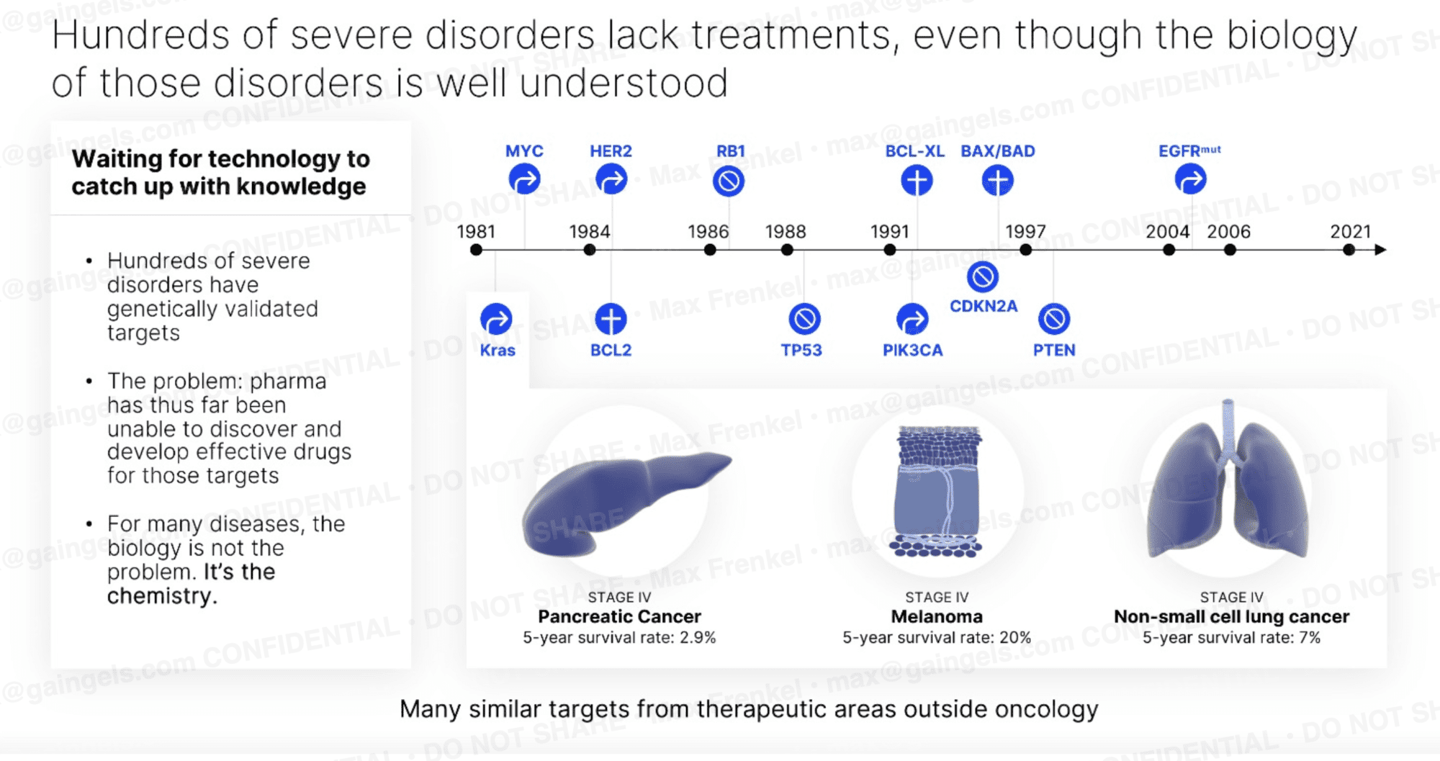 Hundreds of severe human disorders lack treatments, even though the biology of these disorders is well understood. Despite many of these diseases having genetically validated targets, the vast majority of targets are still undruggable (3000+). Pharma typically invests many years and billions of dollars to take a drug from inception to market but has yet been unable to discover and develop effective drugs for the majority of targets because of the chemistry rather than the biology. Properties of newly synthesized molecules: solubility, target-binding efficacy, target-binding stability, etc., can be expensive and time-consuming (3-5 years) to define in physical experiments, particularly when evaluating a large set of molecules. Computer modeling has improved specific facets of the drug discovery process though has certainly not replaced the traditional chemistry- driven value chain. There remains significant room for improvement and optimization given the number of drug-like small molecules is estimated at 1060+ and interactions between proteins at 650,000+.
 Technological advances in computing power and artificial intelligence (AI) have been making inroads in drug discovery for the last decade. While the AI-fueled pipeline continues to expand at dramatic rate (40% annual growth by one BCG estimate), a clear winner has yet to be defined and likely won’t be given the long, complex value chain of drug discovery. AI is being employed across the development spectrum to better understand disease biology, define the chemistry of novel molecules, improve success rates, and improve the speed /cost of discovery. Large pharma is certainly paying attention as evidenced by the growth of licensing deals / M&A with AI-driven biotech in the last few years. Theoretically, if even a fraction of the cost and time benefits of AI is realized, it could represent a fundamental change in the economics of discovery allowing pharma companies to take more shots on goal in an efficient manner.
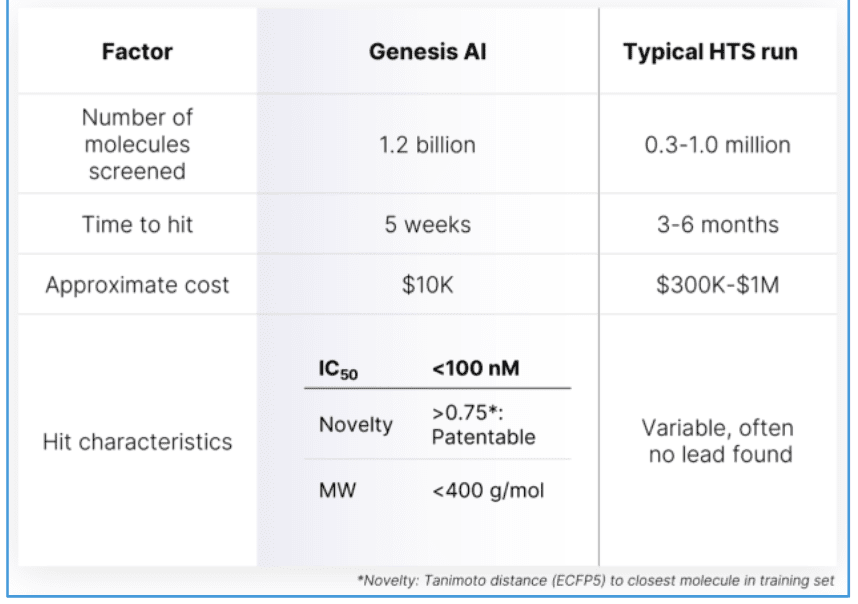
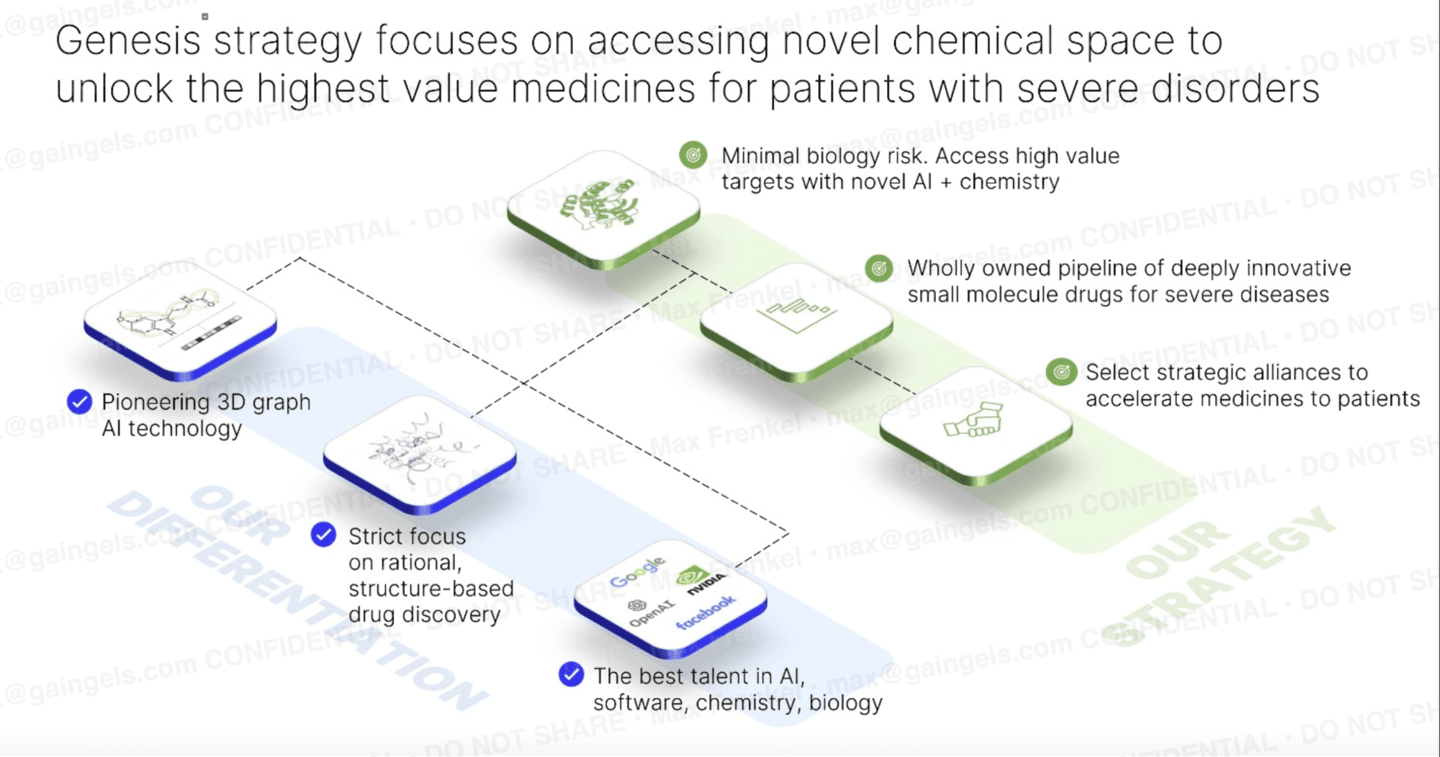 Genesis has developed a unique physics-based AI engine to drive the creation of a pipeline of best-in-class and first-in-class assets in a fraction of the time required for traditional drug discovery/development. Recent advances in modeling the 3D structure of proteins have led to a dramatic increase in the data available on novel proteins and make now an optimal time for an AI- driven solution to predict interactions between the drug and disease target. In just 5 months, the Company identified novel drug candidates and progressed the lead program to a patentable series with high potency achieved at a low dose. Genesis has also identified 4 novel scaffolds for allosteric and previously undruggable targets. Compared to traditional high-throughput screening, Genesis was able to screen 1000x candidates in a matter of weeks rather than months at as much as 1/100th of the cost.
Genesis represents molecules (i.e., drug candidates) more naturally- as graphs. Instead of simply defining the atoms and the bonds between them, the Company can characterize multiple contact types between atoms, spatial distances, and more complex features. The resulting representation is a richer, more complete picture of a molecule than just its chemical formula or stick diagram showing the different structures and bonds. Genesis does this by pre-training its AI platform on multiple rich datasets, using this information to better define the protein 3D structure, motion, and binding to a potential target, then applying the AI learnings to a novel, data-poor proteins. Genesis’s AI platform is differentiated on four pillars: a physics-based deep learning engine, protein motion modeling, and unparalleled training data, leading to trillion-scale molecule generation.
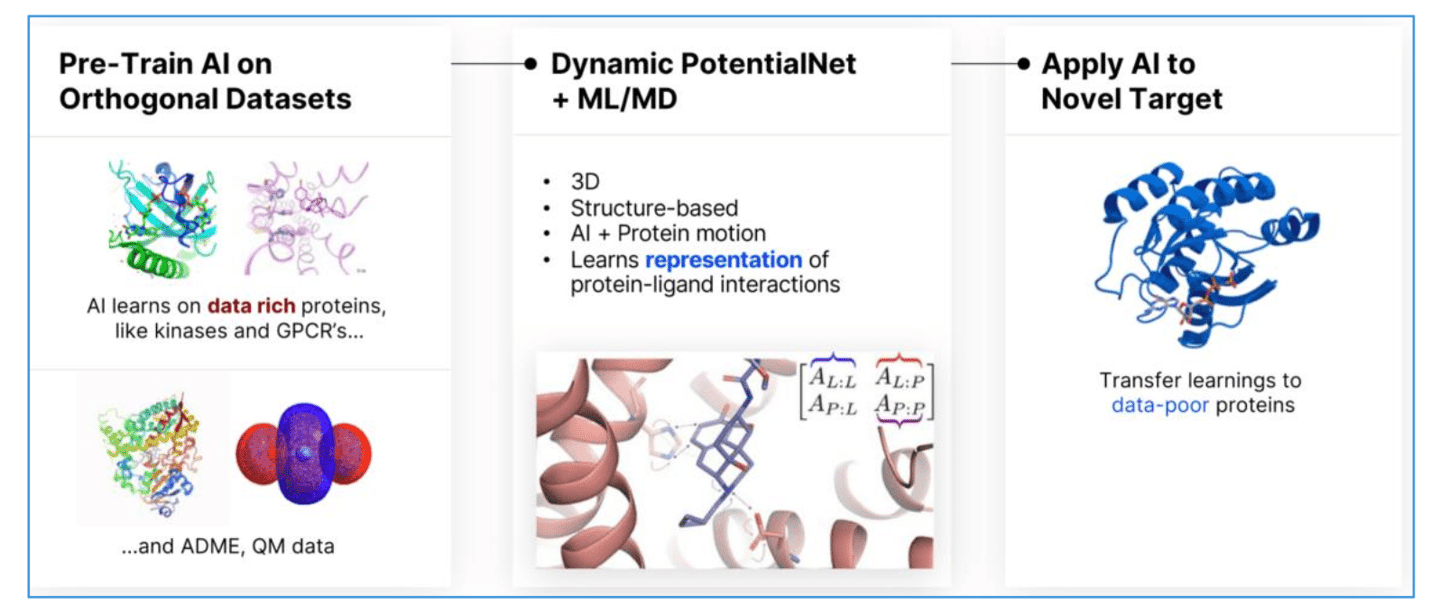
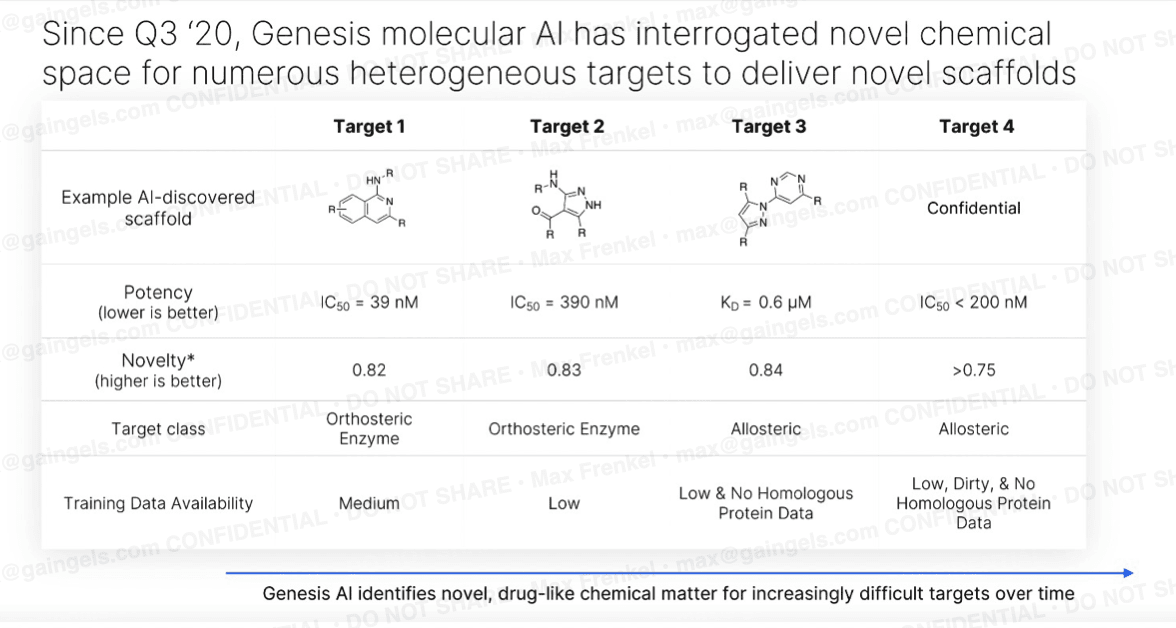
As has become typical for AI-driven drug discovery companies, Genesis anticipates utilizing its platform as a service for biopharma as well as developing an internal pipeline of drug candidates. Genesis has early traction in partnerships, such as the one Genesis has struck up with Genentech, as well as an internal discovery program aimed at identifying and developing independent drug candidates
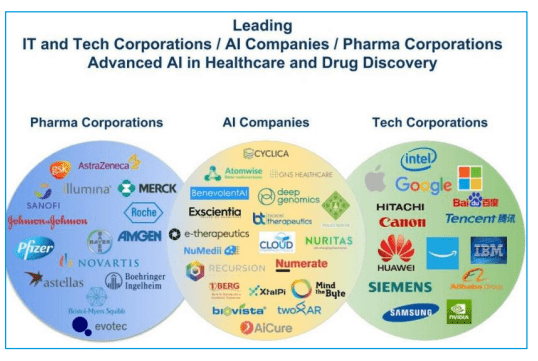
The Artificial intelligence/AI in drug discovery Market is projected to reach USD 4.0 billion by 2027 from USD 0.6 billion in 2022, at a CAGR of 45.7% primarily driven by the industry's need to reduce the time and cost of drug discovery/development. While the field is crowded, the complex value chain in drug discovery/development leaves plenty of opportunities for new entrants to develop innovative solutions for different steps of the value chain.
Over the last few years, many companies have been formed in the AI/drug discovery space, powered by increased computing and simulation power that lets them determine the potential of molecules in treating certain diseases.
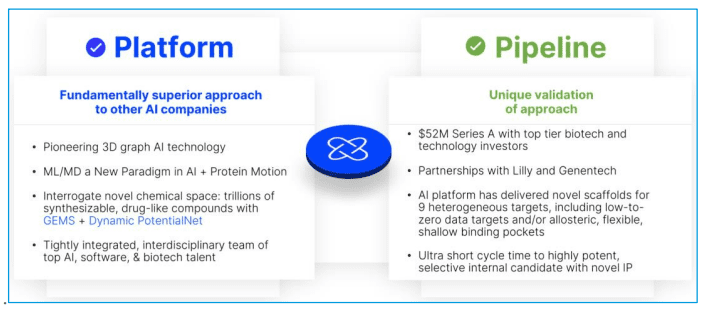
Genesis is differentiated by a tightly integrated, interdisciplinary team of top AI, software, and drug discovery talent to tackle one of the biopharma’s fundamental challenges: discovering new medicines faster and cheaper. The Company has full chemistry and biology teams at the lab site as well as a developed CRO network to further expand capabilities. According to management, Genesis is unique in the space as one of the only companies working at the intersection of modern deep neural network approaches and biophysical simulation — conformational change of ligands and proteins. Genesis is taking multiple shots on goal by partnering with pharma: bringing the technical platform to experts who have taken FDA-approved drugs to market and developing a robust internal pipeline as well.
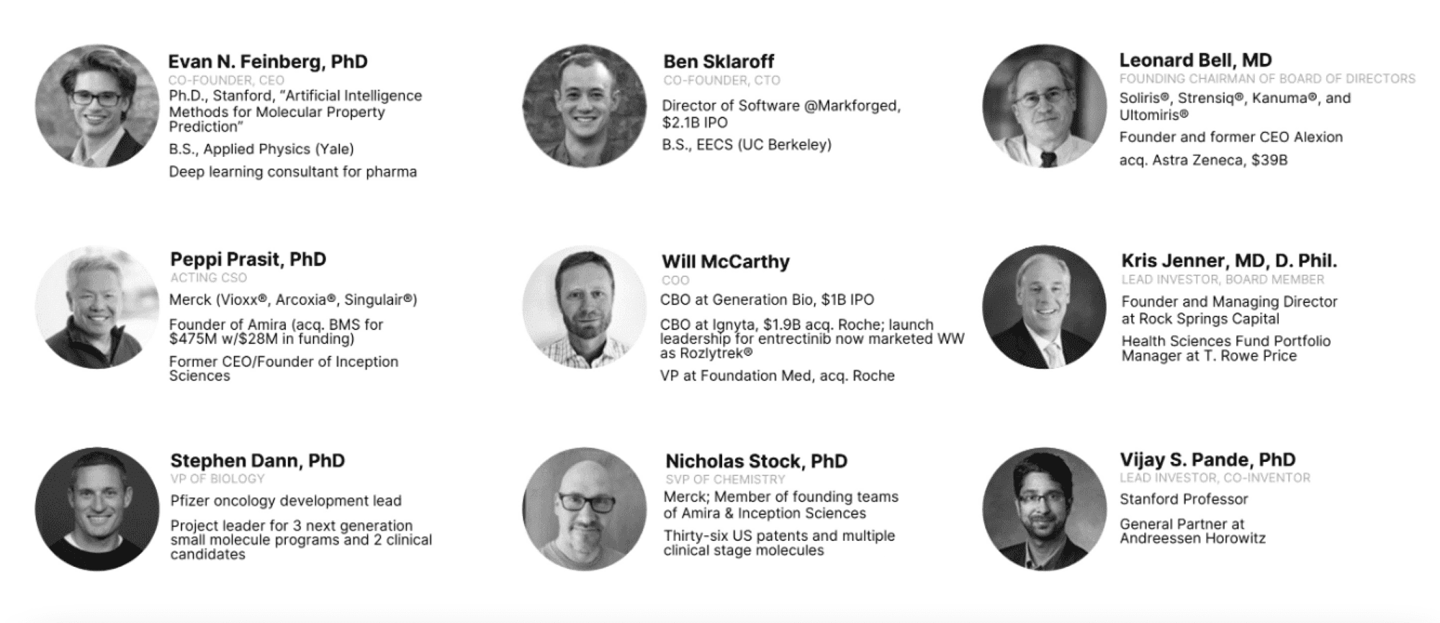 Genesis was founded as a Stanford spinout of Vijay Pande’s lab (Stanford Professor, GP at Andreessen Horowitz). The founding duo brings a balance of deep expertise in AI-driven drug discovery and tech development. The core team brings additional, extensive experience in biotech and pharma leadership having helmed multiple startups through to successful exits and drug development programs at Merck and Pfizer. The AI engineering team are elite alumni of MIT, Google, Facebook, and OpenAI. Similarly, the board brings elite biopharma know-how and includes board director Leonard Bell, MD (Founder/CEO of Alexion) and Kris Jenner, MD (Founder/MD at Rock Springs Capital).
Evan Feinberg, PhD (Co-Founder, CEO)
Ben Sklaroff (Co-Founder, CTO)
Peppi Prasit, PhD (Acting CSO)
In addition to the carried interest Republic Deal Room Advisor LLC is entitled to for the syndicated investments it organizes, certain principals of Republic Deal Room Advisor LLC may have a personal interests in these investments, as disclosed below. When making an investment decision please review any applicable disclosures as they represent pre-existing financial interests held by those principals of Republic Deal Room Advisor LLC.
We do not represent that the information contained herein is accurate or complete, and it should not be relied upon as such. Opinions expressed herein are subject to change without notice. Certain information contained herein (including any forward-looking statements and economic and market information) has been obtained from and/or prepared by the Company or other third-party sources and in certain cases has not been updated through the date hereof. While such sources are believed to be reliable, Republic Deal Room Advisor LLC does not assume any responsibility for the accuracy or completeness of such information. Republic Deal Room Advisor LLC does not undertake any obligation to update the information contained herein as of any future date.

Invest in the app