


 Oops! We couldn’t find any results...


In the past, when someone wanted to fund something — be it a project, a company, or anything that required capital to start — there were a few ways to raise money. They could take on debt from a loan. They could raise money from friends, family members, and angel or VC investors. They could even take the "bootstrapping" route and scrounge up as much money as possible to fund the project themselves.
In the late 2000s, a fourth option became viable for those trying to get something off the ground: crowdfunding.
Crowdfunding is a way to raise money from a large number of people. Large groups of people pool together small individual investments to provide the capital needed to get a company or project off the ground. Individuals, charities, or companies can create a campaign for specific causes and anyone can contribute.
Types of crowdfunding
-
 Securities-based crowdfunding provides opportunities for people to invest in private companies (aka, startups). In this type of campaign, investors receive the promise of stock, future shares, or another security issued by the company in exchange for capital. We’ll primarily discuss equity-based crowdfunding, but there are many different types of crowdfunding, including:
 -
 Donation-based crowdfunding is when someone donates to a specific cause or charity (think GoFundMe).
 -
 Reward-based crowdfunding is exactly what it sounds like. People donate to unlock a specific reward linked to the project they support. For example, you might help fund a new product line and later receive that product in return.
 -
 Peer-to-peer lending allows individuals to obtain loans directly from other individuals without a bank or other financial institution acting as a middleman. Think of this as debt crowdfunding.
 -
 Real estate crowdfunding offers individuals opportunities to invest in real estate projects. This is especially useful for people who are interested in real estate investing but don’t want to deal with mortgage brokers, real estate agents, or contractors. This is a specialized type of securities crowdfunding.
 -
 Human capital crowdfunding is a way for people to raise money to back their personal growth or projects. Investors are given the opportunity to fund a project in exchange for a share of the winnings. For instance, many poker players crowdfund money to play and then distribute a share of their winnings back to investors.
What is crowdfunding for companies?
Like other organizations, businesses can use crowdfunding to raise capital for their venture. When we define crowdfunding in business, we mostly think about startups, angel investments, and transactions outside of the traditional financial institutions. Put simply, crowdfunding for business presents a great opportunity for startups to source a large group of investors efficiently.
Crowdfunding opens early stage investment for innovative companies with diverse teams and a social mission, while also empowering the masses to not only actively fund the companies they believe in, but also benefit from that growth.Brandi DeCarli, Farm from a box.Founding partner

How does crowdfunding work for companies?
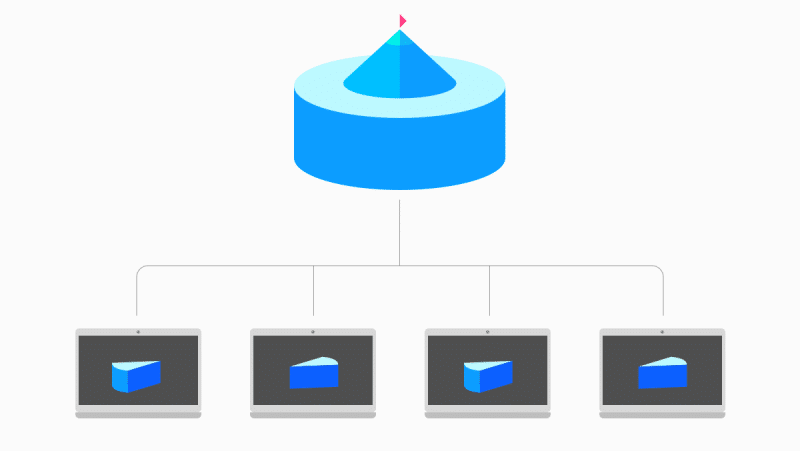
Platforms like Republic have made it easy for people (or backers, as they’re often called) to invest with just a few clicks. Typically, crowdfunding campaigns have a set goal and offer incentives to those who invest. If the goal is met, the backers usually benefit from supporting that campaign. If the company has an exit event in the future, like an acquisition or initial public offering, backers can earn cash or stock.
How is crowdfunding different?
In crowdfunding, numerous investors are invited to participate and contribute their share of the pie. This is a dramatic step away from more traditional fundraising, where companies and institutions seek capital from one or a few major investors. Crowdfunding is also primarily done online, whereas other forms of financing mostly occur offline.
The benefits of crowdfunding
The benefits of crowdfunding go way beyond raising money.
Gaining access to capital is hard for most new ventures. Many early-stage companies are passed over by VCs for a variety of reasons and getting money from banks or rich family members is hardly a sound strategy. Crowdfunding levels the playing field by decreasing reliance on traditional and sometimes exclusive fundraising methods. Crowdfunding campaigns are also unique in their ability to draw interest from new users and drive engagement. Since one must engage the crowd to be successful, campaigns provide an incredible platform to raise awareness for a company, brand, product, or service. The campaign goal and timeline create a sense of urgency that motivates investors. Thus, crowdfunding presents startups with the opportunity to build buzz and secure early adopters. Startups can connect with potential customers who could also serve as investors and brand ambassadors. A successful campaign proves that there is interest in a product while simultaneously providing the runway necessary to support new project initiatives.
The main benefit of crowdfunding is that you, as an entrepreneur (especially in tech), can now raise outside of the conventional means (VC and angel). Often, we chat about friends and family rounds and institutional investors being necessities for tech growth. For Black founders, our journeys are far from conventional because the systems in place have never thought of us as being conventional. Equity crowdfunding aligns with that.Ofo Ezeugwu, WhoseYourLandlord.CEO & Co-Founder

From an investor’s perspective, crowdfunding provides an easy way to fund projects and people that you genuinely believe in and care about. In addition, crowdfunding allows investors to invest small amounts in multiple ventures, thereby diversifying their portfolios and maximizing the chances of a big payout. While crowdfunding is a high-risk investment, where investors should only invest capital they are comfortable losing, hypothetically, all an investor really needs is one blockbuster investment to recoup other losses and realize a large return.
The risks of crowdfunding
From a company’s perspective, crowdfunding can be a great way to raise funds quickly. While it requires a lot of work, promotion, and attention to have a successful crowdfunding campaign, over 90% of startups on Republic have raised successfully. Though success is never guaranteed, platforms like Republic use every available resource to bring more awareness to each campaign.
From an investor’s standpoint, just like other forms of investing, crowdfunding has its own risks.

For one, investors could lose their entire investment. Just because a company meets its crowdfunding campaign goal, doesn’t mean that company is bound to succeed. In fact, most startups fail, and if that business does not succeed, an investor will likely lose all the money invested. Even if a company does succeed, it may take years for any returns to materialize.
There are always risks associated with crowdfunding campaigns. Investors need to be sure to vet any funding project to make sure their funds will be used appropriately and towards a credible company or cause. (Republic helps mitigate this risk by doing a thorough background check on all companies who raise on our platform.)
It is worth mentioning that, with the expansion of the private investment market, startup investing platforms like Republic have internal teams dedicated to lessening risks associated with the private market. Though these companies are nowhere near as tightly regulated and scrutinized as public companies, fraud prevention, and other safeguards are put into place to ensure that accurate information is available. That way, investors can make informed decisions.
Tips for crowdfunding success
How can one make the most of the next crowdfunding opportunity?
-
 The goal — Know what funds will be used by the person or company hosting the campaign.
 -
 The team — Maximize the chance that this company will succeed. Researching the founders, advisors, and team history is a great way to determine if the founder has the right people on board to execute their vision — or if they’re setting themselves up for failure in the future.
 -
 The UVP (unique value proposition) — Make sure to watch for companies that are using technology in a new or unique way, or that could potentially disrupt an existing market. Try to identify their UVP, see what makes them special, and make sure they are bringing a clear and unique solution to the market.
 -
 Research the market and traction — A product or service is only good if there’s interest from potential consumers. Research the market they are hoping to address. Is there a need for their product or room for growth? One can also lookup that company’s traction for data on how their concept is performing in initial markets.
 -
 Fraud — Always check the company website, filing, and other paperwork to make sure they are truly credible. Don’t just click on the next opportunity that appears on social media.
Examples of successful crowdfunding campaigns
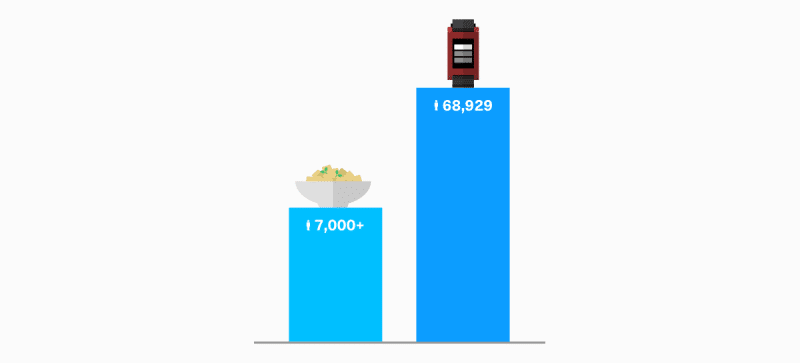
When Zach Brown wanted to try his hands at crowdfunding, he started with a simple, yet ambitious goal: to raise $3,000 for the purpose of "renting out a party hall and inviting the whole internet to the potato salad party." This captured the internet’s attention and over 7,000 people came forward to contribute to the campaign. In the end, the potato salad party raised $55,492. It proved the power of crowdfunding.

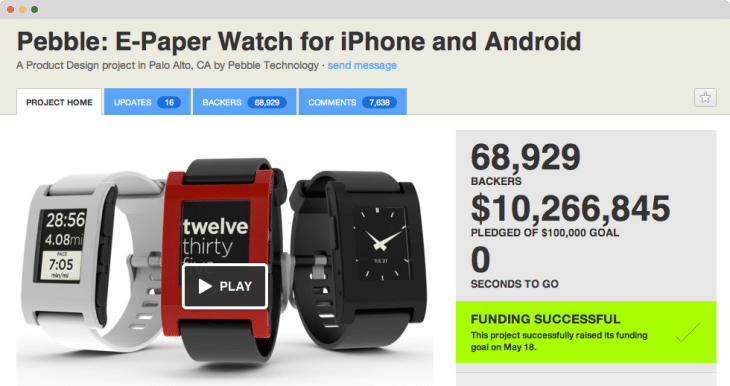
Pebble smartwatch also reached tremendous success when looking for backing from the crowd. The goal was to raise enough capital funds to launch its Pebble 2 and Time 2 watches. Driven by customer fans-turned-funders, Pebble raised over $1 Million in just one hour on Kickstarter. It has since continued to raise funds and is ranked as one of the top earning campaigns in Kickstarer history.
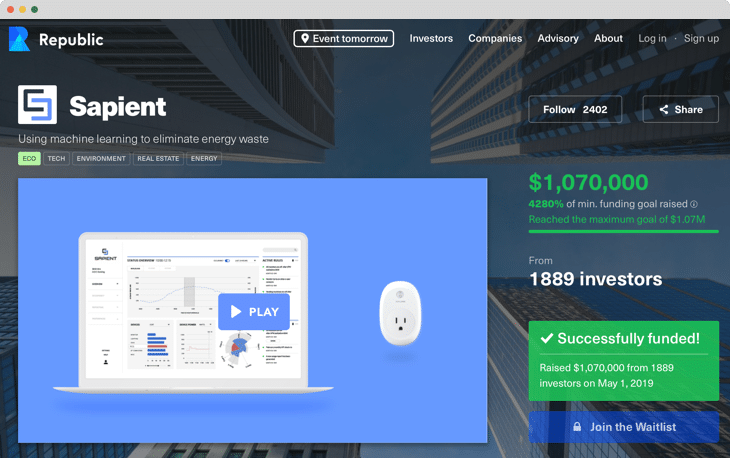
Sapient was looking to raise a late seed-stage round. By launching a campaign on Republic, Sapient not only raised $1,070,000 from 1,889 investors but also gained 20+ customer leads and $750,000+ in customer contracts. They even attracted the attention of angel investors like Jason Calacanis.
These example campaigns provided concrete goals and clearly expressed their desired outcomes. They spoke to their backers’ interests and demonstrated how with each investment, they will get closer to unlocking a product, service, or reward for the community. Crowdfunding gives people an incredible opportunity to support projects they believe in and products they want to purchase. If that company finds success, everyone benefits.
How to start crowdfunding on Republic
Republic makes it easy for companies to raise through crowdfunding. We do thorough background checks and vetting to ensure that all companies raising on our crowdfunding platform are credible. We’re home to a diverse community of angel investors, including some of today’s top VCs, and connect them directly to new funding opportunities. Learn more about the risks here.
If you know someone with a startup or early-stage company looking to raise funds for their company, you can refer them to Republic today. Our team will set up a time to talk about their venture and see if crowdfunding is right for their company.
This educational article is provided by Republic to help its users understand this area of the market, it should not be construed as investment advice as it is impersonal, disinterested and was produced by Republic for Republic’s users, without remuneration received or expected.






we ask users to verify their identity.