Heavy Lifters
Listen to Train AI's Heavy Lifters Podcast on Spotify.


 Oops! We couldn’t find any results...

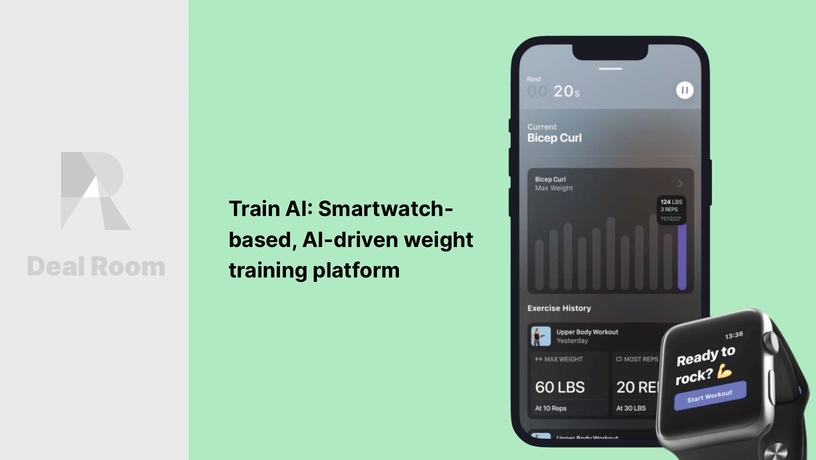



Train AI is a mobile-first software company focused on the fitness wearables segment. Their initial product, Train Fitness, addresses a sticky problem in the Apple Watch ecosystem — reliably tracking movement associated with weight training exercises. The company reports $300k+ ARR as of March 2023, with 65% MoM growth and a projected $1.25M ARR by the end of the year.
Train is raising a $2.5M seed round to support marketing and additional product development, including Train API as well as a ChatGPT-enabled strength training platform. The round is being led by Relay Ventures.
This is a special purpose vehicle (SPV) to invest in Train AI's Seed round:
We interviewed five active users of Train and all of them were impressed with the accuracy of the logging and the ease of correcting the occasional error. Train’s $15/month paid offering is growing by >50% per month, with 20% of active users converting to paid, a very high number for a narrow-use-case app at a $15/month price point."
Lululemon Studio (formerly Mirror)
Apparel company Lululemon acquired Mirror in 2022 for $500M. Sales of the $995 device have underperformed initial expectations.
Tonal
On April 10, 2023 Tonal announced that it had raised $130M in new funding at a valuation of $550–600M — down from $1.9B last year. The company's namesake device retails for $3995.
Cult.fit (formerly Onyx)
India-based fitness player Cure.fit ($625M raised to date) acquired the Onyx computer vision system in 2021, seeking to integrate its computer vision technology into their smartphone-based fitness platform. The company's product pipeline is unclear, but reliance on phone video (having to place your phone at a distance on the floor or other surface) may impact consumer appeal.
| Market leader: Apple Fitness+ |
|---|
By contrast, Apple's wearables segment (including their fitness watches) posted $9.6B revenue in Q4 of 2022. Their Apple Fitness+ product is reported to have accelerating sales — but to date, weight training is not among its features. |
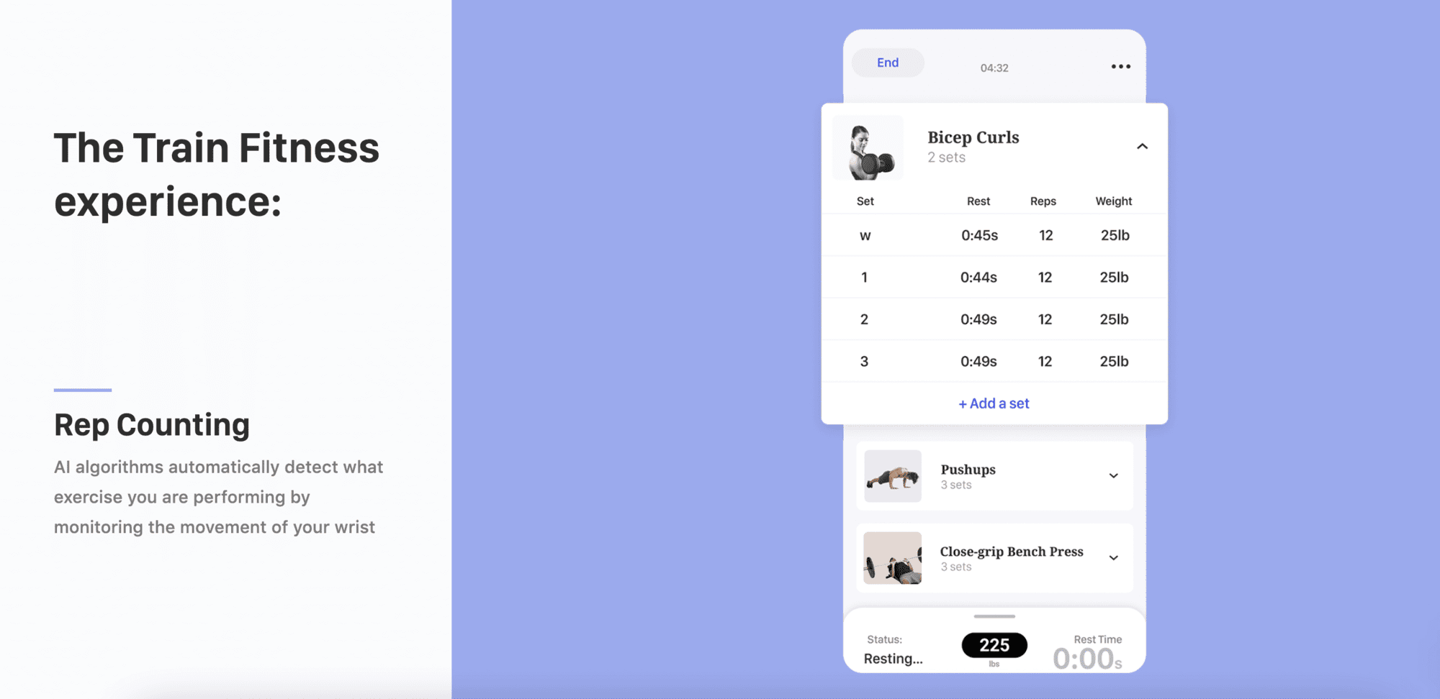
Train AI launched their strength training product Train Fitness in January 2022 which detects exercise type and counts reps using motion of the wrist. The app can track 120+ strength training exercises (e.g. bicep curls, seated rows) with 98% accuracy — a significant improvement on previous efforts, which is bolstered further by the app's built-in error correction feature.
| Data Flywheel |
|---|
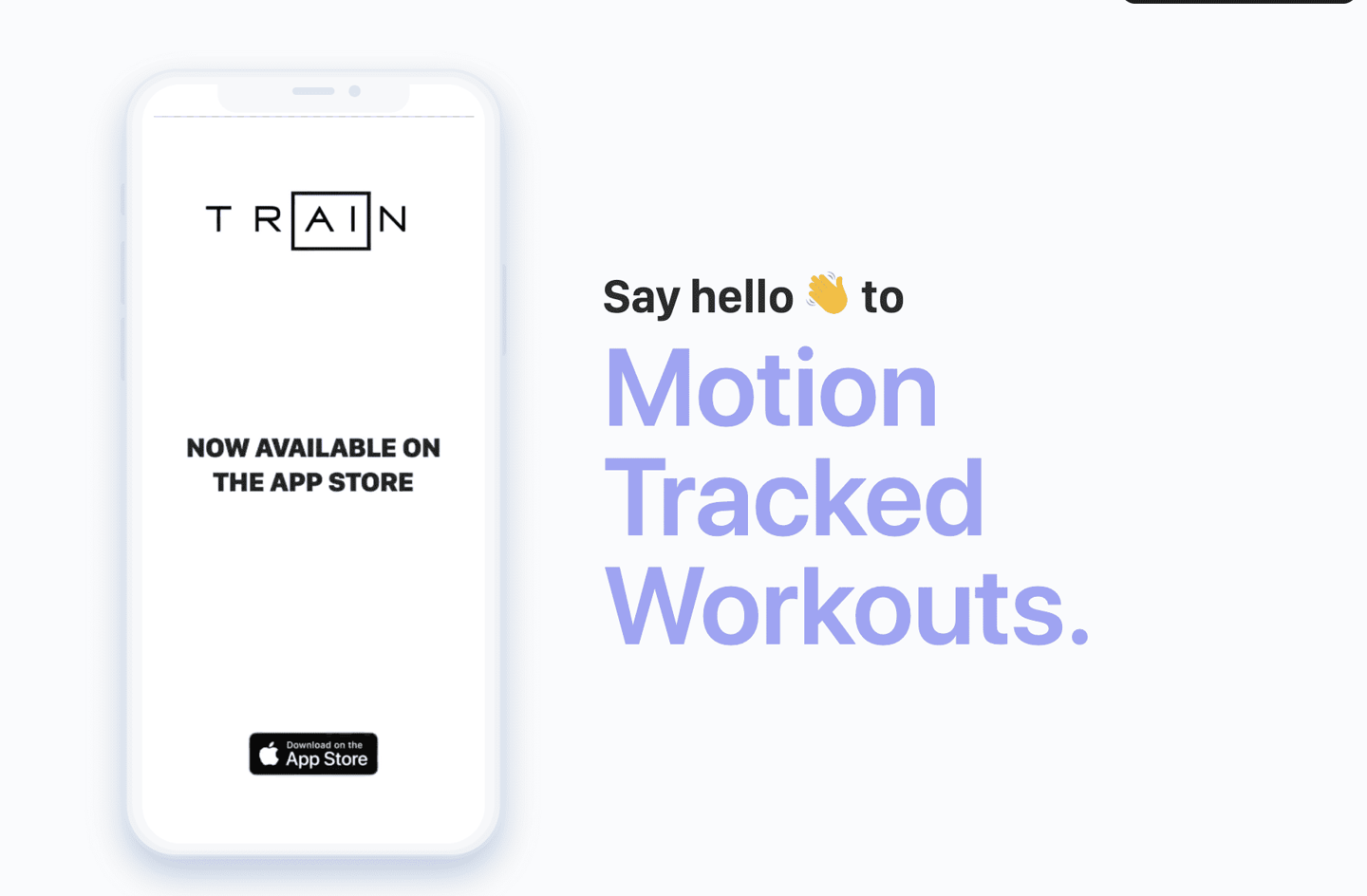
When users do an exercise, Train Fitness detects the exercise and the reps and shows it to the user on their Apple Watch. Like any AI model, sometimes it gets the wrong answer. Users can quickly edit a wrong answer, which provides data back to Train’s AI models, creating an increasingly strong competitive moat with ongoing usage. |
Train Fitness is an iOS app that user the motion of your Apple Watch to automatically track your strength-workout. No more manual input! The app tracks 130+ unique exercises, counts reps, and saves your workout data without manual data input! Below is a quick demo of the product.
For 1-month free, use the code: 1MONTHFOCUSGROUP
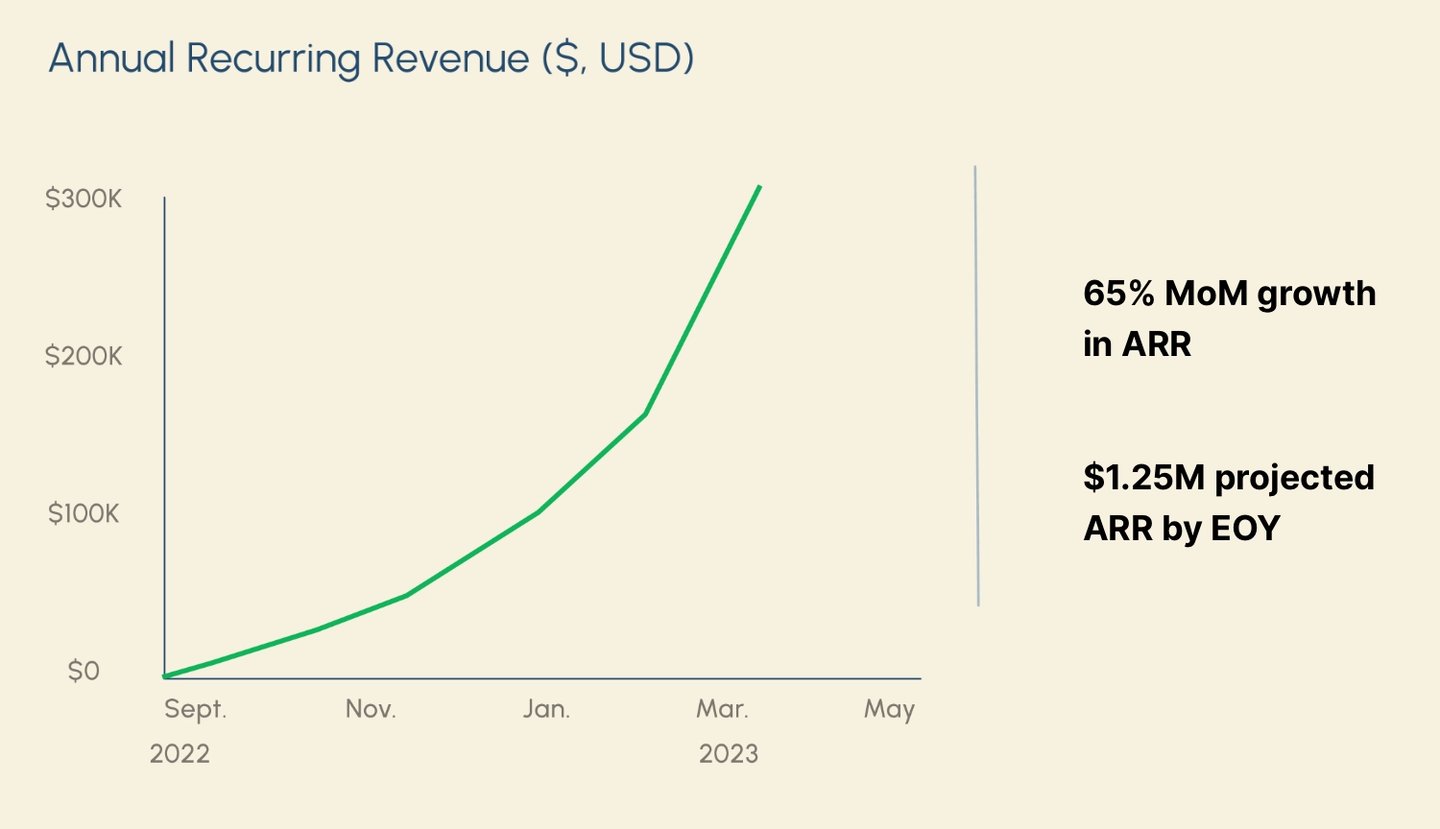
Train’s $15/month paid offering is growing by >50% per month, with 20% of active users converting to paid — a very high number for a narrow-use-case app at a $15/month price point.
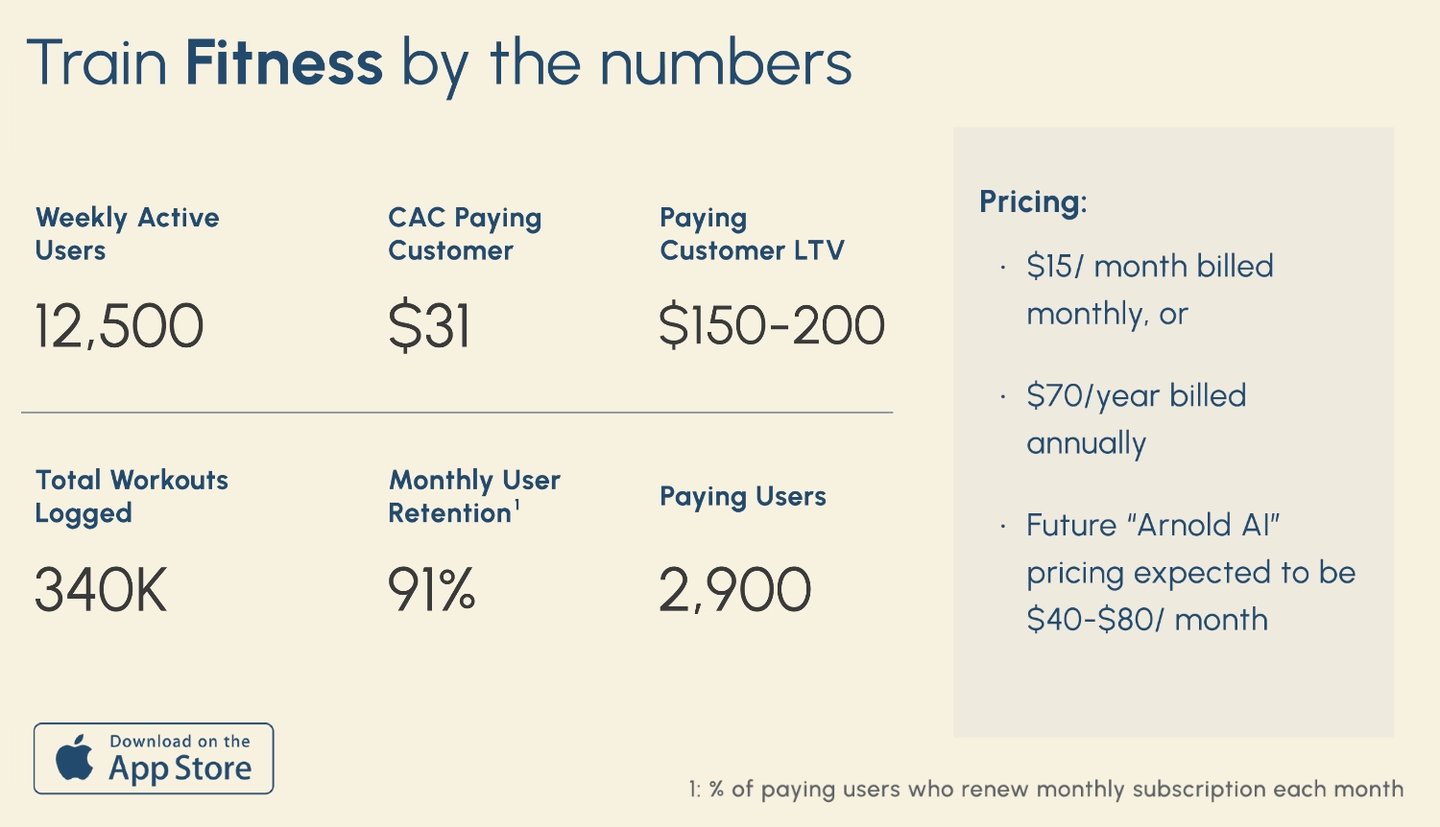
Anorak interviewed five paid, active users of Train Fitness for approximately 15 minutes each to discuss the user’s experience with the app, the alternatives they used before, and what they would use if they no longer had access to Train Fitness. All of them were highly enthusiastic about Train and had come from non-solutions like Apple Notes or paper notebooks – the market here is very immature. One person had previously used a now-defunct hardware wearable called Atlas, but Train’s Apple Watch app is able to deliver better functionality than Atlas without an additional piece of hardware.
All users were dismayed at the thought of not having Train Fitness anymore, and none of them complained that the price was too high.
Long term, Train AI aims to build a social strength training platform that allows users to:
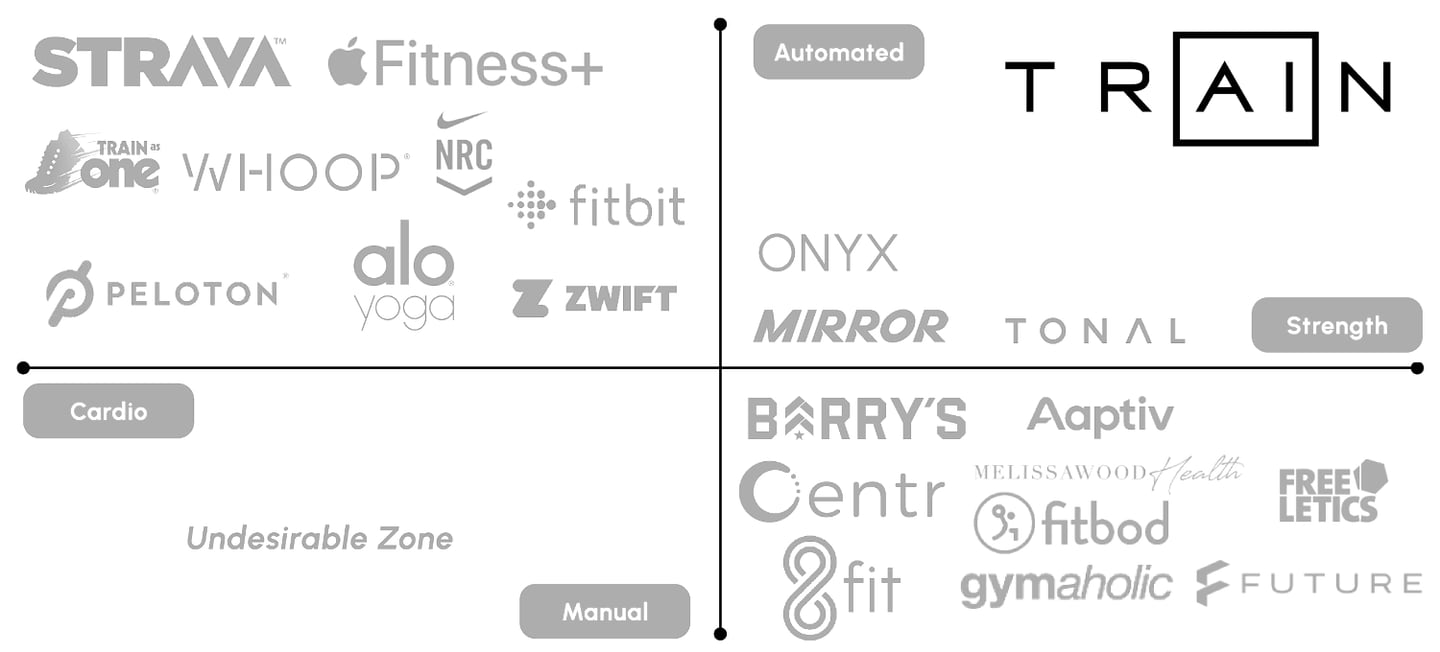
Strength training is growing very quickly in popularity, as recent scientific studies have conclusively demonstrated the power of strength training in staying healthy into old age. Gyms everywhere are seeing much faster demand growth in strength training than in other types of exercise, but there are no dominant technology brands in strength training like Strava or Peloton in cardio.
An AI-powered fitness coach could not have existed three years ago, and will be very easy to build three years from now — making it a great time to attack the market.
Significant risk: Apple’s market entry
Tracking physical activity is one of the central functions of the Apple Watch, and at ~$15 billion/year of Watch revenue, Apple can, with minimal-to-them investment, create their own logging tool for strength training. Train is mitigating this risk by making the social component of the app front and center, which is not where Apple likes to play, but this remains a large risk and makes execution speed very important.
Significant risk: Low-end competitors
Train Fitness currently has quite good accuracy – over 90% on exercises logged – but when we interviewed users about how they feel when Train miscategorizes an exercise, they don’t sound too bothered by it, and say that it’s very easy to manually correct the AI. This makes Train vulnerable to a low-end competitor who is, for example, only 75% accurate, if users don’t mind doing some manual data entry.
Lesser risk: An existing strength training application clones Train
Most of the existing fitness apps stop at the workout planning phase, and are not used during the workout itself. The incumbents in the space are not highly technical companies looking to compete in the AI domain – they mainly compete in the customer acquisition domain with roughly standardized products.
Lesser risk: Hardware competitors
Whoop has become well-known due to their Whoop Tracker, a connected wristband that only costs $49 compared to Apple Watch’s $249 (Watch SE) or $399 (Watch Series 8) price. We believe that the need for dedicated hardware will limit the scale that these competitors can achieve (although they will be very good businesses because they can achieve very high ARPU).
Relay Ventures is an early stage venture capital firm that invests in passionate entrepreneurs disrupting and creating new markets through mobile technologies. (Circle Media, Luma, theScore)
Anorak Ventures is a pre-seed and seed-stage venture capital firm based in Los Angeles and San Francisco. Anorak primarily invests in emerging technologies with core technological differentiation, particularly at the convergence of physical and digital worlds: Computer Vision and data capture, Machine Learning/AI, Hardware & Robotics, 3D computing and gaming, and Virtual and Augmented Reality. (Phiar Technologies, Spiketrap, Loom AI)
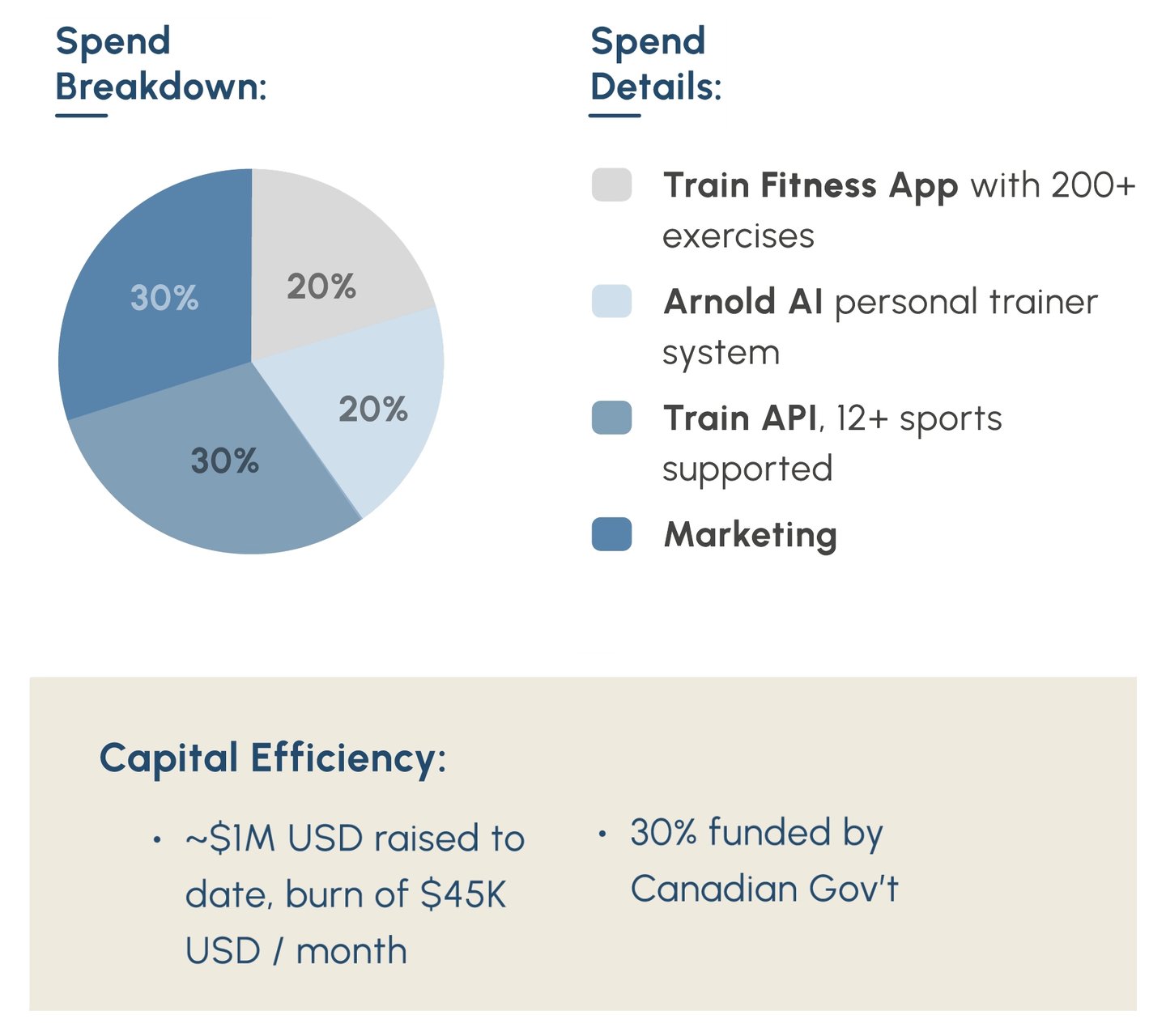 |
Founder Andrew Just created Train AI from a position of personal experience with strength training and 10+ years in mobile apps & AI. He programmed most of Train's existing app himself, and intends to scale up an engineering team to take advantage of the opportunity. According to Anorak Ventures team, Founder Andrew has the domain knowledge of a gym rat and the technical skills to ship software - he has programmed most of Train's existing app himself. Andrew has focused on the stickiest and high-value problems to address with Train's app today and will use this funding to scale up the engineering team.


Invest in the app