[FRESH PICK] Ahn Hyo Seop and Khalid Come Together for "S...
Genius
·
Dec 5, 2026
Somewhere between Seoul and Los Angeles, K-pop and R&B found a middle ground. It sounds like "Something Special" - and it...


 Oops! We couldn’t find any results...

Explore new investment opportunities:
View companies raising now

 Form C
SEC.gov
Form C
SEC.gov
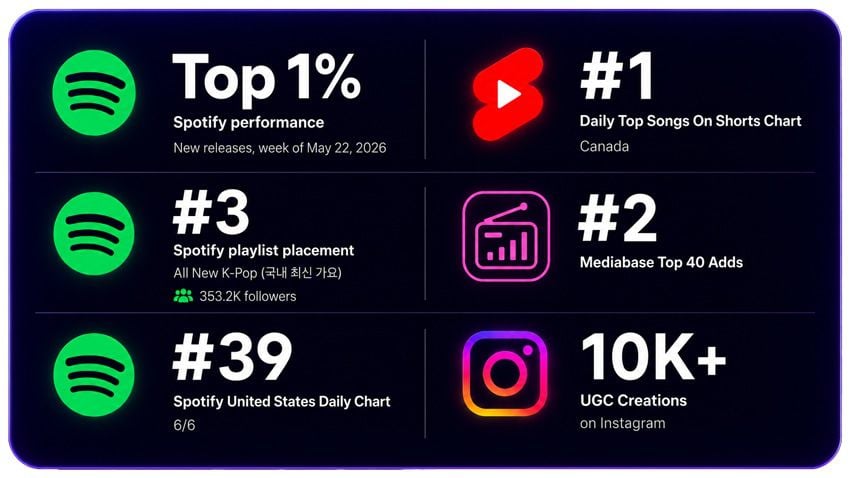 “Reach and chart figures represent historical track performance. Past performance is not indicative of future royalty outcomes or investor distributions for this offering
Become one of the first to own a real stake in a new tokenized music security from FANDOM. This is your chance to own a piece of your favorite song, straight from the creators.
“Something Special” brings together Khalid and Ahn Hyo-seop for a new global collaboration connecting U.S. pop, R&B, and K-culture fandoms. For the first time, fans can share in the financial journey of the track while supporting two artists entering a major new creative moment.

“There was really no reason not to do it. More than anything, I just wanted this song to be like a gift for my fans or just for the world.”
- Ahn Hyo-seop
"I feel truly grateful for the fact that I can connect with more people around the world in a new way through projects like this."
- Ahn Hyo-seop

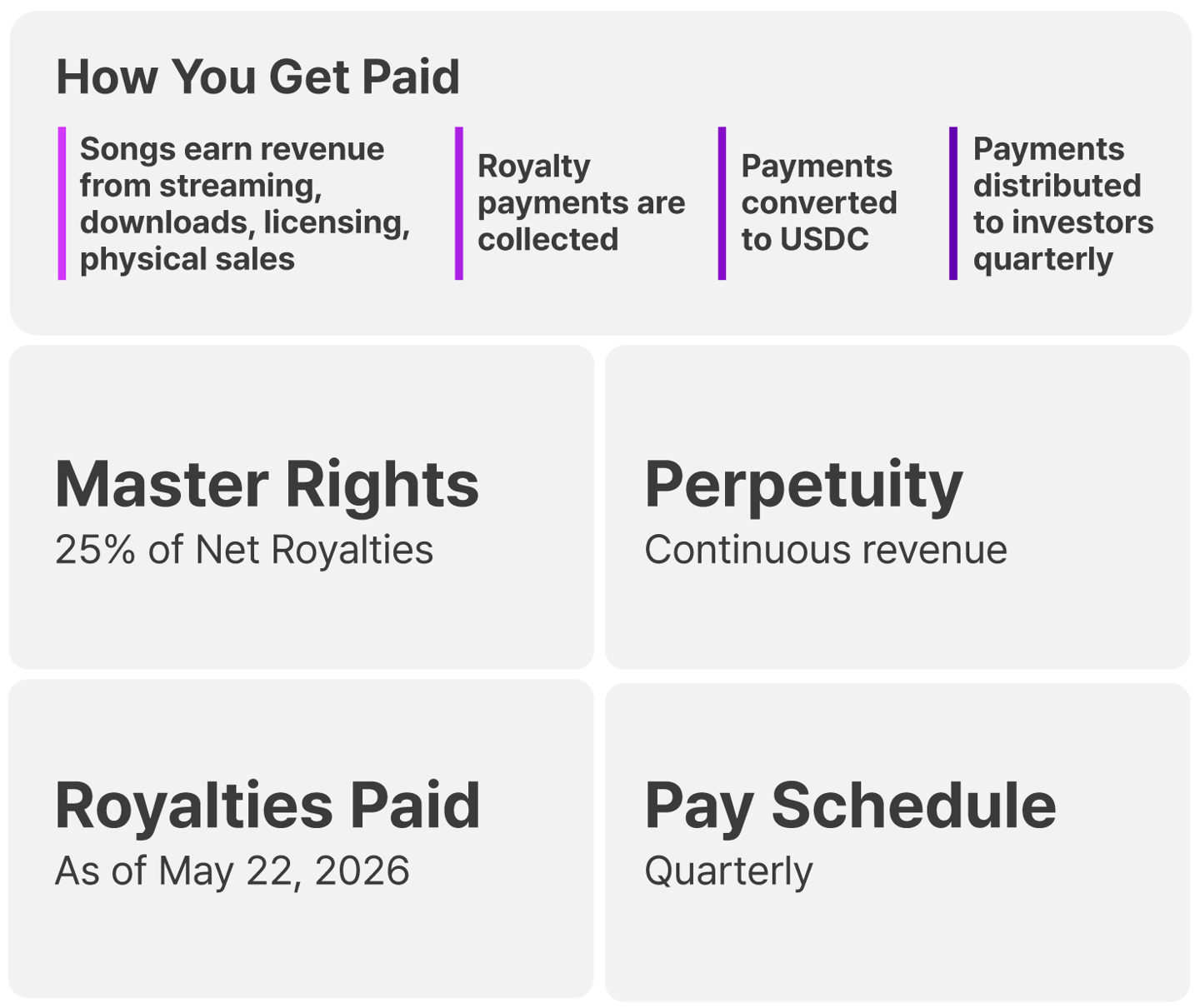
FANDOM, in partnership with Musicow and Roc Nation, gives fans the opportunity to purchase shares linked to royalty income from collaborations between K-pop and American pop artists. Fans can participate at a fixed share price and may receive distributions from income generated by streaming, downloads, licensing, and physical sales.

Image Source: Spotify Album: American Teen
Khalid is a multi-platinum, Grammy-nominated singer and songwriter whose voice and catalog have become defining fixtures in modern R&B and pop. With breakout records like “Location” and “Young Dumb & Broke,” and major projects including American Teen, Free Spirit, Scenic Drive, Sincere, and After the Sun Goes Down, Khalid has built one of the most recognizable catalogs of his generation. Following his public coming out, Khalid entered one of the most open and energized chapters of his career, which continued in 2025 with After the Sun Goes Down, a brighter, more dance-leaning fourth studio album led by singles including “In Plain Sight” and “Out of Body.”
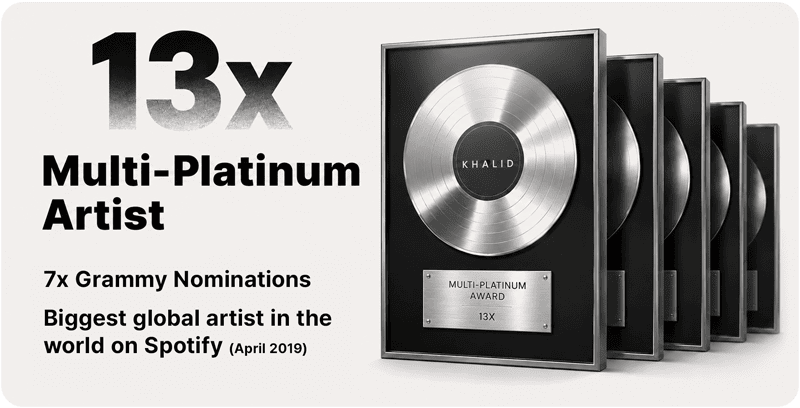
 Source: Luminate (June 2026)


Image Source: IMDB: Sold Out On You (TV Series)
Ahn Hyo-seop is a South Korean actor and singer known globally, now reaching a massive cross-medium audience through K-Pop Demon Hunters, Netflix’s 2025 animated musical fantasy phenomenon. His voice role in the film connects him to one of the year’s biggest global entertainment moments, bringing together K-drama, K-pop, animation, and streaming fandoms.
Already a major K-drama star through breakout leading roles in hit series including Business Proposal and Dr. Romantic, Ahn brings a passionate international fanbase into his music era with 'Something Special', his first solo song. As his profile continues to expand across screen, music, and global fan culture, Ahn Hyo-seop enters this next chapter as a true cross-medium star.

*Reach figures are historical combined performance of both artists. Past performance does not predict royalty outcomes of this offering.
Investors will receive a pro rata share of 25% of the net royalties received from the master recording of “Something Special”.
Streaming and sales income: Revenue generated from digital streams, downloads, and physical sales of the master recording.
Synchronization fees: Revenue from licensing the master recording for use in film, television, commercials, video games, and other visual media.
Neighboring rights and digital performance royalties: Revenue generated from qualifying radio, television, venue, digital radio, and satellite radio uses of the master recording.
Social media (UGC) income: Revenue generated from uses of the master recording on social platforms and other licensed channels.
Royalty Shares provide an economic interest in the specified royalty income tied to the master rights. We plan to distribute applicable Royalty Share payments on a quarterly basis, subject to the receipt of any royalty income. Investors will not own the master recording or copyright.
Token supply is permanently fixed at a maximum of 40,000 units.
Musicow must achieve its minimum goal of $200K before the deadline.
The maximum amount the offering can raise is $2M.
The smallest investment amount the issuer is accepting in this offering.
Something Special will end on July 13th, 2026, at 11:59 pm PT / 2:59 am ET.
Royalty Shares issued by Musicow US Vol. 1 LLC.
Each Royalty Share is $50.
Form C
SEC.gov




Right now, there are no costs for investors to open a custodial account.
Custodial accounts do sometimes have a low annual cost to maintain; however, such costs are covered for the investor in this offering at this time.
Companies will utilize a custodian to ensure that all securities they offer in their campaign are in one place. This means if a liquidity event or any other material event in respect to the securities occurs, the company can look to the custodian to service the securities, rather than each individual investor.
For investors, utilizing a custodian safeguards their investment, or security interest, with a qualified financial institution. Having a custodial account allows for easier transfers and creates additional layers of protection for your securities. For companies, it can increase efficiency by reducing their cap table management costs and creating a single-line item, making future funding rounds easier.
Music copyrights protect the creative and commercial rights of a song. There are two main types of music rights:
Master: This covers the specific recorded version of the song. These rights are typically owned by a label, artist, or other rights holder.
Composition: This covers the lyrics, melody, and underlying musical work of the song. These rights typically belong to songwriters and publishers.
Investors will receive tokens representing an economic interest tied to the master rights of the song. This means investors may be eligible to receive a share of royalty income generated from the master recording.
We were formed on August 2, 2024. As a result, the financial statements included in this Form C for the fiscal year ended December 31, 2024 reflect a partial-year period from inception (August 2, 2024) through December 31, 2024, rather than a full twelve-month fiscal year. The limited duration of the period presented, together with our limited operating history, makes period-over-period comparisons difficult and limits the usefulness of the historical financial information in evaluating an investment in the Royalty Shares. Investors should not rely on the financial statements included in this Form C as indicative of the Issuer’s future financial condition, results of operations or ability to make Royalty Share Payments.
The consolidated financial statements included in this Form C reflect the accounts of the Issuer and of Musicow US Vol. 1 LLC – Series 00001 – Mr. Know It All, Musicow US Vol. 1 LLC – Series 00002 – Should’ve Seen This Coming and Musicow US Vol. 1 LLC – Series 00003 – Western Feels. They do not include, and are not indicative of, the assets, liabilities, results of operations or prospects of Musicow US Vol. 1 LLC – Series 00004 – Something Special, which has no operating history or stand-alone financial statements. Conversely, the Royalty Shares offered in this Offering relate solely to the Royalty Stream attributable to the Master held by Musicow US Vol. 1 LLC – Series 00004 – Something Special. Investors in this Offering will have no economic exposure to, and will not be entitled to any payments derived from, the assets or royalty streams of Musicow US Vol. 1 LLC – Series 00001 – Mr. Know It All, Musicow US Vol. 1 LLC – Series 00002 – Should’ve Seen This Coming, Musicow US Vol. 1 LLC – Series 00003 – Western Feels or any other series of the Company, and the historical or future performance of such other series, whether favorable or unfavorable, will have no bearing on the Royalty Share Payments, if any, made in respect of the Royalty Shares. Accordingly, investors should not rely on the consolidated financial statements included in this Form C, or on the performance of any other series of the Company, in evaluating an investment in the Royalty Shares.
A significant outbreak of contagious diseases in the human population could result in a widespread health crisis. Additionally, geopolitical events, such as wars or conflicts, could result in global disruptions to supplies, political uncertainty and displacement. Each of these crises could adversely affect the economies and financial markets of many countries, including the United States where we principally operate, resulting in an economic downturn that could reduce the demand for our products and services and impair our business prospects, including as a result of being unable to raise additional capital on acceptable terms, if at all.
In order to achieve the Issuer’s near and long-term goals, the Issuer may need to procure funds in addition to the amount raised in the Offering. There is no guarantee the Issuer will be able to raise such funds on acceptable terms or at all. If we are not able to raise sufficient capital in the future, we may not be able to execute our business plan, our
continued operations will be in jeopardy and we may be forced to cease operations and sell or otherwise transfer all or substantially all of our remaining assets, which could cause an Investor to lose all or a portion of their investment.
We may have difficulty raising needed capital in the future as a result of, among other factors, our lack of revenues from sales, as well as the inherent business risks associated with our Issuer and present and future market conditions. We will require additional funds to execute our business strategy and conduct our operations. If adequate funds are unavailable, we may be required to delay, reduce the scope of or eliminate one or more of our research, development or commercialization programs, product launches or marketing efforts, any of which may materially harm our business, financial condition and results of operations.
As an early-stage company, we may implement new lines of business at any time. There are substantial risks and uncertainties associated with these efforts, particularly in instances where the markets are not fully developed. In developing and marketing new lines of business and/or new products and services, we may invest significant time and resources. Initial timetables for the introduction and development of new lines of business and/or new products or services may not be achieved, and price and profitability targets may not prove feasible. We may not be successful in introducing new products and services in response to industry trends or developments in technology, or those new products may not achieve market acceptance. As a result, we could lose business, be forced to price products and services on less advantageous terms to retain or attract clients or be subject to cost increases. As a result, our business, financial condition or results of operations may be adversely affected.
We depend on suppliers and contractors to meet our contractual obligations to our customers and conduct our operations. Our ability to meet our obligations to our customers may be adversely affected if suppliers or contractors do not provide the agreed-upon supplies or perform the agreed-upon services in compliance with customer requirements and in a timely and cost-effective manner. Likewise, the quality of our products may be adversely impacted if companies to whom we delegate manufacture of major components or subsystems for our products, or from whom we acquire such items, do not provide components which meet required specifications and perform to our and our customers’ expectations. Our suppliers may be unable to quickly recover from natural disasters and other events beyond their control and may be subject to additional risks such as financial problems that limit their ability to conduct their operations. The risk of these adverse effects may be greater in circumstances where we rely on only one or two contractors or suppliers for a particular component. Our products may utilize custom components available from only one source. Continued availability of those components at acceptable prices, or at all, may be affected for any number of reasons, including if those suppliers decide to concentrate on the production of common components instead of components customized to meet our requirements. The supply of components for a new or existing product could be delayed or constrained, or a key manufacturing vendor could delay shipments of completed products to us adversely affecting our business and results of operations.
The Issuer relies on certain intellectual property rights to operate its business. The Issuer’s intellectual property rights may not be sufficiently broad or otherwise may not provide us a significant competitive advantage. In addition, the steps that we have taken to maintain and protect our intellectual property may not prevent it from being challenged, invalidated, circumvented or designed-around, particularly in countries where intellectual property rights are not highly developed or protected. In some circumstances, enforcement may not be available to us because an infringer has a dominant intellectual property position or for other business reasons, or countries may require compulsory licensing of our intellectual property. Our failure to obtain or maintain intellectual property rights that convey competitive advantage, adequately protect our intellectual property or detect or prevent circumvention or unauthorized use of such property, could adversely impact our competitive position and results of operations. We also rely on nondisclosure and noncompetition agreements with employees, consultants and other parties to protect, in part, trade secrets and other proprietary rights. There can be no assurance that these agreements will adequately protect our trade secrets and other proprietary rights and will not be breached, that we will have adequate remedies for any breach, that others will not independently develop substantially equivalent proprietary information or that third parties will not otherwise gain access to our trade secrets or other proprietary rights. As we expand our business, protecting our intellectual property will become increasingly important. The protective steps we have taken may be inadequate to deter our competitors from using our proprietary information. In order to protect or enforce our patent rights, we may be required to initiate litigation against third parties, such as infringement lawsuits. Also, these third parties may assert
claims against us with or without provocation. These lawsuits could be expensive, take significant time and could divert management’s attention from other business concerns. The law relating to the scope and validity of claims in the technology field in which we operate is still evolving and, consequently, intellectual property positions in our industry are generally uncertain. We cannot assure you that we will prevail in any of these potential suits or that the damages or other remedies awarded, if any, would be commercially valuable.
We are dependent on our managers, executive officers and key employees. These persons may not devote their full time and attention to the matters of the Issuer. The loss of our managers, executive officers and key employees could harm the Issuer’s business, financial condition, cash flow and results of operations.
We are dependent on certain key personnel in order to conduct our operations and execute our business plan, however, the Issuer has not purchased any insurance policies with respect to those individuals in the event of their death or disability. Therefore, if any of these personnel die or become disabled, the Issuer will not receive any compensation to assist with such person’s absence. The loss of such person could negatively affect the Issuer and our operations. We have no way to guarantee key personnel will stay with the Issuer, as many states do not enforce non-competition agreements, and therefore acquiring key man insurance will not ameliorate all of the risk of relying on key personnel.
Our reputation and the quality of our brand are critical to our business and success in existing markets, and will be critical to our success as we enter new markets. Any incident that erodes consumer loyalty for our brand could significantly reduce its value and damage our business. We may be adversely affected by any negative publicity, regardless of its accuracy. Also, there has been a marked increase in the use of social media platforms and similar devices, including blogs, social media websites and other forms of internet-based communications that provide individuals with access to a broad audience of consumers and other interested persons. The availability of information on social media platforms is virtually immediate as is its impact. Information posted may be adverse to our interests or may be inaccurate, each of which may harm our performance, prospects or business. The harm may be immediate and may disseminate rapidly and broadly, without affording us an opportunity for redress or correction.
The Company was formed on August 2, 2024 and has no operating history. We cannot make any assurance that our business model will be successful. Since the inception of the Company, the scope of our operations has been limited to its formation and we, and/our affiliated entities, entering into agreements with third parties that will provide services to us. Our operations will be dedicated to holding and managing the Royalty Streams and Master. It is difficult to predict whether this business model will succeed or if there will ever be any profits realized from an investment in the Royalty Shares. No guarantee can be given that the Company will successfully employ the Royalty Streams and Master to create return for investors in the Royalty Shares.
The Company’s affiliates Musicow IP and Musicow Asset, have been engaged in securing music IP rights and establishing the management operations for the Company. Additionally, Musicow IP is engaged in the acquisition of music IP rights as well as the production of music unrelated to the business of the Company. However, there is no assurance that the Company can achieve the same operations as its affiliates.
We continue to face advanced and persistent attacks on our information infrastructure where we manage and store various proprietary information and sensitive/confidential data relating to our operations. These attacks may include sophisticated malware (viruses, worms, and other malicious software programs) and phishing emails that attack our products or otherwise exploit any security vulnerabilities. These intrusions sometimes may be zero-day malware that are difficult to identify because they are not included in the signature set of commercially available antivirus scanning programs. Experienced computer programmers and hackers may be able to penetrate our network security and misappropriate or compromise our confidential information or that of our customers or other third-parties, create system disruptions, or cause shutdowns. Additionally, sophisticated software and applications that we produce or procure from third-parties may contain defects in design or manufacture, including “bugs” and other problems that could unexpectedly interfere with the operation of the information infrastructure. A disruption, infiltration or failure of our information infrastructure systems or any of our data centers as a result of software or hardware malfunctions, computer viruses, cyber-attacks, employee theft or misuse, power disruptions, natural disasters or accidents could cause breaches of data security, loss of critical data and performance delays, which in turn could adversely affect our business.
Our business requires the collection, transmission and retention of personally identifiable information, in various information technology systems that we maintain and in those maintained by third parties with whom we contract to provide services. The integrity and protection of that data is critical to us. The information, security and privacy requirements imposed by governmental regulation are increasingly demanding. Our systems may not be able to satisfy these changing requirements and customer and employee expectations, or may require significant additional investments or time in order to do so. A breach in the security of our information technology systems or those of our service providers could lead to an interruption in the operation of our systems, resulting in operational inefficiencies
and a loss of profits. Additionally, a significant theft, loss or misappropriation of, or access to, customers’ or other proprietary data or other breach of our information technology systems could result in fines, legal claims or proceedings.
The regulation of individual data is changing rapidly, and in unpredictable ways. A change in regulation could adversely affect our business, including causing our business model to no longer be viable. Costs associated with information security – such as investment in technology, the costs of compliance with consumer protection laws and costs resulting from consumer fraud – could cause our business and results of operations to suffer materially. Additionally, the success of our online operations depends upon the secure transmission of confidential information over public networks, including the use of cashless payments. The intentional or negligent actions of employees, business associates or third parties may undermine our security measures. As a result, unauthorized parties may obtain access to our data systems and misappropriate confidential data. There can be no assurance that advances in computer capabilities, new discoveries in the field of cryptography or other developments will prevent the compromise of our customer transaction processing capabilities and personal data. If any such compromise of our security or the security of information residing with our business associates or third parties were to occur, it could have a material adverse effect on our reputation, operating results and financial condition. Any compromise of our data security may materially increase the costs we incur to protect against such breaches and could subject us to additional legal risk.
The Issuer may not have the internal control infrastructure that would meet the standards of a public company, including the requirements of the Sarbanes Oxley Act of 2002. As a privately-held (non-public) issuer, the Issuer is currently not subject to the Sarbanes Oxley Act of 2002, and its financial and disclosure controls and procedures reflect its status as a development stage, non-public company. There can be no guarantee that there are no significant deficiencies or material weaknesses in the quality of the Issuer’s financial and disclosure controls and procedures. If it were necessary to implement such financial and disclosure controls and procedures, the cost to the Issuer of such compliance could be substantial and could have a material adverse effect on the Issuer’s results of operations.
We are also subject to a wide range of federal, state, and local laws and regulations, such as local licensing requirements, and retail financing, debt collection, consumer protection, environmental, health and safety, creditor, wage-hour, anti-discrimination, whistleblower and other employment practices laws and regulations and we expect these costs to increase going forward. The violation of these or future requirements or laws and regulations could result in administrative, civil, or criminal sanctions against us, which may include fines, a cease and desist order against the subject operations or even revocation or suspension of our license to operate the subject business. As a result, we have incurred and will continue to incur capital and operating expenditures and other costs to comply with these requirements and laws and regulations.
We may encounter challenges and difficulties frequently experienced by early-stage companies; including:
A lack of operating experience;
Incurring and increasing net losses and negative cash flows;
Insufficient revenue or cash flow to be self-sustaining;
An unproven business model; and
Difficulties in managing rapid growth.
We are an early-stage company in which you may lose your entire investment. We were formed in August of 2024. Because we have no operating history, we are unable to provide significant data upon which to evaluate fully our prospects and an investment in our Royalty Shares. Our ability to succeed and generate operating profits and positive operating cash flow will depend on our ability, among other things, to:
Develop and execute our business model;
Raise additional capital as contemplated in this Offering, if necessary, in the future;
Attract and retain qualified personnel.
We cannot be certain that our business strategy will be successful in the long-term because this strategy is still relatively new and even if successful, we may face difficulty in managing our growth. As an early-stage company, we will be particularly susceptible to the risks and uncertainties described in these risk factors.
We expect that, until we enter into the Royalty Assignment Agreement for a sufficient amount of Royalty Streams, we will not be generating sufficient revenue to fully carry out our planned operations. In order to generate sufficient revenues to carry out our plan of operations and cover our expenses, including the expenses of this Offering, we believe we will need to continue to enter into Royalty Assignment Agreements for Royalty Streams until we reach a sufficient scale. We expect that our costs may increase as Musicow IP continues identifying and negotiating with artists and record labels and entering into new Artist Agreements with featured artists as well as new Royalty Assignment Agreements with the Company and thereby incurring more costs. If a lack of available capital means that we are unable to expand our operations or otherwise take advantage of business opportunities, our business, financial condition and results of operations could be adversely affected.
We believe that few other businesses crowdfund royalty streaming (or similar related interests) or propose to run a platform for crowdfunding royalty streams. The Company and our Royalty Shares may not gain market acceptance from potential investors, featured artists or service providers within the music industry.
While there are currently few businesses that have pursued a strategy or investment objective similar to ours, other businesses may emerge in the future operating in ways that are competitive against our business model. Such competition could have a negative impact on the demand for, and price of, the Royalty Shares.
Because the Company operates with no employees and is reliant on the administrative services provided by the Manager, we may encounter limitations on the effectiveness of our internal controls over financial reporting, public disclosures and other matters. For example, as a result of our staffing, our processing of financial information may suffer from a lack of segregation of duties, which may result in journal entries and account reconciliations not being reviewed by someone other than the preparer, outside of any review by the Company’s auditors. If we encounter limitations on the effectiveness of our internal controls and are unable to remediate them, we may not be able to report
our financial results accurately, prevent fraud or file any periodic reports in an accurate, complete, and timely manner. This could potentially harm our business and holders of Royalty Shares.
We attempted to estimate our funding requirements necessary to implement our business plan. If the costs of implementing such plan should exceed these estimates significantly, we may need to raise additional funds to meet these funding requirements. The Manager/Administrator has funded the Company in an amount of $47,200.00 as of December 31, 2024, and $57,525 as of December 31, 2025, which the Company has used for organizational and formation costs, legal fees, auditor fees and fees for other service providers as well as general expenses. The Manager is funded by Musicow US. Musicow US intends to continue to fund the Manager, and the Manager intends to continue to fund the Company and its affiliates for both buying additional rights and general expenses. However, there is no guarantee that Musicow US will continue to contribute such funds. Any additional funds may be raised by issuing equity or debt securities or by borrowing from banks or other resources. We cannot assure you that we will be able to obtain any additional financing on terms that are acceptable to us, or at all. If adequate capital is not available or the terms of such capital are not attractive, we may have to curtail our growth and our business, and our business, prospects, financial condition and results of operations could be adversely affected.
The value of the Royalty Shares may be influenced by a variety of factors unrelated to the performance of the Master underlying the Royalty Streams. These factors include the following:
Unanticipated problems or issues with respect to the mechanics of the Company’s operations may arise, in particular due to the fact that the mechanisms and procedures governing the creation and offering of the Royalty Shares have been developed specifically for this product;
The Company or its service providers could experience difficulties in operating and maintaining its technical infrastructure, including in connection with expansions or updates to such infrastructure, which may be complex and could lead to unanticipated delays, unforeseen expenses, and security vulnerabilities; and
The Company or its service providers could experience unforeseen issues relating to the performance and effectiveness of the security procedures it uses to operate, or the security procedures may not protect against all errors, software flaws, or other vulnerabilities in the Company’s technical infrastructure, which could give rise to potential unforeseen expenses and reputational harm to the Company.
To date, the Company has made budgeting and operational decisions based on internal financial and operational projections, in order to meet the foreseeable needs of the Company to conduct its business activities in an effective manner. While the relevant projections have been prepared based on carefully devised business assumptions, the demand for Royalty Shares may nonetheless be higher than indicated by our internal projections, in which event the resources currently allocated to customer support may fall short of the Company’s actual needs. While we intend to address such personnel resources issues swiftly, temporary personnel shortages resulting from unanticipated demand may result in dissatisfaction of the Company’s investors and holders of Royalty Shares, which in turn may result in reputational harm to the Company and/or the Royalty Shares.
The Investment Company Act is designed to protect investors by preventing insiders from managing investment companies to their benefit and to the detriment of public investors, such as: the issuance of securities having inequitable or discriminatory provisions; the management of investment companies by irresponsible persons; the use of unsound or misleading methods of computing earnings and asset value; changes in the character of investment companies without the consent of investors; and investment companies engaging in excessive leveraging. To accomplish these ends, the Investment Company Act requires the safekeeping and proper valuation of fund assets, greatly restricts transactions with affiliates, limits leveraging, and imposes governance requirements as a check on fund management.
The Company is not and will not be registered as an investment company under the Investment Company Act of 1940, as amended (the “ICA”), and we believe that the Company is not required to register thereunder. Consequently, holders of Royalty Shares do not have the regulatory protections provided to investors in investment companies.
The Company will not hold or trade in commodity interests regulated by the CEA, as administered by the Commodity Futures Trading Commission (the “CFTC”). Furthermore, we believe that the Company is not a commodity pool for purposes of the CEA, and that the Company is not subject to regulation by the CFTC as a commodity pool operator or a commodity trading advisor in connection with the operation of the Company. Consequently, holders of Royalty Shares will not have the regulatory protections provided to investors in CEA-regulated instruments or commodity pools.
The Company is not registered and will not be registered as an investment company under the ICA, and the Manager will not be registered as an investment adviser under the Investment Advisers Act of 1940, as amended (the “Investment Advisers Act”), and the Royalty Shares do not have the benefit of the protections of the ICA or the Investment Advisers Act. The Company and the Manager have taken the position that the Royalty Shares are not “securities” within the meaning of the Investment Company Act or the Investment Advisers Act, and thus the Company’s assets will consist of less than 40% investment securities under the ICA and the Manager is not and will not be advising with respect to securities under the Investment Advisers Act. This position, however, is based upon applicable case law that is inherently subject to judgments and interpretation. If the Company were to be required to register under the ICA or the Manager were to be required to register under the Investment Advisers Act, it could have a material and adverse impact on the results of operations and the Manager may be forced to liquidate and wind up or rescind the Offering.
Royalty Shares purchased directly from the Company may not be resold except in transactions exempt from registration under the Securities Act and state securities laws and, where applicable, with the consent of the Company.
The Company is not accepting, and does not expect to accept, redemption requests from holders of Royalty Shares. Therefore, unless the Company is permitted to, and does, establish a Royalty Share redemption program, a holder of Royalty Shares may be unable to (or could be significantly impeded in attempting to) sell or otherwise liquidate investments in the Royalty Shares, which could have a material adverse impact on demand for the Royalty Shares and their value.
By purchasing Royalty Shares in this Offering, investors agree to be bound by the arbitration provisions contained in our Subscription Agreement which provide that arbitration is the exclusive means for resolving disputes relating to or arising under the Subscription Agreement and efforts to enforce, interpret or construe such agreement. In addition, by signing the Subscription Agreement, you waive your rights to a jury trial in any such dispute. The arbitration provisions and the waiver of rights to a jury trial in disputes subject to arbitration apply to claims under the U.S. federal securities laws and to all claims that are related to the Company and the Royalty Shares. Arbitration awards are generally final and binding. A party’s ability to have a court reverse or modify an arbitration award is very limited. Further, any claims arising out of the Subscription Agreement must be brought in the parties’ individual capacity, and not as a plaintiff or class member in any purported class action, collective action, private attorney general action, or other representative proceeding, or class arbitration. An arbitrator may not consolidate more than one individual’s claims arising out of the Subscription Agreement. Purchasers of Royalty Shares in a secondary transaction would also be subject to the same arbitration provisions and jury waiver that are currently in our Subscription Agreement. In addition, such arbitration provisions limit the ability of investors to bring class action lawsuits or similarly seek remedies on a class basis for claims subject to the provisions. If invoked, the arbitration is required to be conducted in the State of Delaware in accordance with Delaware law. These restrictions on the ability to bring a class action lawsuit and the waiver of a jury trial may result in increased costs and/or reduced remedies to individual investors who wish
to pursue claims against the Company. Claims by which a jury trial is waived could include claims made under the federal securities laws.
We believe that the arbitration provision in the Subscription Agreement is enforceable under federal law, the laws of the State of Delaware, or under any other applicable laws or regulations. However, the issue of enforceability is not free from doubt and, to the extent that one or more of the provisions in our Subscription Agreement with respect to arbitration or otherwise requiring you to waive certain rights, were to be found by a court to be unenforceable, we would abide by such decision.
BY AGREEING TO BE SUBJECT TO THE ARBITRATION PROVISION, INVESTORS WILL NOT BE DEEMED TO WAIVE THE COMPANY’S COMPLIANCE WITH THE FEDERAL SECURITIES LAWS AND THE RULES AND REGULATIONS PROMULGATED THEREUNDER.
Although our Subscription Agreement generally provides for non-exclusive jurisdiction and venue in accordance with the laws of the State of Delaware, it also requires you to acknowledge that this non-exclusive jurisdiction and venue selection provision does not apply to claims arising under the Securities Act and the Exchange Act. For this reason, all claims arising under the Securities Act and the Exchange Act may be required to be brought in federal court. There is uncertainty as to whether a court would enforce this aspect of the Subscription Agreement if a party were to otherwise seek redress under the federal securities laws in a state court. We expect to assert vigorously the validity and enforceability of federal securities laws and other claims for which federal courts may have exclusive jurisdiction and venue in the federal district courts of the United States. This may require significant additional costs associated with resolving such action in other jurisdictions and there can be no assurance as to how the provision will be interpreted by a court in those other jurisdictions.
This choice of forum provision may limit a holder of Royalty Shares’ ability to bring a Securities Act or Exchange Act claim in a state forum that it finds favorable for disputes with us or our Manager, officers, or other employees. If a court were to find this provision in our Subscription Agreement to be inapplicable or unenforceable in an action, we may incur additional costs associated with resolving the dispute in other jurisdictions, which could seriously harm our financial condition. By agreeing to the Subscription Agreement, you will not be deemed to have waived the Company’s compliance with U.S. federal securities laws and the rules and regulations promulgated thereunder.
We do not plan to have employees and intend to fund our ongoing operations with net Offering proceeds and capital contributions from the Manager. The Manager is funded by Musicow US. We are substantially reliant on the performance of the Manager under the Operating Agreement. The Manager will assist us in the performance and administration of all of our necessary day-to-day operational tasks in connection with the Offering and our obligations to holders of Royalty Shares. The Manager is a newly formed company and has not yet developed a track record of successful performance of these activities. If the Manager were to default on its obligations under the Operating Agreement, it would be extremely difficult for us to replace the Manager or to internally manage these functions. Accordingly, in the event of a material default by the Manager under the terms of the Operating Agreement, it could potentially give rise to circumstances under which we may be forced to liquidate or distribute the Company’s assets. We cannot provide assurance that the timing or terms of any such liquidation would be favorable.
On December 31, 2025, the Company had no cash flow from operating activities. Further, the Company has not conducted material operations. The Company expects to continue to generate operating losses for the foreseeable future.
There is no assurance that sufficient funds required during the next year or thereafter will be generated from operations or that funds will be available through external sources. The lack of additional capital resulting from the inability to generate cash flow from operations or to raise capital from external sources would force the Company to substantially curtail or cease operations and would, therefore, have a material effect on the business. Furthermore, there can be no
assurance that any such required funds, if available, will be available on attractive terms or they will not have a significant dilutive effect on the Company’s existing shareholders. We have therefore concluded there is substantial doubt about our ability to continue as a going concern as of December 31, 2025.
In the event of a bankruptcy or a similar proceeding by the Company, the rights of investors to continue receiving payments in respect of the Royalty Shares could be subject to the following risks and uncertainties:
Organizations may delay payments to us on account of the Royalty Streams because of the uncertainties occasioned by a bankruptcy or similar proceeding of the Company, even if they have no legal right to do so, and such delay could reduce, at least for a time, the funds that might otherwise be available for distribution to holders of the Royalty Shares corresponding to those Royalty Streams.
In a bankruptcy or similar proceeding of the Company, our obligation to continue making Royalty Share Payments would likely be suspended or delayed even if the funds to make such distributions were available. Because a bankruptcy or similar proceeding may take months or years to complete, even if the suspended distributions were resumed, the suspension might effectively reduce the value of any recovery that a holder of a Royalty Share might receive by the time such recovery occurs.
The Royalty Shares are unsecured, and investors do not have a security interest in the corresponding Royalty Streams. Accordingly, the holders of the Royalty Shares may be treated as general unsecured creditors and thus be required to share the monies associated with Royalty Streams received by us in respect of the corresponding Royalty Streams with our other general unsecured creditors. If such sharing of Royalty Streams is deemed appropriate, those Royalty Streams that are either held by us in our accounts at the time of the bankruptcy or similar proceeding of the Company, or not yet received by us at the time of the commencement of the bankruptcy or similar proceeding, may be at greater risk than the Royalty Share Payments that are already held by us in accounts for the benefit of holder of Royalty Shares at the time of the bankruptcy or similar proceeding. To the extent that Royalty Streams would be shared with other creditors of the Company, any secured or priority rights of such other creditors may cause such Royalty Streams to be distributed to such other creditors before, or ratably with, any Royalty Share Payments made to holders of Royalty Shares.
In a bankruptcy or similar proceeding of the Company, a holder of a Royalty Share would be deemed to have a right of payment only from the Royalty Streams of the corresponding Master and not from any other assets of the Company, and the holder of a Royalty Share will not be entitled to share the proceeds of such other assets of the Company with other creditors of the Company, whether or not, as described above, such other creditors would be entitled to share in the Royalty Streams of the Master corresponding to such Royalty Share. To the extent that proceeds of such other assets would be shared with other creditors of the Company, any secured or priority rights of such other creditors may cause the proceeds to be distributed to such other creditors before, or ratably with, any Royalty Share Payments.
If we have received Royalty Streams before bankruptcy proceedings are commenced and those funds are held in our accounts after the commencement of bankruptcy proceedings and have not been used by us to make Royalty Share Payments, there can be no assurance that we will be able to use such funds to make Royalty Share Payments.
If a bankruptcy proceeding commences after your commitment becomes irrevocable, you may not be able to obtain a refund of the funds you have committed even if the Offering proceeds have not yet been used.
If we or the Manager were to become subject to bankruptcy or similar proceedings or if we or the Manager ceased operations, the Company, or a bankruptcy trustee on our behalf, might be required to find other ways to manage Royalty Streams and Royalty Shares, including the collection of royalties and the making of Royalty Share Payments to holders of Royalty Shares. Such alternatives could result in delays in the making of Royalty Share Payments on Royalty Shares or could require payment of significant fees to another company to manage and service the Royalty Streams and the Royalty Shares. Since we have not entered into any back-up management agreements, if we or the Manager were to cease operations or otherwise become unable to manage the Royalty Streams or the Royalty Shares without transferring such Royalty Streams to another entity, the management of the Royalty Streams and the Royalty Shares, including the making of Royalty Share Payments, would be interrupted and may halt altogether unless another way to manage the Royalty Streams and the Royalty Shares on behalf of investors was secured.
If we or the Manager were to file under Chapter 11 of the Bankruptcy Code, it is possible that we would be able to continue to manage the Royalty Streams and the Royalty Shares during reorganization. If, on the other hand, we were to file under Chapter 7 of the Bankruptcy Code, or if an attempted reorganization under Chapter 11 should fail and the bankruptcy case be converted to Chapter 7, the bankruptcy trustee would have the obligation to administer the bankruptcy estate. As part of such administration, the bankruptcy trustee, subject to bankruptcy court approval, may elect to continue to Royalty Streams and the Royalty Shares or to transfer the right to such servicing to another entity for a fee. Either option would likely result in delays in the collection of Royalty Streams and in the making of Royalty Share Payments and could require the bankruptcy trustee to pay significant fees to another company to manage the Royalty Streams and the Royalty Shares, ultimately decreasing the amounts available for Royalty Share Payments. Alternatively, the bankruptcy trustee may elect to cease these management functions altogether.
In the event that we or the Manager were to cease operations or enter into bankruptcy proceedings, recovery by a holder of a Royalty Share may be substantially delayed while back-up management is secured, if practicable, or such services halted altogether, and such recovery may be substantially less than the amounts due and that may become due in respect of the Royalty Shares.
While it is expected that we will operate so that the arrangement will qualify to be treated for U.S. federal income tax purposes as an investment trust, and not as a business entity, given the highly complex nature of the rules governing trusts and partnerships, the ongoing importance of factual determinations, the lack of direct guidance with respect to the application of tax laws to the activities we are undertaking and the possibility of future changes in our circumstances, it is possible that the arrangement will not qualify to be taxable as an investment trust for any particular year. If the Company’s arrangement does not qualify as an investment trust, it may default to a business entity that is characterized as a partnership.
If, for any reason, the arrangement is or becomes taxable as a corporation for U.S. federal income tax purposes, the investors will not be entitled to flow through tax treatment. Instead, the business entity will be required to pay a corporate level income tax on its net income, and distributions to investors will be subject to a shareholder level income tax as a dividend to the extent of the business entity’s earnings and profits. The arrangement’s failure to qualify as an investment trust for U.S. federal income tax purposes could have a material adverse effect on the Company, our investors, and the value of the Royalty Shares.
The Company will not seek rulings from the IRS with respect to any of the United States federal income tax considerations discussed in this Offering. Thus, positions to be taken by the IRS as to tax consequences could differ from the positions taken by the Company.
The Company intends to provide relevant U.S. tax reporting information (e.g., Form 1099) to the holders of the Royalty Shares. However, it may not be able to provide final tax filing information to the holder of Royalty Shares for any given fiscal year until after the initial tax filing deadlines for holders of the Royalty Shares tax returns. Each prospective investor is urged to consult with its own adviser as to the advisability and tax consequences of an investment in the Royalty Shares and plan to obtain extensions of the filing dates for their income tax returns as necessary. In general, royalty income is taxed as ordinary income. Therefore, for U.S. federal income tax purposes, a distribution to a holder of a Royalty Share of its associated Royalty Streams should also be taxed as royalty income at ordinary income tax rates.
Royalty Streams received by us from sources outside of the U.S. may be subject to non-U.S. withholding or other taxes. In addition, the Company may also be subject to taxes in some of the non-U.S. countries where the Company purchases and sells its investments. Taxes such as withholding tax, capital gains taxes, or similar taxes may be imposed on, and thereby reduce, profits of, or proceeds arising to, the Company in respect of the Royalty Shares. It is impossible to predict the rate of non-U.S. tax the Company will pay since the portion (if any) of the Company’s assets to be invested in non-U.S. countries is not known and non-U.S. tax laws are subject to change. The holders of Royalty Shares will be informed by the Company as to their proportionate share of taxes paid by the Company, as applicable, which they will be required to include in their income. Each investor considering purchasing Royalty Shares should
consult its own tax advisor with respect to the availability of credits against tax liability for such taxes.
Our Operating Agreement designates the federal district courts of the United States of America and the courts of the State of Delaware, in each case located in the state of Delaware, as the exclusive forum for disputes between us and our shareholders involving claims under the Securities Act. Section 22 of the Securities Act creates concurrent jurisdiction for federal and state courts over all Securities Act actions. Accordingly, both state and federal courts have jurisdiction to entertain such claims. To prevent having to litigate claims in multiple jurisdictions and the threat of inconsistent or contrary rulings by different courts, among other considerations, our Operating Agreement provides that the federal district courts of the United States of America will be the exclusive forum for resolving any complaint asserting a cause of action arising under the Securities Act. There is uncertainty as to whether a court would enforce such provision, and the enforceability of similar choice of forum provisions in other companies’ constitutive documents has been challenged in legal proceedings. While the Delaware courts have determined that such choice of forum provisions are facially valid, a shareholder may nevertheless seek to bring a claim in a venue other than those designated in the exclusive forum provisions. In such instance, we would expect to vigorously assert the validity and enforceability of the exclusive forum provisions of our Operating Agreement. This may require significant additional costs associated with resolving such action in other jurisdictions and there can be no assurance that the provisions will be enforced by a court in those other jurisdictions.
This choice of forum provision may limit a holder of Royalty Shares ability to bring a Securities Act claim in a judicial forum that it finds favorable for disputes with us, our officers or our Manager, and its officers, or other employees. If a court were to find the exclusive-forum provision in our Operating Agreement to be inapplicable or unenforceable in an action, we may incur additional costs associated with resolving the dispute in other jurisdictions, which could seriously harm our financial condition. Investors cannot waive compliance with U.S. federal securities laws and the rules and regulations promulgated thereunder.
Our Operating Agreement provides that any controversy which may arise under the Operating Agreement or related to the operations of the Company is likely to involve complicated and difficult issues and, therefore, the operating agreement unconditionally waives any right that any party thereto may have to a trial by jury in respect of any legal action arising out of or relating to the Operating Agreement or related to the operations of the Company. If we were to oppose a jury trial demand based on such waiver, the court would determine whether the waiver was enforceable based upon the facts and circumstances of that case in accordance with applicable state and federal law, including whether a party knowingly, intelligently and voluntarily waived the right to a jury trial.
THE WAIVER OF THE RIGHT TO A JURY TRIAL IS NOT INTENDED TO BE DEEMED A WAIVER BY ANY HOLDER OF ROYALTY SHARES OF THE COMPANY’S COMPLIANCE WITH THE U.S. FEDERAL SECURITIES LAWS AND THE RULES AND REGULATIONS PROMULGATED THEREUNDER. THE JURY WAIVER PROVISION DOES NOT APPLY TO CLAIMS BROUGHT UNDER THE EXCHANGE ACT AND SECURITIES ACT.
Our Operating Agreement provides that in the event that any party to the Operating Agreement institutes any action or suit to enforce the Operating Agreement or to secure relief from any default thereunder or breach thereof, the prevailing party shall be reimbursed by the losing party for all costs, including reasonable attorney’s fees, incurred in connection therewith and in enforcing or collecting any judgment rendered therein. In the event you initiate or assert a claims against us, in accordance our Operating Agreement, and you do not obtain a judgment on the merits that substantially achieves, in substance and amount, the full remedy sought, you will be obligated to reimburse us for all reasonable costs and expenses incurred in connection with such claim, including, but not limited to, reasonable attorney’s fees and expenses and costs of appeal, if any.
THE FEE SHIFTING PROVISION CONTAINED IN THE OPERATING AGREEMENT IS NOT INTENDED TO BE DEEMED A WAIVER BY ANY HOLDER OF ROYALTY SHARES OF THE COMPANY’S COMPLIANCE
WITH THE U.S. FEDERAL SECURITIES LAWS AND THE RULES AND REGULATIONS PROMULGATED THEREUNDER. THE FEE SHIFTING PROVISION CONTAINED IN THE OPERATING AGREEMENT DOES NOT APPLY TO CLAIMS BROUGHT UNDER THE EXCHANGE ACT AND SECURITIES ACT.
Risks Related to the Music Industry
In the United States, the composition and recording copyrights embodied in a song are generally protected by U.S. Copyright Law for the periods as follows (subject to various exceptions and nuances): (a) songs created or published in or after 1978, life of the author plus 70 years; (b) songs created or published between 1927 and 1978, there are various applicable periods depending on multiple factors; and (c) for works-made-for-hire created in or after 1978, 95 years from publication date or 120 years from the creation year (whichever expires first). Copyright renewals may also affect the above-referenced timelines. As of 2025, any song created or published before 1929 is currently in the public domain. When a composition or recording moves into the public domain, one who wants to exploit the song does not need to seek permission from or pay royalties to the rights holder. Therefore, if a Master moves into the public domain, the amount of Royalty Share Payments paid in respect of the applicable Royalty Shares may diminish or completely end.
Section 203 and Section 304 of the U.S. Copyright Act provide for a right (with exceptions and limitations) of copyright reversion for creators and/or their statutorily recognized heirs within a five (5) year window commencing after a period of thirty-five (35) years, fifty-six (56) years, or seventy-five (75) years, as applicable, after (i) the date of the original grant of copyright and/or (ii) the date of first publication (depending on the particular circumstances as set out under the US Copyright Act). Where a Royalty Stream is dependent on a third-party copyright, its U.S. termination and reversion under these statutory provisions could render the U.S. or world-wide Royalty Stream diminished or extinguished. In addition, currently, in the U.S., it is accepted under certain case law that Royalty Stream transfers are not terminable under Section 203 of the U.S. Copyright Act – only copyright transfers are terminable (with exceptions and limitations as noted above). There is also a recent case law in the U.S. that concluded that the termination is effective world-wide, but this ruling is a trial court ruling that could be appealed.
In addition to statutory termination, a grant of copyright interest may revert to the granting party pursuant to specific contractual terms. Rights under some agreements may be recaptured by the granting party either by performance of some additional obligation (e.g. repayment of monies advanced under the contract) or by the expiration of a term of years, or other contractual reasons. The Company may not be able to track and monitor its obligations and rights granted under contracts with Featured Artists. Additionally, the Company’s interests in the Masters, in some cases, may be granted under short-term contracts which may expire, or may contain buy-out provisions pursuant to which the relevant artist may terminate the contract prior to its expiration.
Accordingly, if any of the foregoing occurs, the amount of Royalty Share Payments paid in respect of the applicable Royalty Shares may diminish or completely end, which would greatly reduce the value of the Royalty Shares.
Every consecutive year since 2006, music streaming’s market share has grown. There can be no assurances that this growth pattern will persist or that digital revenue will grow at a rate sufficient to offset declines in physical sales, or that changes in streaming models will not negatively impact income generated from the Masters and Royalty Streams. A declining recorded music industry is likely to lead to reduced levels of revenue and operating income generated by the recording and publishing music business. There are also a variety of factors that could cause the prices in the recorded music industry to be reduced. They are, among others, consumption during a global pandemic and fear for economic downturns, price competition from the sale of motion pictures and video games in physical and digital formats, the negotiating leverage of mass merchandisers, big-box retailers and distributors of digital music, and the increased costs of doing business with mass merchandisers and big-box retailers as a result of complying with operating procedures that are unique to their needs and any associated changes.
The recorded and publishing music business is dependent in part on technological developments, including access to and selection and viability of new technologies, and is subject to potential pressure from competitors as a result of their technological developments. For example, the recorded music business may be further adversely affected by technological developments that facilitate the piracy of music, such as internet peer-to-peer filesharing activities, by an inability to enforce intellectual property rights in digital environments, and by a failure to develop successful business models applicable to a digital environment. Music that is illegally produced, distributed, and/or exploited with the use of artificial intelligence could also infringe upon the intellectual property rights associated with the Master and adversely affect our ability to collect our Royalty Streams. The recorded music business also faces competition from other forms of entertainment and leisure activities, such as cable and satellite television, motion pictures, and video games, whether in physical or digital formats. The new digital business, including the impact of ad-supported music services, some of which may be able to avail themselves of “safe harbor” defenses against copyright infringement actions under copyright laws, may also limit the recorded music industry’s ability to receive income from music royalty rights. Due to such “safe harbor” defenses, revenue from ad-supported music services may not fully reflect increases in consumption of recorded music. In addition, the recorded music industry is currently dependent on a small number of leading digital music services, which allows such services to significantly influence the prices that can be charged in connection with the distribution of digital music. It is possible that the share of music sales by a small number of leading mass-market retailers, as well as online retailers and digital music services, will continue to grow, which could further increase their negotiating leverage and put pressure on prices, ultimately decreasing the income we will receive from music royalty rights.
The success of the Company and its ability to make distributions to holders of Royalty Shares depends on its ability to obtain, maintain, protect, and enforce our rights under the Royalty Assignment Agreement and Musicow IP’s ability to obtain, maintain, protect, and enforce its rights under the Artist Agreement. The measures that we and Musicow IP take to obtain, maintain, protect, and enforce our rights, including, if necessary, litigation or proceedings before governmental authorities and administrative bodies, may be ineffective, expensive and time-consuming, and, despite such measures, we may not be able to enforce Royalty Stream collection. Additionally, changes in law may be implemented, or changes in interpretation of such laws may occur, that may affect our and Musicow IP’s ability to obtain, maintain, protect, or enforce rights to our Royalty Steams. Moreover, with music royalty rights, it is possible that despite our due diligence efforts there could be successful challenges by third parties to the ownership of a particular copyright or royalty stream or, if acquired as a group of assets, the entire group in which case the value of the asset(s) might be significantly less valuable, or have no value. Failure to obtain, maintain, protect, or enforce our rights could harm our brand or brand recognition and adversely affect our business, financial condition, and results of operation.
The combined effect of the decreasing cost of electronic and computer equipment and related technology such as the conversion of music into digital formats has made it easier for consumers to obtain and create unauthorized copies of music recordings in the form of, for example, MP3 files. Such piracy will have a negative effect on revenues attributable to music royalty rights we acquire. In addition, while growth of music-enabled mobile consumers (music-enabled mobile consumers refers to individuals who use mobile devices, such as smartphones or tablets, to access, stream, download, or listen to music) offers new opportunities for growth in the music industry, it also opens the market up to risks from behaviors such as “sideloading” and the mobile app-based downloading of unauthorized content. “Sideloading” refers to the process of transferring or installing content, such as music, apps, or other media, onto a mobile device (like a smartphone or tablet) from a source other than an official app store or authorized platform. As the business shifts to streaming music or access models, piracy in these models is increasing. The impact of digital piracy on legitimate music sales and subscriptions is hard to quantify, but we believe that illegal filesharing and other forms of unauthorized activities could potentially have a negative impact on music sales and on the Royalty Streams. The music industry is working to control this problem in a variety of ways including through litigation, and lobbying governments for new, stronger copyright protection laws and more stringent enforcement of current laws, through graduated response programs achieved through cooperation with internet service providers and legislation being advanced or considered in many countries, through technological measures and by enabling legitimate new media business models. However, we do not know whether such measures will be effective, and if such measures are not effective, our Royalty Streams may decrease.
Various business risks in the music industry may contribute to the reduction or elimination of the royalties, fees and other income streams that would otherwise accrue with respect to a song. For example, a song may have an unrecouped balance owed to a music label, publisher or other party that must first be recouped from the royalty income before any royalties, fees and other income streams can pass to another party entitled to payments. Additionally, royalties may be withheld by a record label, publisher, performing rights organization (“PRO”), or other party or reduced if they become subject to a dispute (legal or non-legal) until the dispute is resolved to the satisfaction of the copyright holder or if a copyright infringement claim is successful. In addition, royalties may be delayed or misdirected, including due to the failure to communicate to the record label, publisher, PRO, or other party to redirect payment. Royalties may also go uncollected or be paid to a prior label, publisher, other third party, or owner if the present copyright holder may not have an appropriate party engaged to exploit and collect income owing in respect of a song. Royalty administrators, publishers, labels, and/or distributors may also experience delays in receiving and/or distributing royalty payments.
Royalties, fees and other income streams are often not paid on a consistent, regular or timely basis and substantial time may pass between when the right to receive royalties accrues (i.e., a song is played or streamed) and when the ultimate party entitled to receive those royalties is paid. As a result, there may be periods when no royalties are received and other periods when royalties that accrued during multiple prior periods are received. Accordingly, there is no guarantee that a holder of Royalty Shares will receive Royalty Share Payments that correspond to the duration of their holding period.
Publishers and labels may also be contractually required to obtain the approval of the original creator of the song (or the estate thereof) before being able to undertake certain exploitations of songs and recordings (e.g., film or tv synchronizations, compilation usages, etc.) and such approvals may be withheld, thus reducing potential Royalty Streams. Outside of the United States, the doctrine of “moral rights” for creators may similarly restrict the commercial exploitation potential of songs and/or sound recordings. Additionally, the underlying copyrights in songs and sound recordings are subject to duration periods after which these works fall into the public domain.
These are examples of some, but not all, of the risks that may impact the amount of Royalty Streams that we receive and that will be available for Royalty Share Payments. If any of these or other risks were to arise with respect to the Master or Royalty Streams, then holders of Royalty Shares of the corresponding Royalty Shares may experience a material or complete reduction in the amount of Royalty Share Payments paid in respect of such Royalty Shares.
The value of music is inherently subjective given the unique character of each individual work. In addition, the popularity of any given work or given artist may be unpredictable. While the analysis of certain qualitative factors may provide some predictive information regarding how the music-consuming market may respond to a certain asset, such as an artist’s track record, general cultural and/or industry trends, press coverage and other public exposure, or certain musical criteria, these factors may not reliably inform how the Master underlying the Royalty Streams will perform in ways that result in the ultimate distribution of Royalty Share Payments to holders of Royalty Shares.
Temporary consumer popularity may lead to short-term or temporary increases in Royalty Share Payments, followed by decreases thereof. The demand for specific categories of music and artists is influenced by changing cultural trends in the market, which can be difficult to predict. These risks of changes in popularity may be greater for a living or emerging artist, as compared to other categories which may have a proven popularity track record over a longer period of time. These trends could result in reduced profitability for holders of Royalty Shares. Furthermore, artists and songwriters may engage in activities or behaviors that may influence their public perception, which in turn may influence the demand or popularity of the Master. The adverse impact to the Royalty Shares resulting, directly or indirectly, from such artists’ or songwriters’ activities or behaviors may be impossible to predict at the time an investor purchases a Royalty Share.
The Company was formed to facilitate an investment in the collection of Royalty Streams from the Master. Such lack of diversification may create a concentration risk that may make an investment in the Royalty Shares riskier than an investment in a diversified pool of assets or business with more varied operations. Aggregate returns realized by investors are expected to correlate to the change in popularity and/or consumption of the underlying assets, which may not correlate to changes in the overall music market or any segment of the music market.
The value of the Royalty Shares is directly tied to the popularity and commercial success of the Master and the associated artists. Musical tastes, cultural trends, and public interest can change rapidly and unpredictably. A song or artist that is currently popular may decline in relevance over time, leading to a reduction in streaming plays, sales, and licensing opportunities. This decline in popularity could significantly reduce the royalty income generated by the Master, thereby lowering the value of the Royalty Shares. Investors should be aware that historical success is not a guarantee of future performance, and their investment is subject to these unpredictable market dynamics.
Under Sections 203 and 304 of the Copyright Act of 1976, authors or their heirs have the right to terminate the grant of copyright transfers and licenses after a certain period. For works created on or after January 1, 1978, termination rights generally become effective 35 years after the original grant. For works created before January 1, 1978, termination rights may become effective 56 years after the original grant. If an artist or their heirs exercise these termination rights, the Company’s ability to collect royalties on the affected Master could be revoked. This would significantly impact the income derived from those assets and, consequently, the value of the Royalty Shares. Investors should consider the risk that the Master in the Company’s portfolio may be subject to termination, which could diminish or eliminate the future royalty income associated with those assets.
Risks Related to the Ownership of Royalty Shares
The Royalty Shares are “Income Rights” authorized under Section 2.07 of the Operating Agreement, which provides that the terms and conditions of Income Rights will be determined by the Company and the Manager and reflected in the Company’s books and records. The Royalty Assignment Agreement establishes the framework for the assignment, valuation, fractionalization and monetization of the Royalty Stream, but does not itself constitute a comprehensive statement of the rights and obligations associated with the Royalty Shares. The distribution mechanics, record date and payment date procedures, term and other material terms of the Royalty Shares are established by the Manager pursuant to Section 2.07 of the Operating Agreement, are reflected in the Company’s books and records and are described in this Form C and in the Subscription Agreement; no separate series designation, resolution or certificate establishing such terms has been adopted. Because the terms of the Royalty Shares derive from multiple documents rather than a single executed instrument, ambiguities or inconsistencies may exist among the Operating Agreement, the Royalty Assignment Agreement, the Subscription Agreement, the Company’s books and records and the description of the Royalty Shares in this Form C. In the event of any such ambiguity or inconsistency, a holder of Royalty Shares may face uncertainty in establishing or enforcing the terms of the Royalty Shares, including the distribution mechanics, and a court may interpret such terms in a manner adverse to holders. In addition, because the Company’s books and records are maintained by the Manager, holders of Royalty Shares are dependent on the Manager to accurately record and maintain the terms of the Royalty Shares, and the Manager may amend the Operating Agreement in certain circumstances without the consent of holders of Royalty Shares.
An investor in this Offering will acquire an ownership interest in the Royalty Shares representing the contractual right to receive Royalty Share Payments, and will not, for the avoidance of doubt, acquire an ownership interest in (i) the Company or any series of the Company, (ii) the Manager, (iii) Musicow IP or Musicow US, (iv) the underlying intellectual property rights, including copyrights, of the Master, or (v) directly, the Master associated with or underlying the Royalty Streams. The Manager retains significant control over the management of the Company. Furthermore, because the Royalty Shares do not constitute an investment in the Company as a whole, holders are not
expected to receive any economic benefit from the assets of, or be subject to the liabilities of, any of the Company’s activities unrelated to this Offering or the Royalty Streams. In addition, the economic interest of a holder may not be identical to owning a direct undivided interest in the Master underlying the Royalty Streams because, among other things, the Company will be required to pay certain taxes before distributions are made to the holders of Royalty Shares, and the Company will receive fees in respect of its ongoing administration of rights associated with the Royalty Shares.
Pursuant to the Royalty Assignment Agreement, the Manager will determine a fair market value for the Royalty Streams and set an offering price per Royalty Share with a premium over that valuation. Investors who buy the Royalty Shares will pay that premium price. In performing the valuation, the Manager will first perform the valuation itself, and may, but is not required to arrange for a third-party music valuation expert to perform an independent valuation solely at the expense of the Manager. If there is a difference between the two valuations, the greater valuation will be selected. The Manager will then present the valuation to Musicow IP, which may accept or reject the valuation. If the valuation is accepted, it will be the designated fair market value pursuant to the Royalty Assignment Agreement, and if the valuation is rejected, and Musicow IP and the Manager cannot agree on an evaluation, the Royalty Assignment Agreement will terminate. Because the offering price is not based upon any independent valuation, the offering price may not be indicative of the actual value of the Royalty Shares you acquire. Further, the offering price may be significantly more than the price at which the Royalty Shares would trade if they were to be listed on an exchange or actively traded by broker-dealers.
The Company is obligated to make Royalty Share Payments only to the extent that we receive Royalty Stream payments in accordance with the applicable Royalty Assignment Agreement. If we do not receive any Royalty Stream payments, you will not be entitled to, and will not receive any, Royalty Share Payments.
Following the Offering Deadline, Musicow IP will administer and distribute the Income to the Company on a quarterly basis, no later than forty-five (45) days following the end of the preceding calendar quarter, after which the Company shall declare with respect (a) the amount of distributions payable per Royalty Shares on the next designated payment date, and (b) a record date and payment date for such distributions. Holders must own the Royalty Shares on the date of record for each month, as specified by the Company at the point of issuance, to be eligible to receive payment for that month’s royalties. Holders who dispose of their Royalty Shares before the record date of any initial or ongoing distribution for a series of Royalty Shares will not receive any payment in connection with such month. Following the Offering Deadline, there could be a delay of approximately six (6) months before Company receives the first royalty payment associated with the Royalty Shares, depending on royalty provider distribution timelines and registration deadlines, as well as song activity, among other things. As such, holders may need to hold their Royalty Shares for six (6) months or more before their Royalty Shares are eligible for any Royalty Share Payments.
The Royalty Shares are unsecured limited obligations of the Company only and will not represent an obligation of the Manager or Musicow IP or Musicow US, or any other party except the Company. The Royalty Shares are not secured by any collateral and are not guaranteed or insured by any governmental agency or instrumentality or any third party.
Provisions of our Certificate of Formation and the operating agreement may be deemed to have anti-takeover effects, which include, among others, the Manager having sole and exclusive control of our operations and our decision making, thus preventing a takeover attempt.
The SEC has not made any official policy statements categorically addressing whether music Royalty Streams, are “securities” under federal securities laws. As such, the SEC may consider music Royalty Streams as “securities” in
the future. The test for determining whether a certain music Royalty Streams can be complex and highly fact-specific, where the outcome is difficult to predict.
To the extent music Royalty Streams are securities, the Company may also be subject to additional regulatory requirements, including under the Investment Company Act, and the Company may be required to register as an investment adviser under the Investment Advisers Act. Regulatory changes or interpretations could cause the Company to register and comply with new regulations, resulting in potentially extraordinary expenses to the Company. If the Company determines not to comply with such additional regulatory and registration requirements, the Manager may dissolve the Company in accordance with the Company’s Operating Agreement. Any such dissolution could result in the liquidation of the Royalty Streams at a time that is disadvantageous to holders of Royalty Shares.
The holders of the Royalty Shares will have no voting rights. Accordingly, holders of the Royalty Shares will be relying on the judgment of the Company’s management and operations of the Company.
Pursuant to the Royalty Assignment Agreement, the Manager will determine a fair market value for the Royalty Streams and set an offering price per Royalty Share with a premium over that valuation. Investors who buy the Royalty Shares will pay that premium price. Accordingly, the initial offering price for the Royalty Shares is above their net tangible asset value. Prior to these series Offerings, no public market exists for the Royalty Shares of such series. You may not be able to sell your Royalty Shares of a series at or above the initial offering price, or ever. Investors should be prepared to hold their Royalty Shares of such series for an indefinite period, as there can be no assurance that the Royalty Shares of such series can ever be tradable or sold.
The Royalty Shares have not been registered under the Securities Act and are being offered in reliance upon the exemption provided by the Securities Act, including Regulation CF promulgated thereunder. We represent that this Offering does not contain any untrue statements of material fact or omit to state any material fact necessary to make the statements made, in light of all the circumstances under which they are made, not misleading. However, if this representation is inaccurate with respect to a material fact, if the Offering fails to qualify for exemption from registration under the federal securities laws pursuant to Regulation CF, each investor may have the right to rescind his, her or its purchase of the Royalty Shares and to receive back from us his, her or its purchase price with interest. Such investors, however, may be unable to collect on any judgment, and the cost of obtaining such judgment may outweigh the benefits. If investors successfully seek rescission, we may elect to sell the Royalty Streams ; there can be no assurance that the proceeds of any such sale would be an adequate remedy for our investors, and we would face severe financial demands we may not be able to meet and it may adversely affect any non-rescinding investors.
Because the Company’s Manager has control over the Company, the Company does not have a Board of Directors or any independent directors and the Company has not voluntarily implemented various corporate governance measures, holders of the Royalty Shares may have more limited protections against interested management transactions, conflicts of interest and similar matters.
Federal legislation, including the Sarbanes-Oxley Act of 2002, as amended (“the “Sarbanes-Oxley Act”), has resulted in the adoption of various corporate governance measures designed to promote the integrity of the corporate management and the securities markets. Some of these measures have been adopted in response to legal requirements. Others have been adopted by companies in response to the requirements of national securities exchanges, such as the NYSE or the NASDAQ Stock Market, on which their securities are listed. Among the corporate governance measures that are required under the rules of national securities exchanges are those that address board of directors’ independence, audit committee oversight, and the adoption of a code of ethics. The Manager, which has complete control over the Company, has not yet adopted any of these other corporate governance measures and because our
Royalty Shares are not listed on a national securities exchange, we are not required to do so. Our management does not have independent directors.
The Company has not adopted corporate governance measures such as an audit or other independent committee (such as a compensation committee or corporate governance and nominating committee) of the Board of Directors, as the Company presently does not have a Board of Directors or independent directors.
We do not have an audit committee. The Company’s Manager has control over the Company. The absence of an audit committee means that there is no independent body to review or oversee the integrity of our financial statements, assess our internal controls, or evaluate potential conflicts of interest. Because we do not have an audit committee, holders of the Royalty Shares will have to rely on our management to perform these functions. This reliance increases the risk that financial misstatements, errors, or omissions may go undetected. Furthermore, it may reduce transparency and accountability in our financial reporting and decision-making processes. The lack of an independent audit committee may also make it more difficult to identify and prevent fraud or mismanagement. Investors should be aware that this structure could potentially lead to financial reporting issues or conflicts of interest that may negatively affect the value of the Royalty Shares.
Financial statements prepared in accordance with accounting principles generally accepted in the United States of America (“GAAP”) typically require the use of estimates, judgments and assumptions that affect the reported amounts. Often, different estimates, judgments and assumptions could reasonably be used that would have a material effect on such financial statements, and changes in these estimates, judgments and assumptions may occur from period to period over time. Significant areas of accounting requiring the application of management’s judgment include, but are not limited to, determining the fair value of assets and the timing and amount of cash flows from assets. These estimates, judgments and assumptions are inherently uncertain and, if our estimates were to prove to be wrong, we would face the risk that charges to income or other financial statement changes or adjustments would be required. Any such charges or changes could harm our business, including our financial condition and results of operations and the price of our Royalty Shares.
The Royalty Shares do not represent an ownership interest in the Company and holders of Royalty Shares take no part in the management or control of the Company. Accordingly, holders of Royalty Shares will not have the right to authorize actions, appoint service providers or take other actions as may be taken by shareholders of companies whose shares carry such rights. The Manager may take actions in the operation of the Company that may be adverse to the interests of holders of Royalty Shares and may adversely affect the value of the Royalty Shares. Moreover, because the Royalty Shares do not represent an ownership interest in the Company, holders of Royalty Shares do not have a statutory right under Delaware law to bring a derivative action (i.e., to initiate a lawsuit in the name of the Company in order to assert a claim belonging to the Company against a fiduciary of the Company or against a third-party when the Company’s management has refused to do so).
There are no statutory provisions, regulations, published rulings, or judicial decisions that directly address the characterization of the Royalty Shares or instruments similar to the Royalty Shares for U.S. federal income tax purposes. However, although the matter is not free from doubt, the Company intends to treat the arrangement as an investment trust described in Treasury Regulation 301.7701-4(c) for U.S. federal income tax purposes in which the
investor’s Royalty Share represents an undivided beneficial interest in the Royalty Streams derived from the Master. Investment trusts are entitled to flow through treatment of the income to the holders of the Royalty Shares.
An investment trust is not classified as a trust if a power exists under the trust agreement to vary the investment of the certificate holders. An investment trust with multiple classes of ownership interests ordinarily is classified as a business entity. However, an investment trust with multiple classes of ownership interests in which no power exists under the trust agreement to vary the investment of the certificate holder is classified as a trust if the trust is formed to facilitate direct investment in its assets and the existence of multiple classes of ownership interests is incidental to that purpose.
All prospective purchasers of the Royalty Shares are advised to consult their own tax advisors regarding the U.S. federal, state, local and non-U.S. tax consequences of the purchase and ownership of the Royalty Shares (including any possible differing treatments of the Royalty Shares).
Holders of the Royalty Shares will have no rights in our management and will have no ability to remove our management. Holders of the Royalty Shares will have no rights to participate in the management of the Company, nor will they have voting rights or the ability to influence business decisions. This means that, even if our management team fails to meet performance objectives, or makes decisions that adversely affect the value of the Royalty Shares, investors will have no ability to remove or replace management.
The Issuer and the Investor shall appoint and authorize the qualified third-party Custodian for the benefit of the Investor, to hold the Securities in registered form in the Custodian’s name or the name of the Custodian’s nominees for the benefit of the Investor and Investor’s permitted assigns. Investors may never become an equity holder, merely a beneficial owner of an equity interest.
You should be aware of the long-term nature of this investment. There is not now and likely will not ever be a public market for the Securities. Because the Securities have not been registered under the Securities Act or under the securities laws of any state or foreign jurisdiction, the Securities have transfer restrictions and cannot be resold in the United States except pursuant to Rule 501 of Regulation CF. It is not currently contemplated that registration under the Securities Act or other securities laws will be effected. Limitations on the transfer of the Securities may also adversely affect the price that you might be able to obtain for the Securities in a private sale. Investors should be aware of the long-term nature of their investment in the Issuer. Each Investor in this Offering will be required to represent that they are purchasing the Securities for their own account, for investment purposes and not with a view to resale or distribution thereof. If a transfer, resale, assignment or distribution of the Security should occur, the transferee, purchaser, assignee or distribute, as relevant, will be required to sign a new Omnibus Nominee Trust Agreement (attached as Exhibit D). Additionally, Investors will only have a beneficial interest in the Securities, not legal ownership, which may make their resale more difficult as it will require coordination with the Custodian.
Investors will not have the right to inspect the books and records of the Issuer or to receive financial or other information from the Issuer, other than as required by law. Other security holders of the Issuer may have such rights. Regulation CF requires only the provision of an annual report on Form C and no additional information. Additionally, there are numerous methods by which the Issuer can terminate annual report obligations, resulting in no information rights, contractual, statutory or otherwise, owed to Investors. This lack of information could put Investors at a disadvantage in general and with respect to other security holders, including certain security holders who have rights to periodic financial statements and updates from the Issuer such as quarterly unaudited financials, annual projections and budgets, and monthly progress reports, among other things.
The offering price was not established in a competitive market. We have arbitrarily set the price of the Securities with reference to the general status of the securities market and other relevant factors. The offering price for the Securities should not be considered an indication of the actual value of the Securities and is not based on our asset value, net worth, revenues or other established criteria of value. We cannot guarantee that the Securities can be resold at the offering price or at any other price.
There is no assurance that an Investor will realize a return on their investment or that they will not lose their entire investment. For this reason, each Investor should read this Form C and all exhibits carefully and should consult with their attorney and business advisor prior to making any investment decision.
Risks Related to the Offering
The Issuer has conducted previous offerings of securities and may not have complied with all relevant state and federal securities laws. If a court or regulatory body with the required jurisdiction ever concluded that the Issuer may have violated state or federal securities laws, any such violation could result in the Issuer being required to offer rescission rights to investors in such offering. If such investors exercised their rescission rights, the Issuer would have to pay to such investors an amount of funds equal to the purchase price paid by such investors plus interest from the date of any such purchase. No assurances can be given the Issuer will, if it is required to offer such investors a rescission right, have sufficient funds to pay the prior investors the amounts required or that proceeds from this Offering would not be used to pay such amounts.
In addition, if the Issuer violated federal or state securities laws in connection with a prior offering and/or sale of its securities, federal or state regulators could bring an enforcement, regulatory and/or other legal action against the Issuer which, among other things, could result in the Issuer having to pay substantial fines and be prohibited from selling securities in the future.
You should not rely on the fact that our Form C is accessible through the U.S. Securities and Exchange Commission’s EDGAR filing system as an approval, endorsement or guarantee of compliance as it relates to this Offering. The U.S. Securities and Exchange Commission has not reviewed this Form C, nor any document or literature related to this Offering.
No governmental agency has reviewed or passed upon this Offering or the Securities. Neither the Offering nor the Securities have been registered under federal or state securities laws. Investors will not receive any of the benefits available in registered offerings, which may include access to quarterly and annual financial statements that have been audited by an independent accounting firm. Investors must therefore assess the adequacy of disclosure and the fairness of the terms of this Offering based on the information provided in this Form C and the accompanying exhibits.
Unless the Issuer has agreed to a specific use of the proceeds from the Offering, the Issuer’s management will have considerable discretion over the use of proceeds from the Offering. You may not have the opportunity, as part of your investment decision, to assess whether the proceeds are being used appropriately.
At the conclusion of the Offering, the Issuer shall pay the Intermediary a cash fee equal to the amount determined pursuant to the following schedule: (1) five percent (5%) of any amounts raised up to $500,000.00 in the Offering, (2) four percent (4%) of any amounts raised exceeding $500,000.01 but not exceeding $1,000,000.00 in the Offering, and
(3) three percent (3%) of any amounts raised exceeding $1,000,000.00 in the Offering. The Issuer has paid the Intermediary a non-refundable fee of seven thousand five hundred dollars ($7,500.00) related to certain onboarding
expenses. The compensation paid by the Issuer to the Intermediary may impact how the Issuer uses the net proceeds of the Offering.
The Issuer may prevent any Investor from committing more than a certain amount in this Offering based on the Issuer’s determination of the Investor’s sophistication and ability to assume the risk of the investment. This means that your desired investment amount may be limited or lowered based solely on the Issuer’s determination and not in line with relevant investment limits set forth by the Regulation CF rules. This also means that other Investors may receive larger allocations of the Offering based solely on the Issuer’s determination.
The Issuer may extend the Offering Deadline beyond what is currently stated herein. This means that your investment may continue to be held in escrow while the Issuer attempts to raise the Target Offering Amount even after the Offering Deadline stated herein is reached. While you have the right to cancel your investment in the event the Issuer extends the Offering Deadline, if you choose to reconfirm your investment, your investment will not be accruing interest during this time and will simply be held until such time as the new Offering Deadline is reached without the Issuer receiving the Target Offering Amount, at which time it will be returned to you without interest or deduction, or the Issuer receives the Target Offering Amount, at which time it will be released to the Issuer to be used as set forth herein. Upon or shortly after the release of such funds to the Issuer, the Securities will be issued and distributed to you.
If the Target Offering Amount is met after 21 calendar days, but before the Offering Deadline, the Issuer can end the Offering by providing notice to Investors at least 5 business days prior to the end of the Offering. This means your failure to participate in the Offering in a timely manner, may prevent you from being able to invest in this Offering – it also means the Issuer may limit the amount of capital it can raise during the Offering by ending the Offering early.
If the Issuer meets certain terms and conditions, an intermediate close (also known as a rolling close) of the Offering can occur, which will allow the Issuer to draw down on seventy percent (70%) of Investor proceeds committed and captured in the Offering during the relevant period. The Issuer may choose to continue the Offering thereafter. Investors should be mindful that this means they can make multiple investment commitments in the Offering, which may be subject to different cancellation rights. For example, if an intermediate close occurs and later a material change occurs as the Offering continues, Investors whose investment commitments were previously closed upon will not have the right to re-confirm their investment as it will be deemed to have been completed prior to the material change.
Risks Related to Potential Conflicts of Interest
The Manager holds 100% of the beneficial ownership of the Company’s membership interests and controls the Company and each series, including Musicow US Vol. 1 LLC – Series 00004 – Something Special. The Manager is funded and controlled by Musicow US. Certain officers, directors, managers and control persons of Musicow US and its parent entities, including Paul Baik, the initial series manager of each series, also serve as officers, managers or control persons of the Issuer, the Manager and Musicow IP and exercise management or control over the acquisition of royalty streams and the conduct of this Offering. As a result, decisions regarding the selection and acquisition of the Master and the Royalty Stream, the valuation of the Royalty Stream, the determination of the Fair Market Value and the offering price, the terms of the Royalty Assignment Agreement and the fees payable to the Manager, Musicow Asset and Musicow IP have been, and will continue to be, made by persons affiliated with one another. These persons owe duties to multiple entities within the Musicow group, may allocate their time and resources among such entities in their discretion and may favor the interests of Musicow US, Musicow IP, the Manager or their respective affiliates over the interests of the Company or the holders of Royalty Shares. Holders of Royalty Shares have no voting rights and no ability to remove the Manager, any series manager or any officer or control person of the Issuer or its affiliates, and will be unable to influence any of the foregoing determinations.
The Manager will manage the affairs of the Company. Conflicts of interest may arise among the Manager and its affiliates. As a result of these conflicts, the Manager may favor its own interests and the interests of its affiliates over the Company or holders of Royalty Shares. These potential conflicts include, among others, the following:
The Company has agreed to indemnify the Manager and its affiliates pursuant to the Operating Agreement;
To the extent the Manager services clients other than the Company, the Manager is responsible for allocating its own limited resources among different clients and potential future business ventures, to each of which it owes fiduciary duties;
The Manager and its staff may in the future service, affiliates of the Manager, which may include other music royalty investment vehicles and their respective investors, and may not be able to devote all of its, or their, respective time or resources to the management of the affairs of the Company; and
The Manager, its affiliates and their respective officers and employees are not prohibited from engaging in other businesses or activities, including those that might be in direct competition with the Company.
By purchasing the Royalty Shares, investors agree and consent to the provisions set forth in the Subscription Agreement.
For a further discussion of the conflicts of interest among the Company, Musicow IP, Musicow US, the Manager, and others, see “Transactions With Related Persons and Conflicts of Interest.”
The services provided by the Manager to the Company pursuant to the Operating Agreement may be provided through other service providers, from time to time, including entities affiliated with the Company, such as the Manager. Because Musicow IP, Musicow US and the Manager are affiliated with each other and the Company, any agreement between the Company and any service providers affiliated with Musicow IP, Musicow US and the Manager are not negotiated on an arm’s-length basis. The Manager may be disincentivized from replacing an affiliated service provider due to its affiliated status. In connection with this conflict of interest, holders of Royalty Shares should understand that affiliated service providers may receive fees for directly or indirectly providing services to the Company. In the course of the Manager’s management of the Company, the Manager may have an incentive to resolve questions between the Company and the affiliated service providers in favor of the latter.
Musicow IP, Musicow US and the Manager each expects to engage in other business activities, including other activities relating to the music industry. Additionally, Musicow IP, Musicow US and the Manager may establish other entities similar to the Company and otherwise engage in other activities. The Manager is not required to operate the Company as its sole and exclusive function and it will have other business interests and will engage in other activities in addition to those relating to the Company. And, while the Company is dependent on the Manager and the Manager’s officers and employees to provide essential services pursuant to the Operating Agreement, their other business interests and activities could divert time and attention away from operating the business of the Company.
In February 2025, Paul Baik was designated as manager for each series of the Company. Mr. Baik has served as the manager of the Manager and Administrator, Musicow Asset, since July 2024. Mr. Baik has served as the Head of Business for Musicow US, which wholly owns Musicow IP and Musicow Asset, since May 2024 and oversees its business operations. As of the date of this filing, Musicow Asset, our Manager and Administrator, holds a Class A Unit of each series of the Company. Paul Baik is the individual who has voting and dispositive control over the membership interests held by Musicow Asset. Therefore, Paul Baik effectively has control over the Company, which could lead to a conflict of interest where Mr. Baik’s interests do not align with those of ordinary members of the Company. The fact that Paul Baik holds multiple leadership roles gives him substantial influence over the Company’s
strategic and operational decisions. This concentration of power could lead to situations where decisions are made in a manner that prioritizes his personal or affiliated interests over those of ordinary members or holders of Royalty Shares. Consequently, in scenarios where his interests diverge from the broader member base, there is a heightened risk that the outcomes may not be aligned with the best interests of all members or holders of Royalty Shares. Additionally, because there is limited independent oversight of his decisions, ordinary members and holders of Royalty Shares might have little recourse if conflicts of interest arise, potentially impacting the Company’s overall governance and financial performance.
Our future depends on the continued contributions of Paul Baik, the manager for each series of the Company, and the manager of our Manager and Administrator, who would be difficult to replace. The services of Mr. Baik are critical to the management of our business and operations. Additionally, we do not maintain key man life insurance on Mr. Baik. Should we lose the services of Mr. Baik and be unable to replace his services with equally competent and experienced personnel, our operational goals and strategies would likely be adversely affected, which will negatively affect the Company.
Holders of Royalty Shares cannot be assured that the Manager will be willing or able to continue to serve for any length of time as Manager of the Company pursuant to the Operating Agreement. If the Manager discontinues its activities on behalf of the Company and a substitute manager is not appointed, the Company may experience substantial disruption to its business operations.
Appointment of a substitute administrator will not guarantee the Company’s undisrupted operation. Because a substitute administrator may have no experience managing the administration of a music royalty investment vehicle and providing other related management services, a substitute administrator may not have the experience, knowledge or expertise required to ensure that the Company will operate successfully or continue to operate at all.
The Company has consulted with counsel, accountants and other advisers regarding the formation and operation of the Company. No counsel was appointed to represent investors in connection with the formation of the Company or the establishment of the terms of the Subscription Agreement and the Royalty Shares. Moreover, no counsel has been appointed to represent holders of Royalty Shares in connection with an investment in the Royalty Shares. Accordingly, an investor should consult his, her or its own legal, tax and financial advisers regarding the desirability of an investment in the Royalty Shares. Lack of such consultation may lead to an undesirable investment decision with respect to investment in the Royalty Shares.
Each series will have an Administrator to handle its daily operations, although the Series Manager(s) retain overall authority over the series, its assets, and its activities. At this time, the roles of Manager and Administrator are vested in a single entity, Musicow Asset, which also currently holds all the equity interest of the Company in the form of Class A Units of each established series which creates the following risks:
Concentration of Control: The dual role of the Manager and Administrator being held by a single entity results in a significant concentration of control. This arrangement will limit the ability of holders of Royalty Shares to influence the management and strategic direction of each series within the Company. Decisions regarding the operation, investment, and distribution policies may be made with the interests of the controlling entity taking precedence over those of other holders.
Potential Conflicts of Interest: The alignment of management, administrative responsibilities, and equity interest in a single entity may give rise to conflicts of interest, particularly in decisions that could affect the valuation of Royalty Shares. While the Company endeavors to operate in a manner that is fair and equitable to all holders, there is an inherent risk that decisions could be made that disproportionately benefit the
Manager or Administrator entity, especially in scenarios involving financial distress or the liquidation of assets.
Operational Risk: The effectiveness of the Company’s operations is heavily dependent on the performance and decision-making of the single entity serving as both Manager and Administrator. This concentration of operational roles means that any adverse developments affecting this entity’s capacity to fulfill its duties, whether due to financial, legal, or reputational issues, could significantly impact the Company’s overall performance and the value of Royalty Shares.
Governance and Oversight: The structure may also impact the governance and oversight mechanisms typically in place to protect investors’ interests. The unique position of the Manager and Administrator entity could make it challenging to implement checks and balances that ensure transparent and accountable management practices, thereby increasing the risk to holders of Royalty Shares.
Investor Consideration: Potential investors in Royalty Shares should carefully evaluate the implications of the concentrated control and ownership structure. Although the Series LLC format offers flexibility and segregation of assets and liabilities among different series, the centralization of control in a single entity necessitates thorough due diligence and consideration of the governance structures in place to safeguard investors’ interests.
The Company’s structure and strategy are designed to maximize operational efficiency and strategic focus. However, the concentration of control and ownership in the Manager and Administrator entity introduces specific risks that could affect the attractiveness and performance of the Royalty Shares being offered. Potential investors are advised to consider these factors in conjunction with the overall merits of the investment opportunity.

Invest in the app